



Ruby Animal Jewelry
Ruby animal jewellery brings together precious stones and creatures in gold, offering character and craftsmanship from the nineteenth century to the mid-twentieth century.
Ruby Animal Jewelry
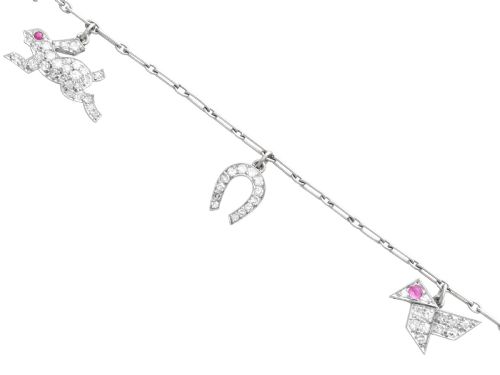
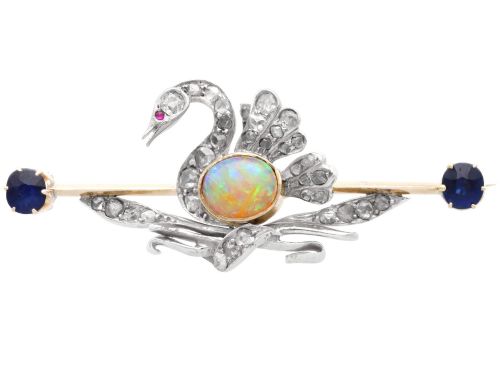
Ruby animal jewellery comprises wearable depictions of fauna ranging from swans and birds to big cats and mythical griffons, executed in precious metals. When searching for ruby animal jewellery, buyers encounter figurative brooches, rings, and charm pendants that utilise gemstones to denote eyes or body details.
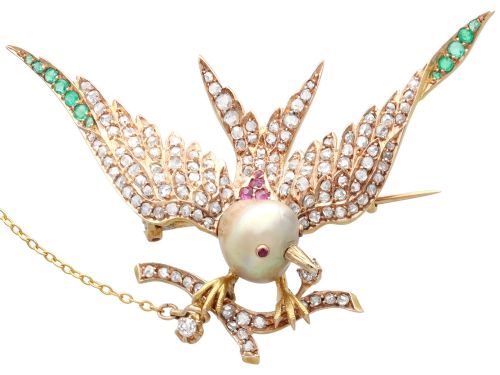
The pieces appearing on this page span several distinct eras, notably the Victorian period, Art Nouveau, and mid-century fine jewellery. Victorian and late nineteenth-century examples often favour natural pearls and emeralds alongside rubies, while later twentieth-century iterations lean into bolder textured golds and signed studio pieces.
Materials and Construction
Techniques combine traditional casting with hand-chased detailing to render realistic textures in the metalwork. Artisans used pavé settings for compact stone clusters, giving creatures like panthers and birds a dense, shimmering surface.
Ruby Animal Jewelry Retail Price Guide 2026
Typical asking prices for ruby animal jewelry among the pieces listed under this phrase on Sellingantiques today, from the lower quarter to the upper quarter. They describe what is for sale here now, not the wider market.
Evaluating Quality
Quality rests on the precision of the animal's anatomical rendering and the integration of the stones. Superior examples display lifelike posture and considered placement of rubies to create expression rather than mere decoration.
The choice of supporting materials and maker attribution further define the upper tier. Signed works by established makers utilising solid higher-carat gold and well-matched gemstones command greater distinction than unsigned commercial pieces.
Kutchinsky·Ben Rosenfeld·Ilias Lalaounis·Asprey
The Ruby Animal Jewelry Glossary
- Animalier
- A genre of fine art and jewellery focusing on realistic or stylized depictions of animals. This style gained particular prominence during the nineteenth century and mid-twentieth century.
- Pavé
- A setting technique where small gemstones are closely set together with minimal visible metal, creating a continuous surface of stones. It is frequently utilised in these pieces to represent plumage or fur.
- Charm Pendant
- A small decorative ornament hung from a bracelet or chain. These miniature representations often take figurative animal forms set with rubies and other gems.
- Hellenistic Revival
- A nineteenth-century design movement drawing inspiration from ancient Greek art. Pieces from this aesthetic often incorporate mythological creatures like griffins and chimera.
Ruby Animal Jewelry: Frequently Asked Questions
What periods do these pieces date from?
The selection spans from the late nineteenth century through to the mid-twentieth century, encompassing Victorian, Edwardian, Art Nouveau, and 1960s aesthetics.
Each era brings distinct metallurgical styles and stone combinations, from delicate nineteenth-century bird brooches to bold mid-century gold rings.
How are rubies used in these designs?
Rubies primarily serve as accent stones, most frequently forming the eyes of birds, felines, and reptiles, or highlighting specific details in multi-gem settings.
In some compositions, they contribute to a broader palette alongside diamonds, emeralds, and sapphires to depict colourful plumage or patterned fur.
Are these pieces suitable for daily wear?
Many items, such as solid gold rings and robust brooches, are durable enough for regular use provided they receive appropriate care. Items featuring delicate charm pendants or antique settings benefit from gentler handling to preserve the secure placement of smaller stones.
Consulting the specific construction of each piece helps determine its suitability for frequent rotation.
How do I identify a signed piece?
Maker marks and signatures are typically stamped onto the reverse of brooches, inside ring shanks, or upon suspension loops of pendants. These hallmarks often denote the originating workshop alongside the gold purity standard.