

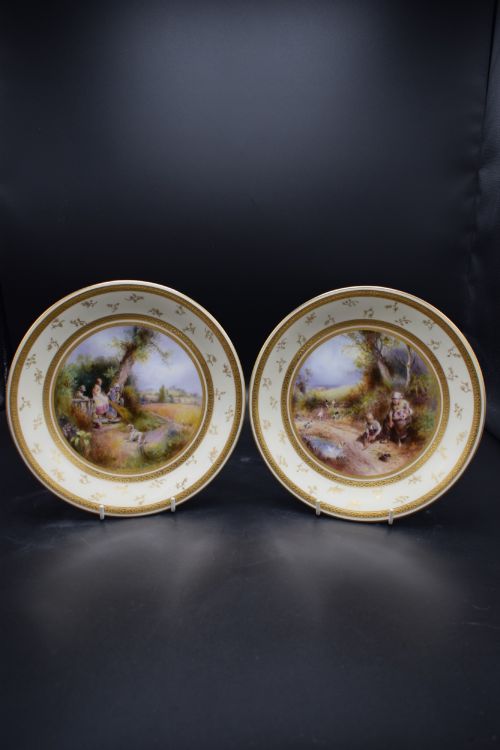


Royal Worcester Landscape
Royal Worcester landscape pieces are fine painted porcelain works depicting pastoral scenes and cattle, offering traditional British craftsmanship for collectors of decorative ceramics.
Royal Worcester Landscape
When you search for royal worcester landscape, you are looking at decorative porcelain painted with pastoral motifs and highland cattle. These items form a distinct group within British ceramic art, bridging the gap between utilitarian vessels and fine art.
The pieces listed on this page span the Victorian and Edwardian styles, alongside objects dated from 1900 to 1930. You will most frequently meet vases, cabinet plates, decorative urns, wall art, and wall plaques bearing these pastoral scenes.
Forms range from spill vases and pairs of vases to covered vessels and large wall plaques. Each piece serves primarily as a decorative display object rather than a functional item for daily use.
How they were made
Makers utilised porcelain and bone china as the primary ceramic bodies for these items. Artisans shaped these materials into vases, urns, and plates before applying detailed enamel paints.
Decoration relied on hand painting by skilled artists, frequently depicting cattle and natural scenery. Gilding, gold leaf, and gilt accents complemented the painted enamel scenes.
Some items feature additional framing, such as giltwood surrounds for wall art. The combination of porcelain, enamel, and gold leaf defined the standard manufacturing process for these decorative objects.
Royal Worcester Landscape Retail Price Guide 2026
Typical asking prices for royal worcester landscape among the pieces listed under this phrase on Sellingantiques today, from the lower quarter to the upper quarter. They describe what is for sale here now, not the wider market.
Highland cattle appear with remarkable frequency on these porcelain surfaces, staring out from Edwardian parlours with windswept fringe.
What varies in quality
The standard of painting determines the distinction between ordinary and exceptional examples. Pieces bearing signatures from known painters demonstrate superior brushwork and artistic composition.
The application of gilding and gold leaf also separates standard items from finer works. Rich, well-preserved enamel colours and precise detailing elevate the overall execution of the landscape design.
Scale and form influence the presence of these items, with large plaques and pairs of vases representing more ambitious undertakings than smaller spill vases.
Royal Worcester·H Davis·Harry Stinton·Harry Davis·J Stinton
The Royal Worcester Landscape Glossary
- Spill vase
- A tall, narrow vessel originally designed to hold wooden spills for lighting fires. These cylindrical porcelain containers often display painted landscape motifs.
- Cabinet plate
- A decorative ceramic plate intended for display in a cabinet rather than for dining. These plates frequently feature painted pastoral scenes.
- Enamel
- A glassy substance fused to the porcelain surface through firing to create durable, coloured decoration. It provides the vibrant pigments used in landscape scenes.
- Gilding
- The application of gold leaf or gilt powder onto the ceramic surface. This technique highlights rims, handles, and framing elements.
- Giltwood
- Wood that has been treated with gold leaf or a gold-coloured finish. It appears on the frames surrounding decorative wall plaques.
Royal Worcester Landscape: Frequently Asked Questions
What are royal worcester landscape pieces?
These items are porcelain and bone china objects decorated with painted pastoral scenes, notably featuring highland cattle. They include vessels, plates, and wall plaques.
Produced across several decades around the turn of the twentieth century, they represent a specific tradition of British ceramic painting.
How were these decorative items used?
Most of these pieces served as ornamental items for display within domestic interiors. Vases, urns, and plaques were placed on mantelpieces or hung on walls.
Cabinet plates were kept in display cabinets to protect the painted enamel surfaces from damage.
How do I live with royal worcester landscape ceramics?
Display these items away from direct sunlight to preserve the enamel colours and gilding. Dust them gently with a soft dry cloth.
Wall plaques and art pieces require secure fixings due to the weight of the porcelain and framing materials.
How can I tell the periods apart?
Pieces span the Victorian and Edwardian styles, with dates ranging from 1900 to 1930. Stylistic shifts in the painting and framing often reflect these changing decades.
Signatures from specific painters help anchor individual items within this chronological range.