



Round Teak Table
A round teak table brings rich regional character and practical circular form into a room, offering versatile seating and display space.
Round Teak Table
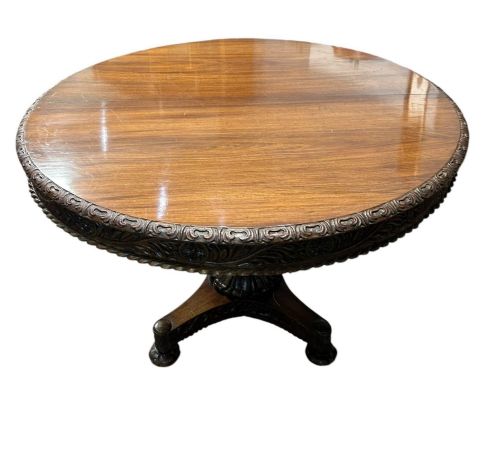
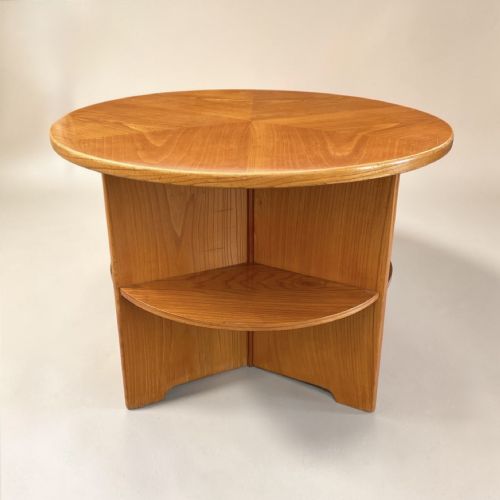
When you search for a round teak table, you encounter diverse forms ranging from dining and centre tables to smaller side, occasional, and coffee tables. These pieces span multiple eras, including the eighteenth century, Victorian period, and mid-twentieth century.
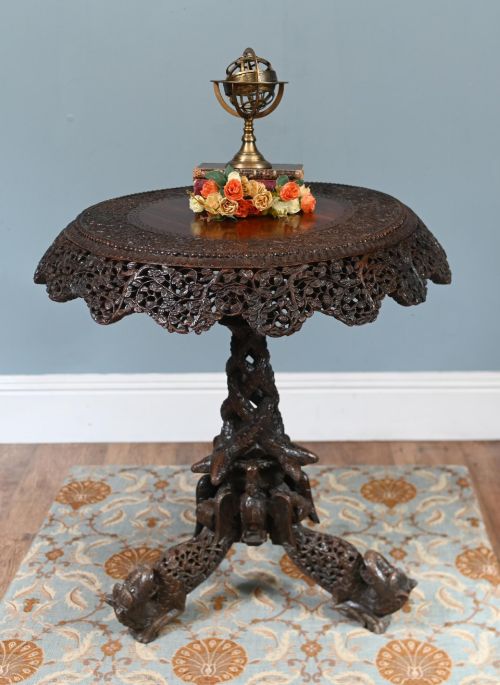
The selections on this page heavily feature Anglo-Indian, Anglo-Burmese, and colonial styles, alongside mid-century modern circular coffee tables. Many examples incorporate intricate regional carving traditions originating from Myanmar, India, and Bombay presidency workshops.
How they were made
Construction relies heavily on dense hardwood and solid teak, frequently shaped into circular tops supported by heavily carved pedestals or folding frames. Artisans utilised traditional joinery and intensive hand-carving techniques to decorate surfaces with elaborate floral and animal motifs.
Certain regional variations incorporate contrasting materials, pairing the dark teak wood with delicate bone inlay, bone elements, or glass inserts to create striking visual textures.
Round Teak Table Retail Price Guide 2026
Typical asking prices for round teak table among the pieces listed under this phrase on Sellingantiques today, from the lower quarter to the upper quarter. They describe what is for sale here now, not the wider market.
Several tables feature carved elephants.
What varies in quality
Quality rests significantly on the depth and precision of the hand-carving across the hardwood surface, where crisper detailing distinguishes finer workshop output. The architectural stability of the base, whether a heavy pedestal or clever folding mechanism, further separates standard domestic furniture from exceptional colonial commissions.
The choice of materials also dictates standing, with select pieces enhancing the timber through intricate bone inlay or combining teak with rosewood and other dense hardwoods.
The Round Teak Table Glossary
- Teak
- A dense, durable tropical hardwood prized for its rich grain and resistance to wear. It forms the primary structural material for these circular tables.
- Anglo-Indian
- A designation for furniture made in India during the British period, often combining British furniture forms with local Indian craftsmanship. These pieces typically display elaborate hand-carved ornamentation.
- Occasional table
- A small, movable table designed for specific, intermittent uses around a room rather than permanent dining. Examples include small coffee and side tables.
- Bone inlay
- A decorative technique where small pieces of bone are set into the wood surface to create contrasting patterns. It appears on select regional tables.
- Centre table
- A large table designed to stand free in the middle of a room rather than against a wall. They often serve as the focal point of a principal reception space.
Round Teak Table: Frequently Asked Questions
Where should I place a round teak table?
These versatile circular tables work well as central focal points in entrance halls, living rooms, or dining spaces where a round footprint eases movement.
Smaller side and occasional variants suit corners or beside seating, while larger dining formats anchor a room for gatherings.
How do I care for carved teak furniture?
Dust the intricately carved wooden surfaces regularly with a soft brush to prevent buildup in the recessed recesses of the design.
Avoid placing the hardwood furniture in direct sunlight or near heat sources to protect the timber and any delicate inlay work.
What periods do these round tables cover?
The inventory spans multiple eras, including eighteenth-century examples, Victorian-era pieces, and early twentieth-century items.
Mid-century modern circular coffee tables also appear alongside the heavily carved colonial styles.
What is the difference between side and centre tables?
Centre tables are typically larger pieces designed to stand independently in the middle of a room, often featuring substantial carved pedestals.
Side and occasional tables have smaller footprints intended for placement against walls or beside seating furniture.