






Round Solitaire Engagement Ring
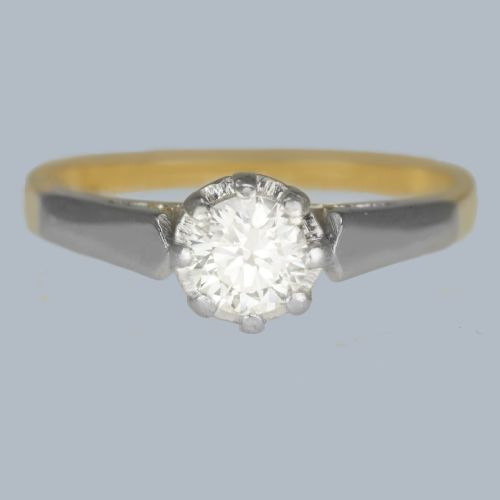
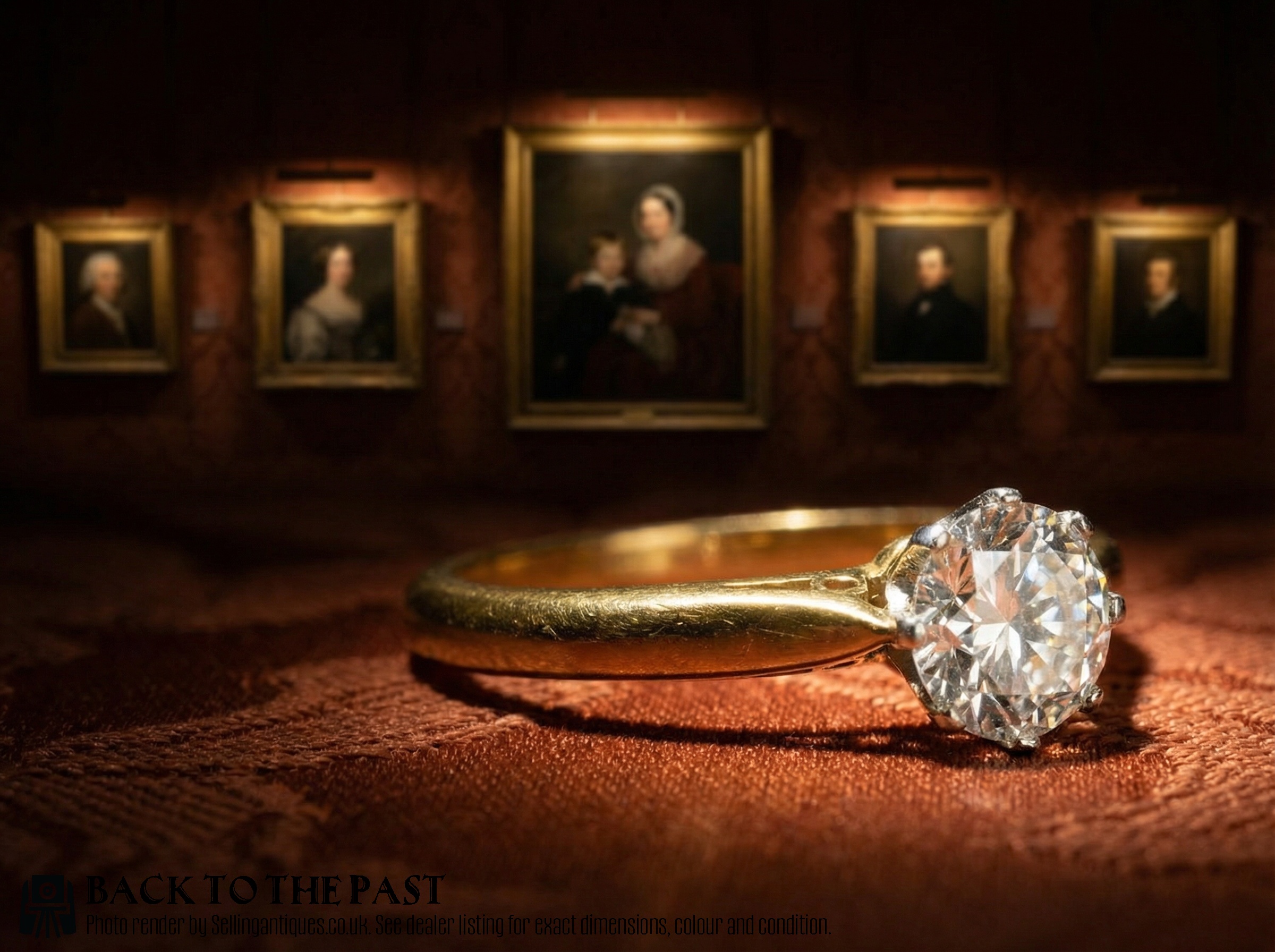
A round solitaire engagement ring centres a single central stone in a timeless profile.
Round Solitaire Engagement Ring
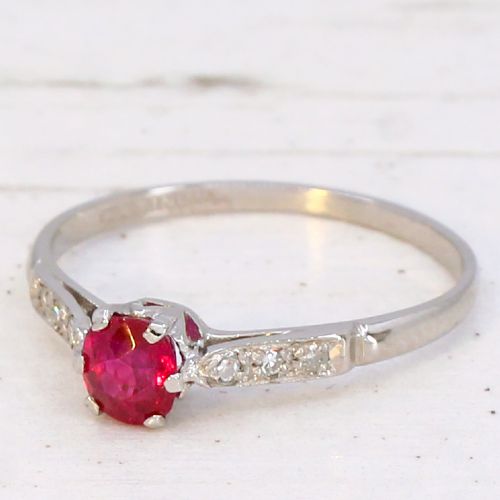
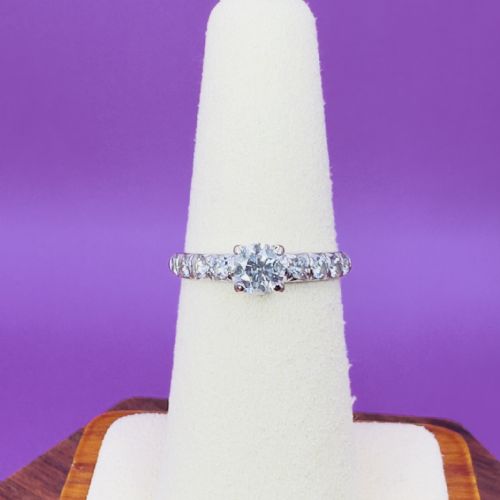
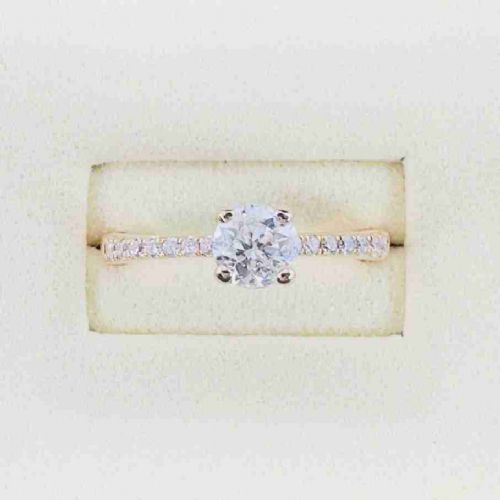
A round solitaire engagement ring showcases a single principal diamond or gemstone mounted upon a precious metal band. The selection spans periods from the late Victorian era through Art Deco, Edwardian, and mid-century designs.
The version most frequently met on this page pairs a substantial centre diamond with a durable platinum setting or an 18ct gold band. These configurations reflect the prevailing styles of the 1920s, 1930s, and 1950s.
Makers utilised various precious metals, combining platinum with yellow gold or white gold to secure the central stone. The resulting jewellery ranges from minimalist bands to pieces featuring delicate shoulder diamonds.
How they were made
Goldsmiths worked primarily in platinum and 18ct gold, casting and forging metal to construct secure settings for centre stones. Platinum became the preferred choice during the Art Deco period for its strength and bright finish.
Cut techniques evolved across the decades represented, moving from old European and old mine cuts to transitional cuts and modern brilliant cuts. Stone cutters shaped facets by hand in earlier examples to maximise brilliance under candlelight.
Materials documented in these rings include platinum, 18ct gold, 18ct white gold, 18ct yellow gold, and 9ct yellow gold.
What varies in quality
The weight, clarity, and colour of the centre diamond heavily influence the overall character of a round solitaire engagement ring. Larger carat weights combined with minimal inclusions command attention.
The precision of the metalwork and the integrity of the prongs holding the stone define the standard of craftsmanship. Heavier platinum mountings and well-balanced proportions separate exceptional examples from standard production.
The Round Solitaire Engagement Ring Glossary
- Solitaire
- A ring featuring a single prominent gemstone mounted centrally without accompanying major side stones.
- Old European Cut
- An early round diamond cut characterised by a small table, high crown, and large culet.
- Transitional Cut
- A diamond cut used from the 1920s to the 1940s bridging older hand-cut styles and modern brilliant facets.
- Platinum
- A dense, durable, and naturally white precious metal widely utilised in antique ring mountings.
- Culet
- The small facet at the very bottom of a gemstone designed to prevent chipping.
Round Solitaire Engagement Ring: Frequently Asked Questions
How do I wear a vintage solitaire ring daily?
Pair your round solitaire engagement ring with bands that match the curvature and metal type of the original mounting. Take care to remove the jewellery during heavy manual work to protect the prongs.
Regular checks by a jeweller ensure the central diamond remains secure in its setting over years of daily use.
What periods do these rings come from?
The selections span from late Victorian and Edwardian periods through Art Deco and mid-century modern designs. Each era brings distinct characteristics in mounting style and metal combination.
Art Deco pieces frequently highlight platinum settings, while mid-century examples often incorporate 18ct white or yellow gold.
How do I identify an Art Deco solitaire?
Art Deco rings typically feature geometric mountings, fine millgraining, and heavy use of platinum. The metalwork frames the central diamond with sharp lines and symmetrical shoulder details.
These pieces often date from the 1920s and 1930s, reflecting the architectural design trends of that time.
Can I resize an antique engagement ring?
Most precious metal bands in gold or platinum can be adjusted by a skilled bench jeweller. The structure of the shank dictates the ease of alteration without disturbing the setting.
Consult a specialist who understands antique construction to preserve the hallmarks and structural integrity of the band.