

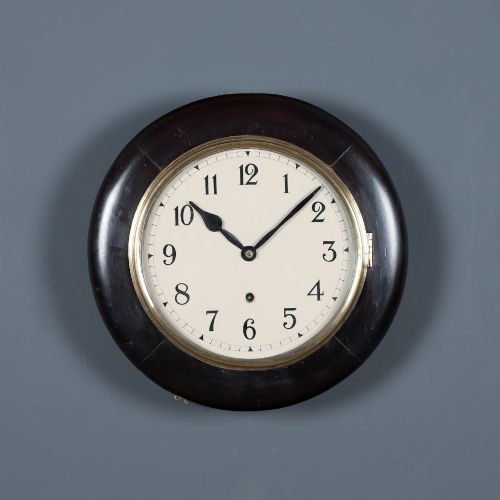
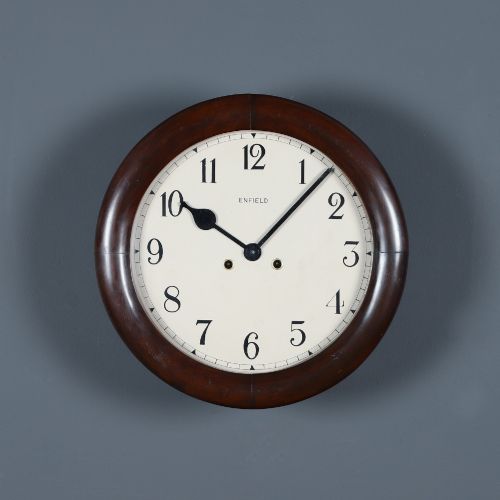
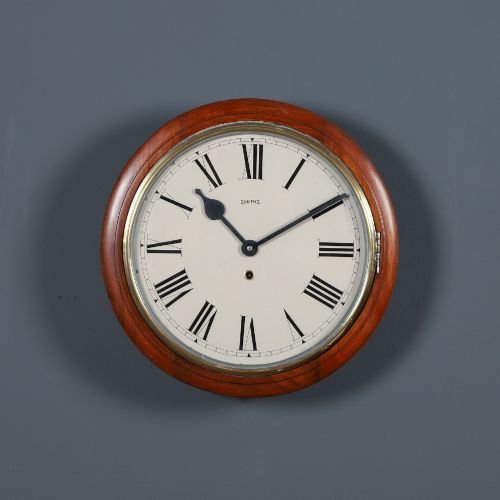
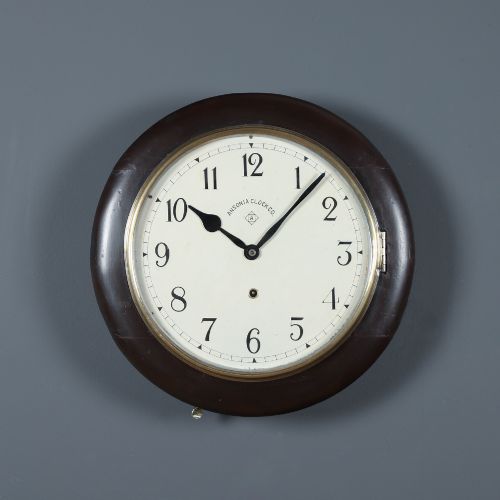


Round Railway Clock
A round railway clock brings solid utility and crisp station dials into a room, offering a reliable piece of transport history for everyday spaces.
Round Railway Clock
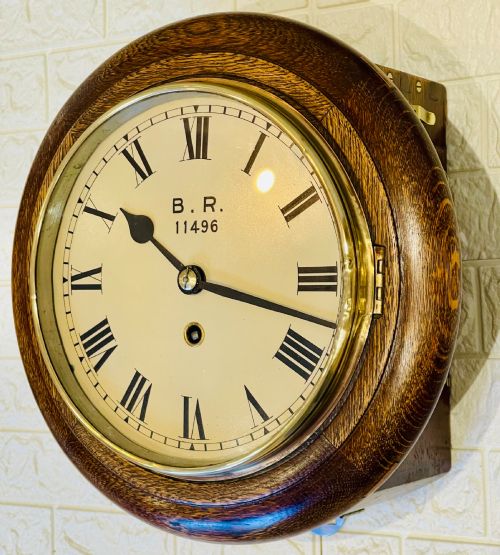
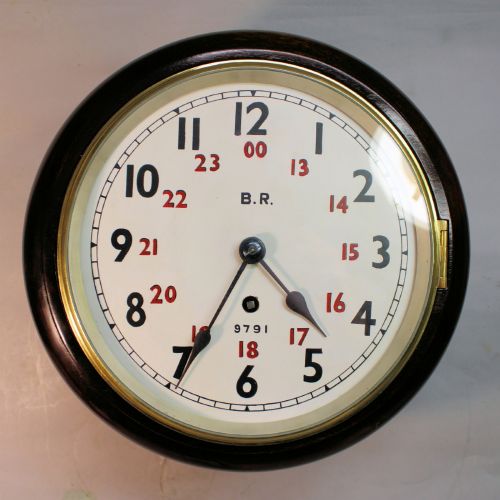
A round railway clock is a wall-mounted timepiece designed for operational clarity in stations, offices, and schools, featuring a clear circular dial for distance reading. When you search for a round railway clock, you encounter heavy wooden or metal cases enclosing traditional timekeeping movements.
The specimens seen here span the Victorian era, the Edwardian period, and mid-twentieth-century contexts like British Rail. Mahogany cases dominate the selection, alongside examples in oak, brass, iron, and glass.
Dial sizes vary considerably, ranging from compact eight-inch faces to oversized wall displays. Most examples present standard station or school round dial designs, often housing timepiece or fusee movements.
Materials and construction
Cases rely heavily on durable hardwoods such as mahogany and oak, turned or joined into solid circular frames designed to withstand bustling station environments. Glass covers and protects the painted enamel dials beneath.
Internal mechanisms utilise brass and iron components configured for reliable timekeeping, with many traditional English models driven by fusee movements to maintain steady tension as the mainspring unwinds.
Round Railway Clock Retail Price Guide 2026
Typical asking prices for round railway clock among the pieces listed under this phrase on Sellingantiques today, from the lower quarter to the upper quarter. They describe what is for sale here now, not the wider market.
Listings feature mahogany, oak, brass, iron, and glass across Victorian, Edwardian, and mid-twentieth-century periods.
What separates the best from the rest
Quality rests in the precision of the movement and the integrity of the original case construction. Heavy mahogany timber housing a clean fusee movement stands apart from simpler timepieces.
The legibility and condition of the enamel dial, together with crisp maker inscriptions on the face, elevate the standing of a wall clock.
John Walker·Ansonia·Smiths·Enfield·Anglo Swiss Watch Co
The Round Railway Clock Glossary
- Fusee
- A conical pulley connected to the mainspring by a chain or cord, designed to equalise the torque as the spring unwinds. This mechanism improves timekeeping consistency throughout the winding cycle.
- Timepiece
- A clock that tells the time without incorporating a striking or chiming mechanism. These simpler movements focus entirely on accurate rotation of the hands.
- Enamel dial
- A metal face coated with fused glass powder to create a smooth, durable white background. Black painted numerals and railway company lettering stand out clearly against this surface.
- Convex glass
- Curved glass fitted over the dial to reduce glare from overhead station lighting. It gives the face a distinct protruding profile.
Round Railway Clock: Frequently Asked Questions
How do I hang a heavy railway clock?
These clocks require secure fixing directly into wall studs or masonry using appropriate heavy-duty screws and plugs. The weight of the timber case and glass demands a robust anchor rather than standard picture hooks.
Ensure the wall is level before mounting so the pendulum and fusee movement operate without friction or uneven wear.
What is a fusee movement?
A fusee movement uses a conical drum and a chain to regulate the pull of the mainspring. As the spring loses tension, the chain moves to a wider part of the cone to maintain steady power.
This traditional English clockmaking feature ensures more reliable timekeeping across the full winding duration.
How do I wind a wall clock?
Opening the side door or lifting the front glass bezel provides access to the winding arbor on the dial. Insert the key and turn it gently until resistance indicates the mainspring is fully wound.
Avoid over-winding, as this strains the internal brass gears and the driving chain.
Where were these clocks originally used?
Railway station masters, platform supervisors, and railway offices relied on these clocks to coordinate timetables and daily operations. Many pieces also served in associated railway buildings and municipal schools.
Inscriptions on the dial often denote specific regional railway companies and locations.