
Round Pedestal Centre Table
A round pedestal centre table anchors a room with its circular top and central column, drawing the eye naturally to the middle of the floor.
Round Pedestal Centre Table
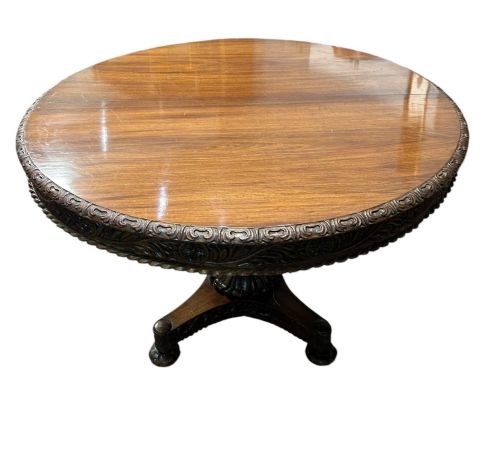
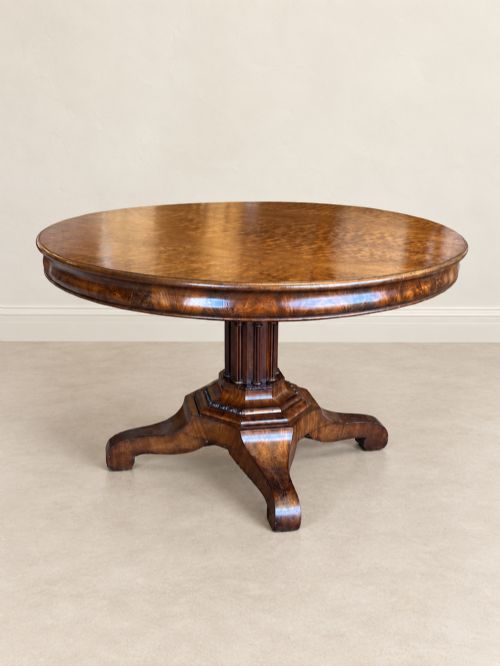
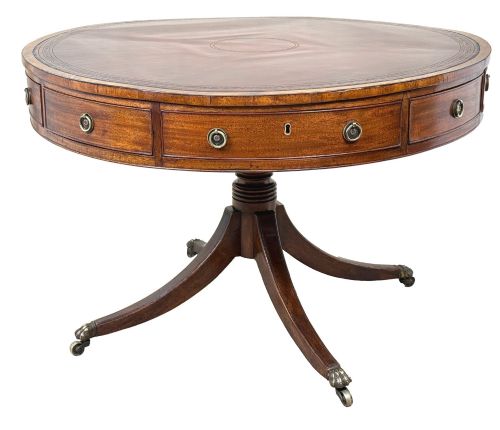
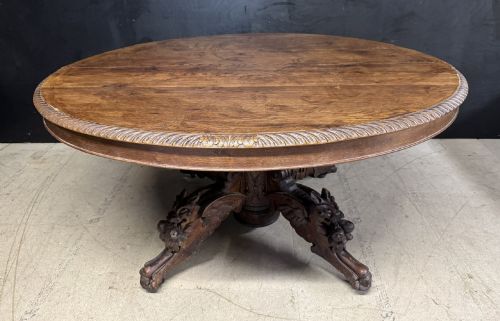
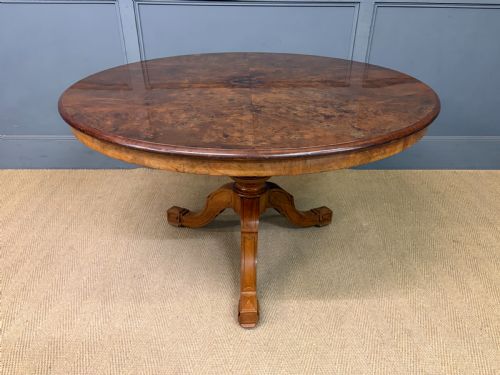
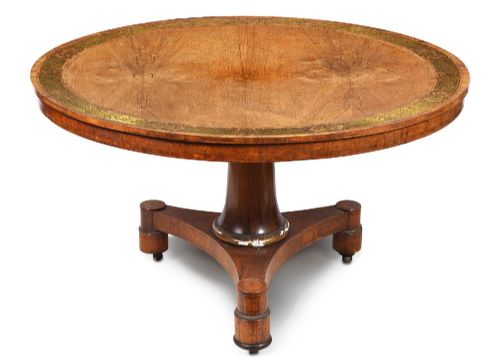
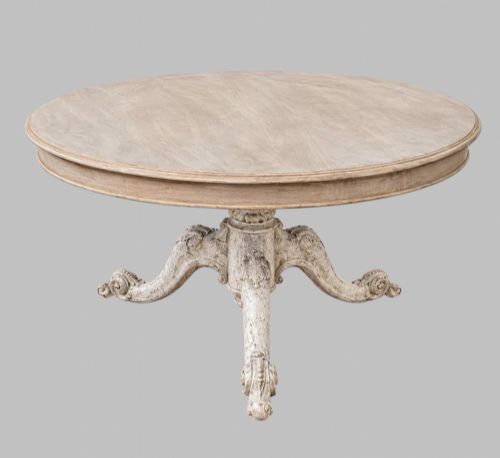
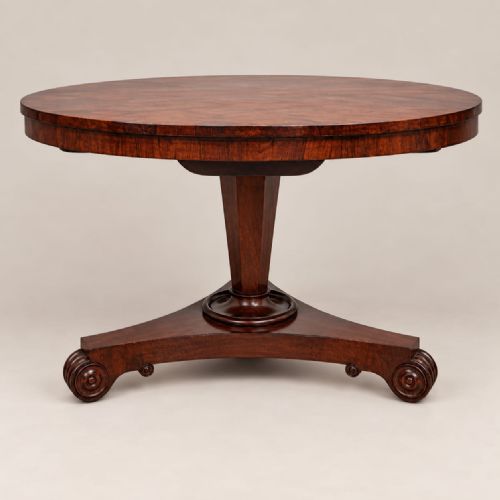
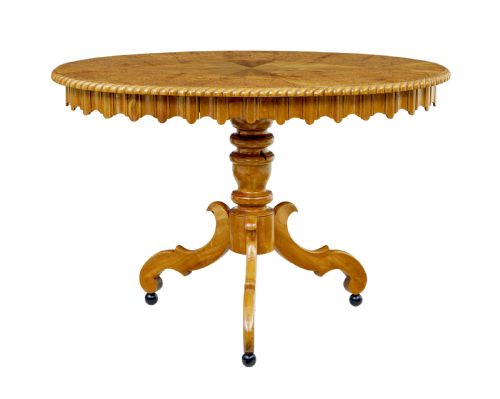
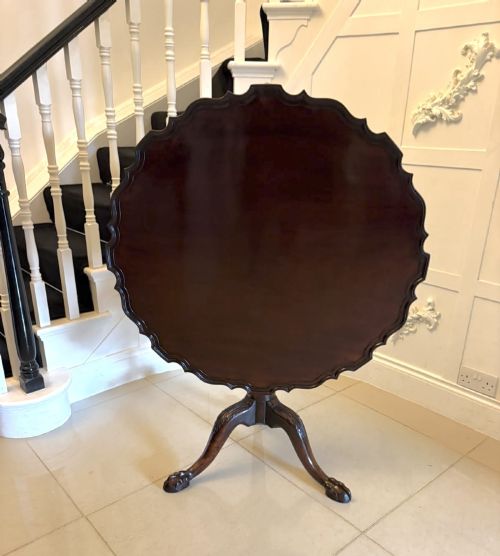
A round pedestal centre table is designed to stand free in the middle of a room rather than against a wall, offering access from all sides. These pieces appear frequently in Victorian, William IV, and Regency guises, often functioning as breakfast tables, dining tables, or occasional tables.
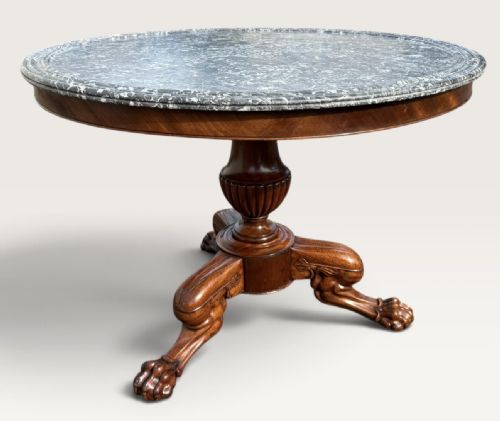
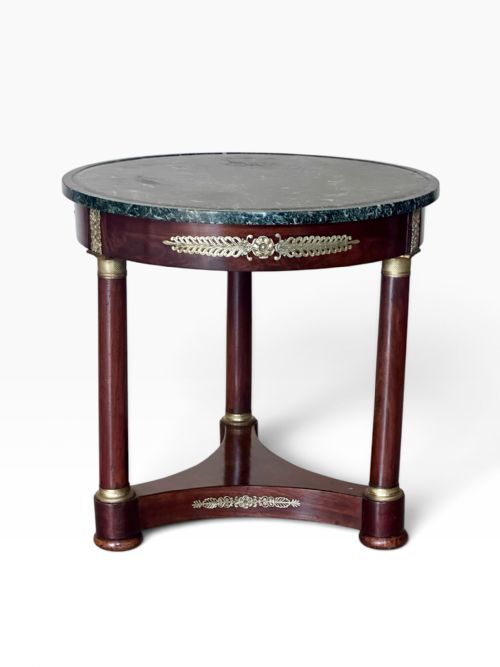
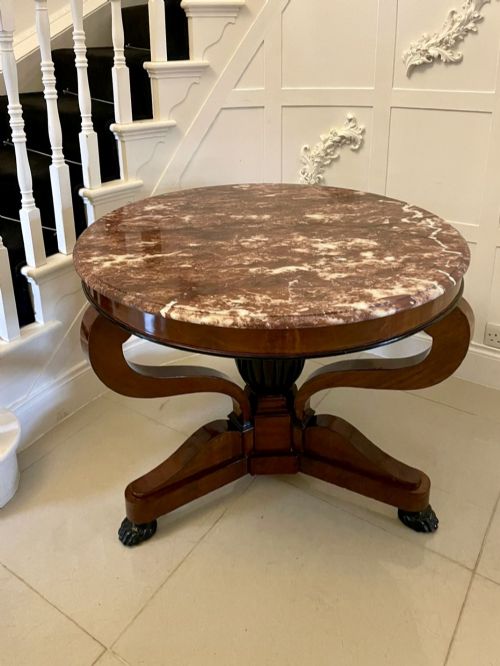
The form typically comprises a heavy circular top supported by a central column resting on a triangular, platform, or tripod base. Variations range from plain mahogany and walnut to French gueridon styles topped with marble or fitted with tilt-top mechanisms.
How they were made
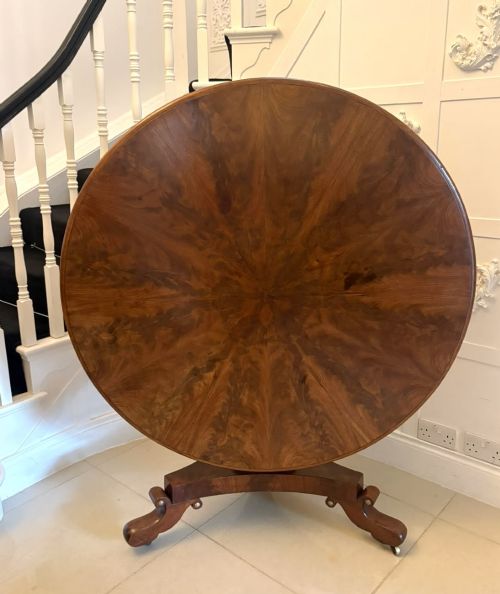
Cabinet makers utilised dense timbers such as mahogany, rosewood, and walnut, often applying figured veneers like flame mahogany, burr walnut, or pollard oak over solid secondary woods. Tops were frequently constructed with tilt mechanisms, allowing the circular surface to fold vertically when not in use.
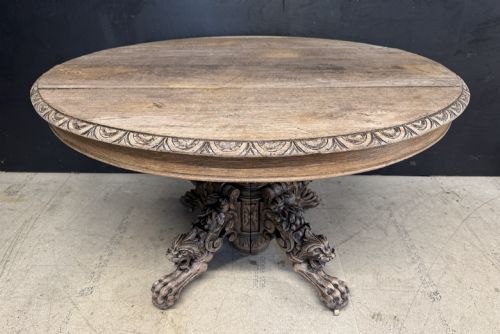
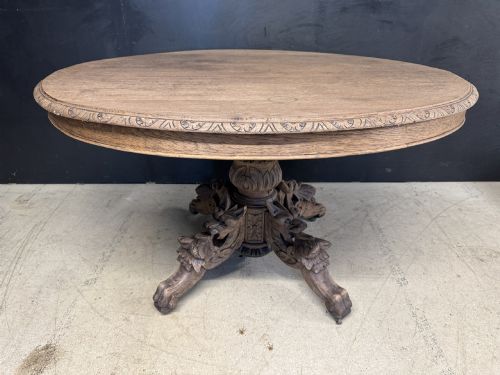
Bases relied on substantial turned or carved pedestals standing on heavy plinths, triform feet, or tripod legs, sometimes incorporating brass castors to ease movement across a floor.
Some secret drawers hide beneath circular tops, offering discreet storage for late-night letters or forgotten spectacles.
What varies in quality
Quality rests in the selection and bookmatching of timber veneers, where symmetrical grain patterns on a circular top elevate a piece considerably. Finer examples display crisp, hand-carved details on the pedestal and base rather than cast plaster ornaments.
The engineering of the tilt-top mechanism and the stability of the central column also dictate worth, as heavier tops require robust joinery to prevent sagging over time.
Gillows·Peters of Genoa
The Round Pedestal Centre Table Glossary
- Gueridon
- A small French round table, typically supported by a single central pillar, originating in the seventeenth century. These frequently feature marble slabs or decorative marquetry.
- Tilt-top
- A hinged tabletop mechanism that allows the circular surface to pivot to a vertical position. This clever design enabled tables to be stored against walls when space was required.
- Triform base
- A three-sided platform or foot arrangement supporting the central pedestal. It provides stability for heavy circular tops.
- Veneer
- A thin layer of figured wood applied over a stable base timber to display dramatic grain patterns. Flame mahogany and burr walnut are common examples.
Round Pedestal Centre Table: Frequently Asked Questions
How were round pedestal centre tables used?
These tables served multiple domestic purposes, acting as breakfast tables, dining surfaces, or grand centrepieces in entrance halls and libraries.
Their freestanding design allowed people to gather around the entire circumference for dining, reading, or socialising.
What is a gueridon table?
A gueridon is a traditional French round table supported by a single central column. They frequently include marble tops and decorative wood veneers.
Cabinet makers produced them for drawing rooms and boudoirs as decorative surfaces for lamps and ornaments.
Why do some tables tilt?
The tilt-top mechanism was an ingenious space-saving device used by nineteenth-century cabinet makers. It allowed owners to fold the heavy circular top flat and store the table against the wall.
This practical feature was particularly common on breakfast and occasional tables.
How do I spot a Regency table?
Regency tables typically date from the early nineteenth century and draw inspiration from classical antiquity. They often feature dark mahogany or rosewood timbers alongside brass mounts and bold central pedestals.
The lines tend to be clean and architectural, reflecting the neoclassical tastes of the period.