

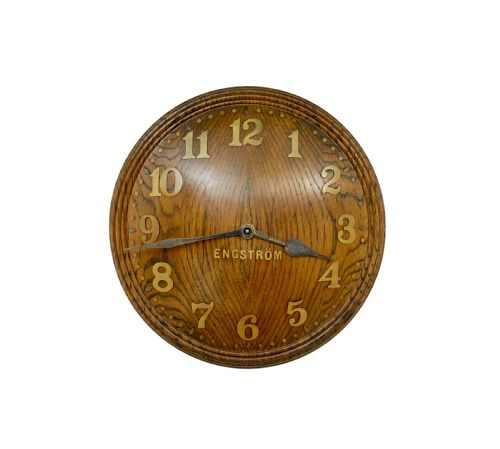


Round Office Clock
A round office clock is a dependable wall timepiece designed for legibility and utility, pairing timber cases with clear dials to anchor any room.
Round Office Clock
When searching for a round office clock, buyers encounter robust wall-mounted timepieces spanning Victorian, Edwardian, Art Deco, and Mid-Century Modern periods. These pieces serve as both practical timekeepers and architectural details, shaped by the functional demands of workplaces, stations, and schools.
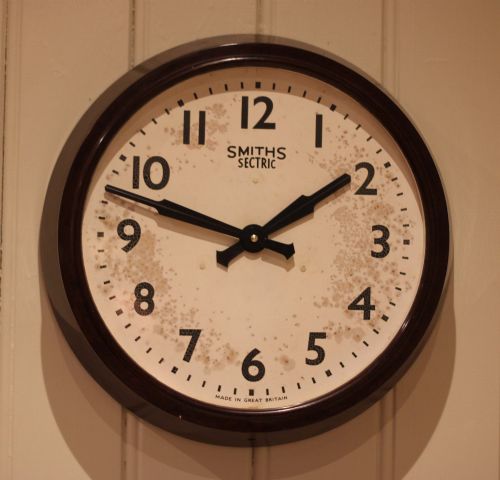
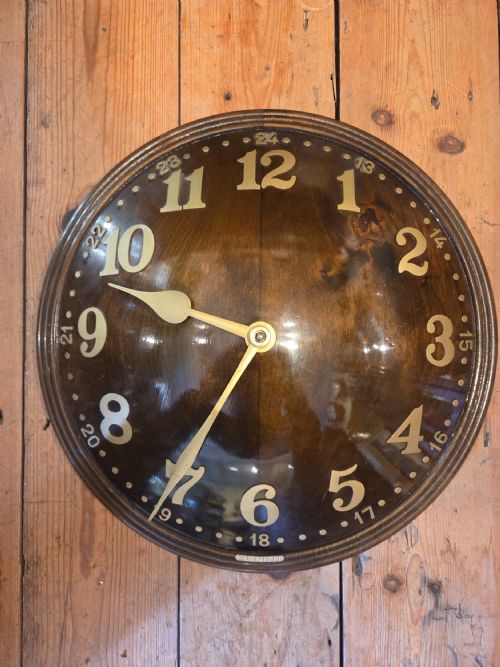
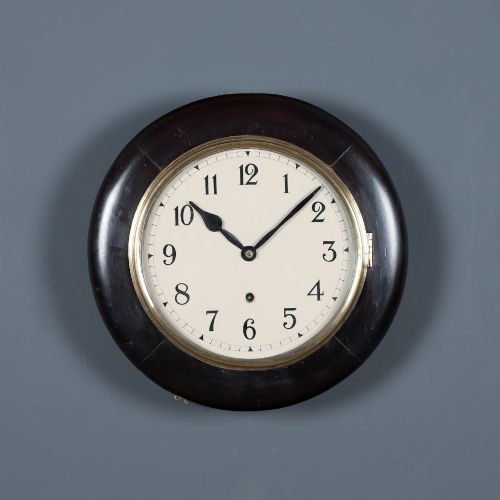
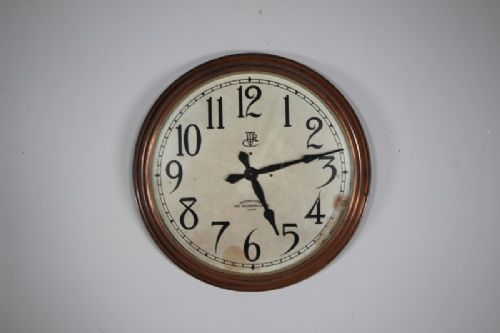
The versions most commonly met on this page are housed in rich timbers such as mahogany and oak, alongside industrial materials like metal and Bakelite. Their circular faces prioritise straightforward readability, often featuring prominent numerals behind protective glass bezels.
Origins stretch from the late nineteenth century through to the 1960s, capturing shifts in interior design from heavy Victorian joinery to streamlined mid-century aesthetics. Each piece reflects the workplace standards of its respective decade, retaining the character of municipal and commercial spaces.
Materials and construction
Cases are predominantly constructed from solid timber, with mahogany and oak providing durability and structural stability for heavy internal mechanisms. Walnut and gilt brass also appear, introducing varied textures and tones from different eras.
Dials are protected by thick glass covers fitted within hinged bezels, shielding the paper or painted faces from dust and damage in busy environments. Bakelite and iron emerge in later mid-century examples, marking a shift toward industrial mouldings and pressed metals.
Round Office Clock Retail Price Guide 2026
Typical asking prices for round office clock among the pieces listed under this phrase on Sellingantiques today, from the lower quarter to the upper quarter. They describe what is for sale here now, not the wider market.
Judging quality in timepieces
Quality reveals itself in the calibre of the movement and the precision of the case joinery. Fusee movements and jewelled mechanisms represent higher tiers of horological construction, ensuring steady power delivery and precise timekeeping.
Material selection and dial execution further separate standard examples from finer specimens. Solid mahogany or carved oak cases with crisp dial lettering and heavy bevelled glass indicate superior manufacture compared to utilitarian substitutes.
Zenith·Imhof·Engström
The Round Office Clock Glossary
- Fusee
- A conical pulley used in clock movements to maintain an even pull as the mainspring unwinds. This mechanism ensures consistent timekeeping across the duration of the wind.
- Bakelite
- An early form of thermosetting plastic used for moulded clock casings from the 1930s onward. It provides a durable, heat-resistant shell with a characteristic dark lustre.
- Dial
- The visible face of the clock where numerals indicate the hours and minutes. These can be painted, printed, or metal-applied behind glass.
- Timepiece
- A clock that indicates the time without including a striking or chiming mechanism. This simpler movement focuses entirely on continuous running accuracy.
Round Office Clock: Frequently Asked Questions
What is a fusee movement?
A fusee movement uses a conical pulley system to equalise the declining power of a mainspring as it unwinds.
This traditional mechanism ensures the clock maintains consistent tension and accuracy throughout its running cycle.
How do I date a clock?
Dating relies on examining the timber species, case styling, and the materials used for the dial and bezel.
Victorian and Edwardian models typically feature deep mahogany joinery, while 1930s and 1950s pieces introduce Bakelite and minimalist modernist numbering.
Where were these clocks used?
These timepieces were originally manufactured for utilitarian environments including offices, railway stations, schools, and municipal factories.
Their clear circular dials and robust construction were designed for quick legibility across large communal rooms.