



Round Marble Top Stand
A round marble top stand brings a cool, smooth stone surface and sturdy timber framework into a room, offering a functional pedestal for lamps, vases or plants.
Round Marble Top Stand
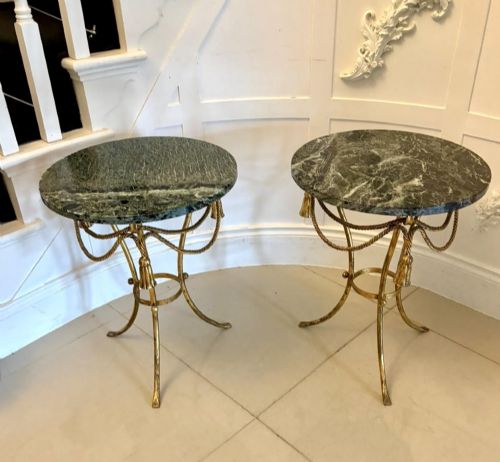
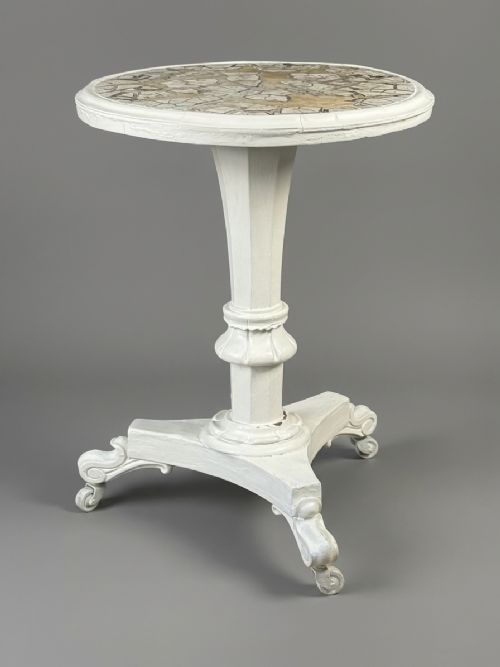
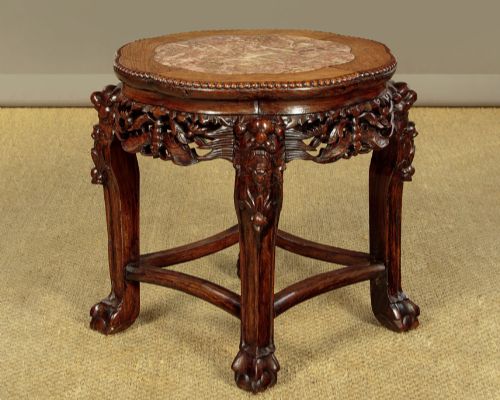
A round marble top stand takes several forms across the inventory, appearing as side tables, occasional tables, plant stands and washstands. These pieces serve practical functions in domestic spaces while introducing solid stone surfaces supported by wood or metal frames.
The selection spans various historical periods including the nineteenth century, Regency, and early twentieth century. Designs range from French Empire and Louis XVI styles to Chinese Qing Dynasty examples, showing diverse cultural influences in their manufacture.
Surfaces feature white or coloured stone paired with hardwood, ebony, satinbirch, brass, giltwood and gesso frames. Some incorporate canework tiers or decorative flower mouldings to enhance their visual appeal.
How they were made
Maker construction combines heavy slabs of marble or onyx fitted tightly into solid timber or giltwood framing. Frames utilise hardwoods, ebony and satinbirch, shaped with turned columns or curved legs to support the dense stone top.
Decorative detailing involves applied gesso, intricate flower mouldings, and gilt metal mounts. Certain examples integrate secondary materials like woven canework on lower tiers alongside brass fittings to complete the structure.
Round Marble Top Stand Retail Price Guide 2026
Typical asking prices for round marble top stand among the pieces listed under this phrase on Sellingantiques today, from the lower quarter to the upper quarter. They describe what is for sale here now, not the wider market.
Some nineteenth-century makers evidently decided a wine table needed stone armour just in case the claret got rowdy.
What varies in quality
Quality differences emerge in the selection and preparation of the stone top, where finer pieces feature uniform veining and precise edge profiling fitted flush to the frame. Lesser examples might show uneven thickness or mismatched stone sections.
The sophistication of the supporting woodwork and metal ornamentation dictates the tier of the piece. Crisp carving on giltwood columns, solid hardwood joinery, and intact canework indicate higher standards of workshop production compared to simpler turned supports.
The Round Marble Top Stand Glossary
- Gueridon
- A small French table, often circular, designed to hold a candle, vase or decorative object. These stands typically feature a central column or slender legs.
- Giltwood
- Timber that has been coated with a thin layer of gold leaf or gilt paint. This finish creates a bright, reflective surface popular in classical European furniture styles.
- Onyx
- A banded variety of chalcedony quartz used for decorative table tops. Its translucent layers provide distinctive natural patterns differing from standard marble.
- Canework
- Woven rattan or cane material used to form lower tiers or decorative panels. It provides a lightweight contrasting texture against heavy timber and stone.
- Satinbirch
- A pale, lustrous hardwood with a fine grain often utilised in nineteenth-century cabinet making. The timber accepts a polished finish that highlights its natural sheen.
Round Marble Top Stand: Frequently Asked Questions
What rooms suit a round marble top stand?
These stands fit neatly beside seating in a drawing room or sit in hallways to hold a small lamp or dish. Their compact footprint makes them useful in corners where a surface is needed without blocking space.
The stone top handles damp flowerpots or sweating glassware without staining the wood below. This durability allows them to function effectively as plant pedestals or bedside tables.
How do I clean a marble surface?
Wipe the stone gently with a soft cloth dampened in warm water and a mild, neutral soap. Avoid acidic cleaners, vinegar or abrasive powders that can etch or dull the polished finish.
Dry the surface thoroughly afterwards to prevent water marks. Using coasters helps protect older stone from sudden spills.
Are these stands heavy to move?
The weight depends largely on the thickness of the stone top and the density of the wood frame. Marble and onyx add considerable heft, making the top section heavier than standard wooden tables of the same size.
Two people should lift larger pieces to avoid straining the joinery where the legs meet the top. Smaller plant stands can be repositioned easily by holding the frame rather than the stone edge.
How do I distinguish French styles from Chinese ones?
French pieces like Louis XVI or Empire styles generally feature carved giltwood, classical motifs, fluted columns or decorative metal mounts. Their proportions reflect European architectural traditions of the eighteenth and nineteenth centuries.
Chinese Qing Dynasty stands typically display lower profiles, darker hardwoods, and simpler joinery focused on the grain of the wood and the inset stone panel. They lack the applied gilt ornamentation common in European cabinet making.