



Round Marble Base Table
These round marble base table pieces combine stone and timber for steady, striking centrepieces.
Round Marble Base Table
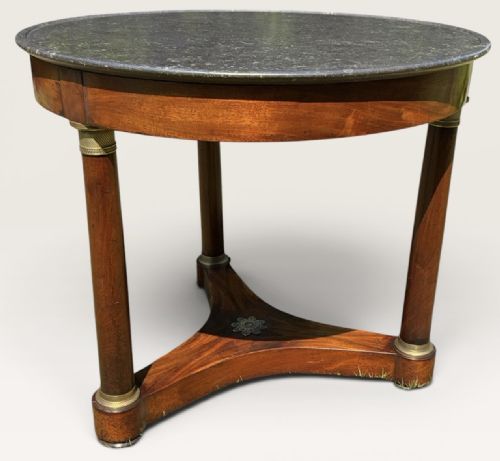
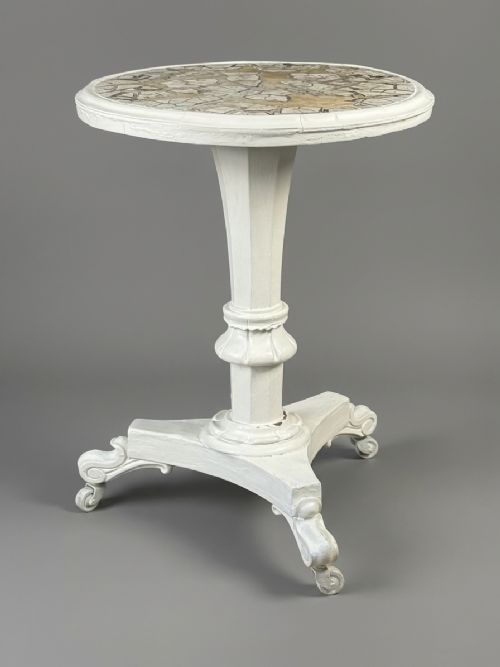
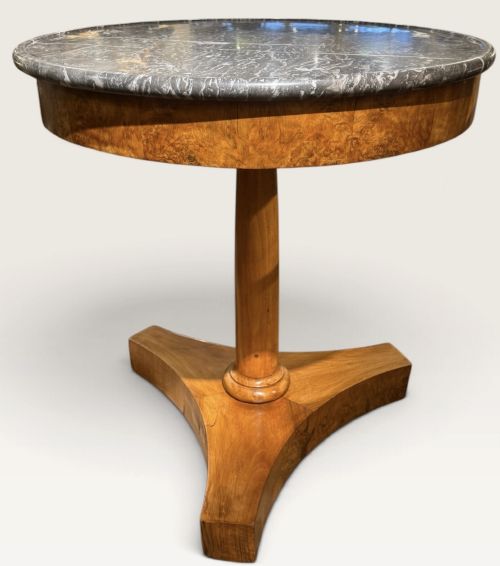
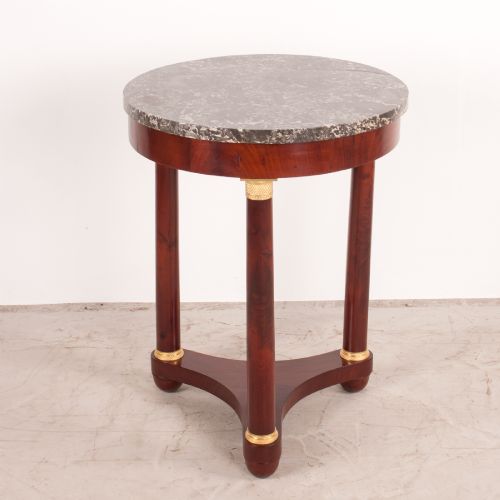
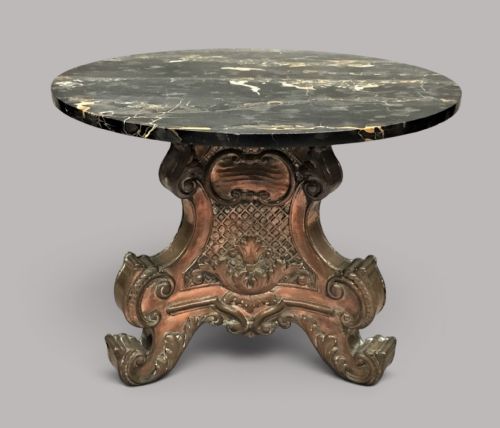
A round marble base table unites a heavy stone foundation with a circular top, frequently taking the form of a French guéridon or a bistro table. These pieces function as occasional tables, centre tables, and coffee tables within various rooms.
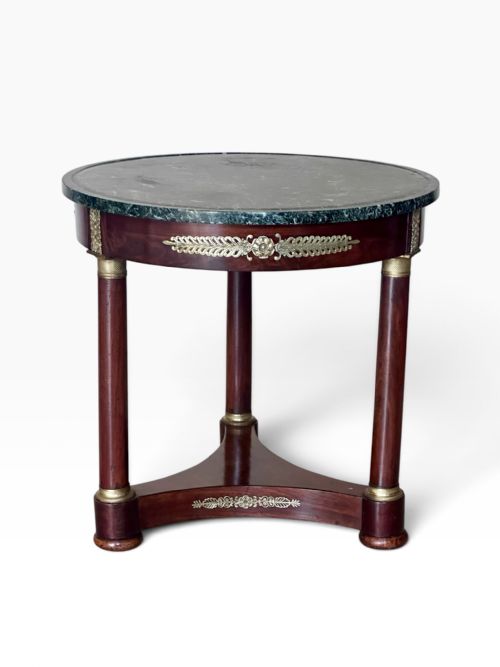
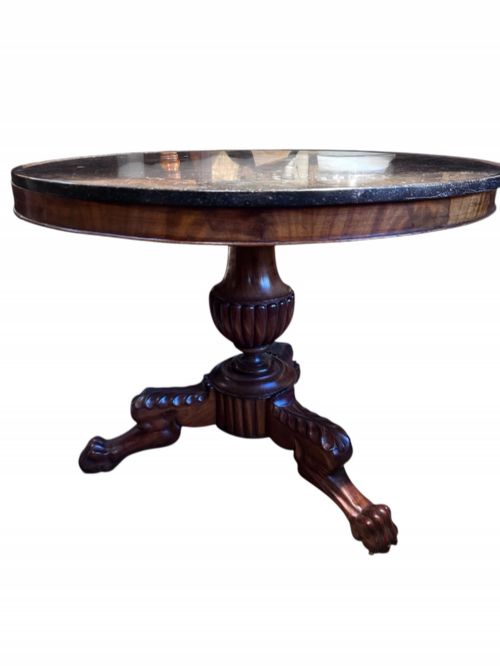
The materials span from nineteenth century mahogany and burr elm to cast iron and giltwood, topped with polished marble. Buyers commonly encounter French Empire, Louis Philippe, and Art Deco styles across these listings.
Origins stretch from French workshops to Italian makers such as B Battioli, Varese. The forms range from tall pedestal breakfast tables down to low coffee tables.
How they were made
Construction relies on pairing dense stone with cabinet timbers or metals. Marble forms the heavy base or the circular top, supported by mahogany, burr elm, cast iron, or gilt metal.
Joinery methods secure heavy circular marble slabs to central pedestals or tripod legs. Ormolu mounts, brass details, and giltwood embellishments finish the structural frames.
Round Marble Base Table Retail Price Guide 2026
Typical asking prices for round marble base table among the pieces listed under this phrase on Sellingantiques today, from the lower quarter to the upper quarter. They describe what is for sale here now, not the wider market.
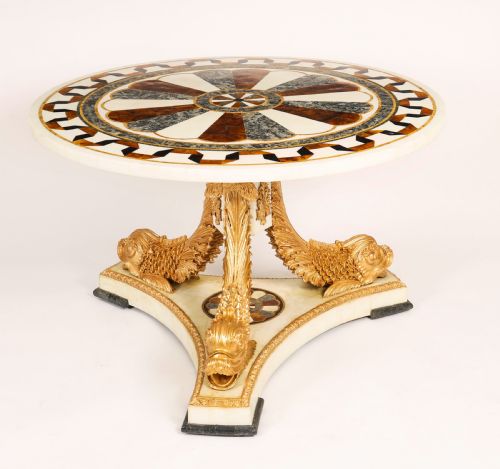
Some tables even feature carved dolphins holding up the marble, proving that furniture designers take marine life very seriously.
What varies in quality
Quality rests in the selection of the stone and the richness of the timber figure, such as burr elm or mahogany. Finer examples display crisper carving on neoclassical dolphins and giltwood elements.
The weight and stability of the marble base relative to the top determine the physical balance of the piece. Superior construction shows seamless integration between metal mounts, stone, and wood.
B Battioli, Varese
The Round Marble Base Table Glossary
- Guéridon
- A small French round table supported by a central pillar or columns. These pieces often feature marble tops and heavy bases.
- Ormolu
- Gilt bronze mounted on furniture as decorative trim. This technique appears frequently on French Empire examples.
- Burr Elm
- A highly figured timber prized for swirling grain patterns. Cabinetmakers utilised this wood on nineteenth century occasional tables.
- Neoclassical Revival
- A style drawing on classical Greek and Roman motifs. Pieces in this manner often incorporate dolphin supports and strict symmetry.
Round Marble Base Table: Frequently Asked Questions
Where do I put a round marble base table?
These tables suit hallways as centrepieces or living rooms as coffee and side tables. Their compact circular shape allows them to fit easily beside seating.
The heavy stone base provides reliable stability for lamps, books, or decorative objects. They work effectively in both traditional reception rooms and bright conservatories.
How do I care for the marble top?
Wipe the surface regularly with a soft, damp cloth to remove dust and daily grime. Avoid acidic cleaners that can etch the polished stone.
Use coasters under glasses to prevent liquid rings from forming on the marble. Professional sealing helps protect vulnerable stone against accidental spills.
Are these tables French in origin?
Many examples on this page hail from France, particularly nineteenth century guéridons and bistro tables. French Empire and Louis Philippe styles dominate the selection.
Other pieces originate in England and Italy, bringing different regional timbers and metalwork into the mix. Each regional tradition applies distinct decorative treatments to the base.
How do I identify an Empire style table?
Empire style pieces often feature dark mahogany timbers paired with striking gilt bronze or ormolu mounts. Neoclassical motifs like dolphins and classical columns frequently appear.
Heavy circular marble tops and robust central pedestals define the silhouette. The overall aesthetic emphasises symmetry, proportion, and formal dignity.