



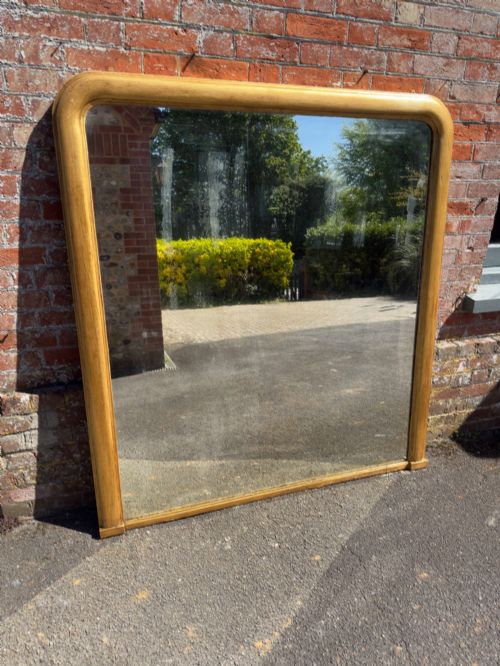

Round Gold Frame
A round gold frame brings undeniable presence to a room, holding mirrors, portraits, and prints with classical poise.
Round Gold Frame
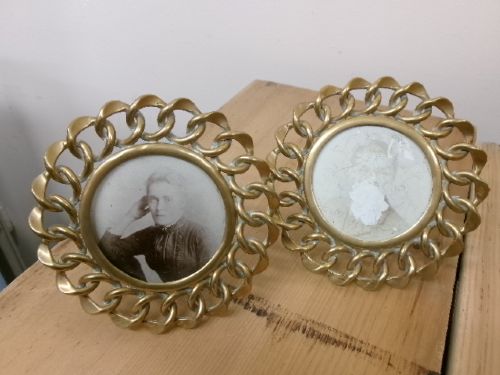
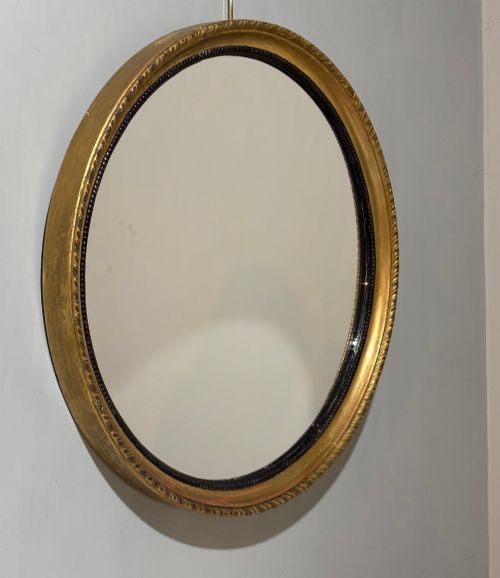
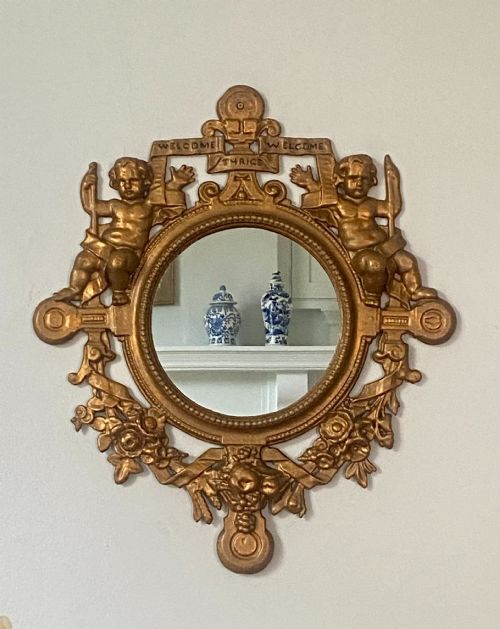
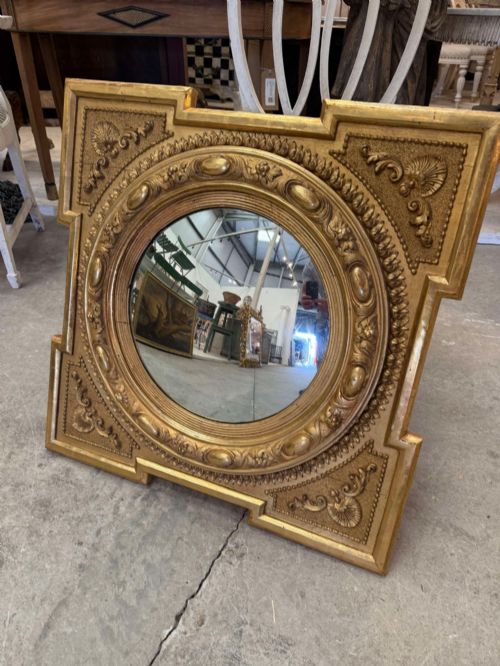
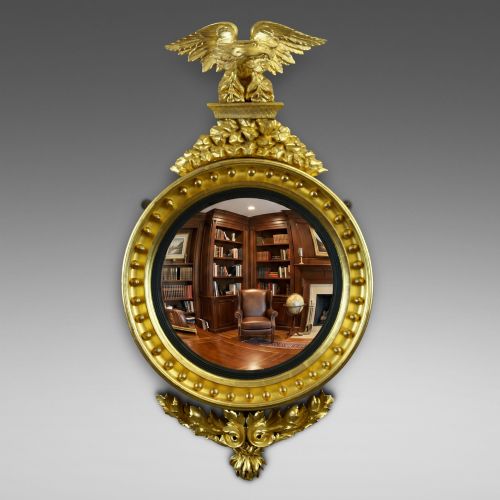
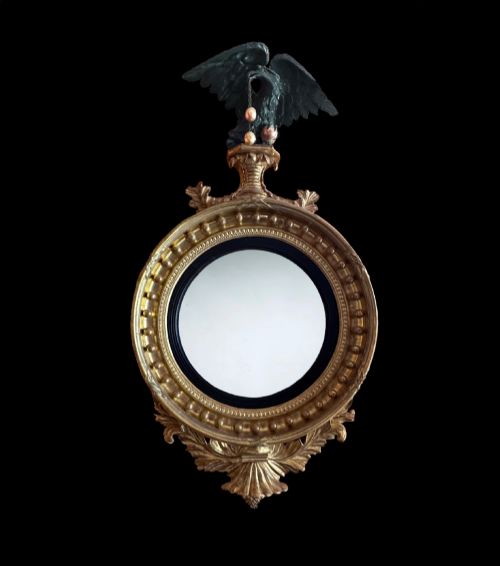
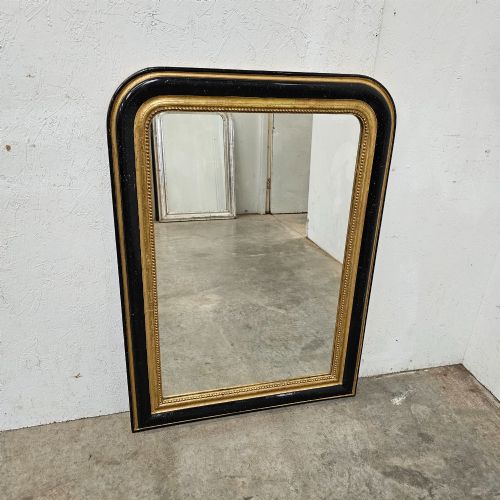
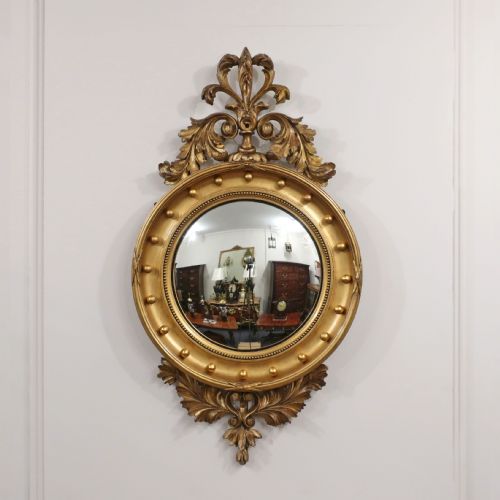
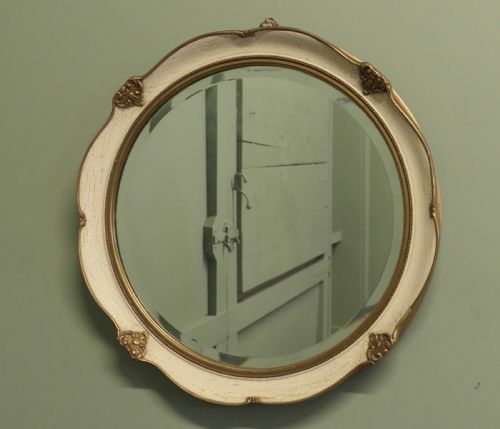
When you search for a round gold frame, you find a collection dominated by circular wall mirrors, convex glasses, and framed works from the nineteenth century and the Regency period. These pieces range from small porthole mirrors to grand convex wall glasses with deep gilded surrounds.
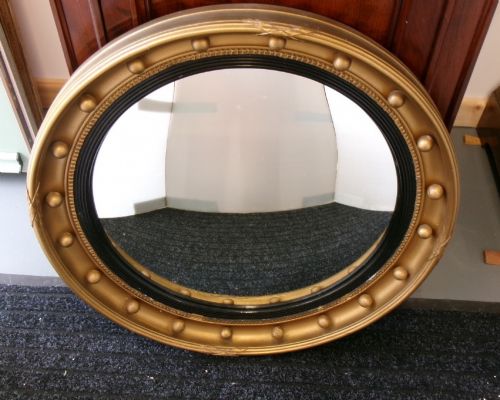
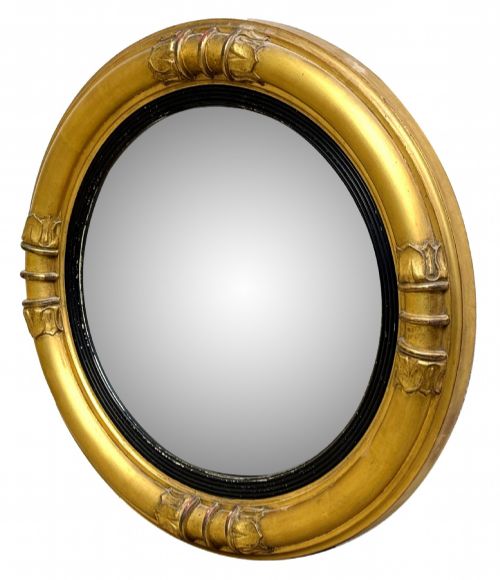
The most common examples on this page are convex mirrors from the Regency and Victorian eras, often featuring carved gesso and giltwood frames. Alongside these circular mirror glasses, you encounter occasional portraits and watercolours housed in gilded circular surrounds.
Makers and craftsmen of the nineteenth century utilised circular formats to bounce light into darker corners of period rooms. The circular wooden or iron body draws the eye immediately, functioning as both an optical instrument and a piece of wall art.
How they were made
The foundation of these frames typically relies on carved wood or cast iron, coated in layers of gesso to build up crisp decorative details. Craftsmen then applied gold leaf or gilt finishes directly over the prepared surfaces to achieve a bright metallic sheen.
Mirror glasses within these circular frames include mercury glass and standard plate glass, sometimes exhibiting foxing and age spots after a century or more. Frames from the Regency period often incorporate ebonised wood details alongside the primary giltwood elements to create visual contrast.
Round Gold Frame Retail Price Guide 2026
Typical asking prices for round gold frame among the pieces listed under this phrase on Sellingantiques today, from the lower quarter to the upper quarter. They describe what is for sale here now, not the wider market.
Some Victorian convex mirrors were affectionately called butler's mirrors because they let staff keep an eye on the dining table from the corner.
What varies in quality
The depth of carving and the crispness of the gesso ornamentation separate standard production from superior examples. Better pieces display sharply defined mouldings and retain their original gilding rather than modern resprays.
The quality of the glass itself dictates the overall appeal, particularly when original mercury plates remain intact within the circular frame. Frames that maintain their structural integrity without heavy shrinkage cracks in the wood command greater respect.
Coalbrookdale
The Round Gold Frame Glossary
- Giltwood
- Wood that has been coated with gold leaf or a gold-coloured metallic finish. This surface treatment provides the characteristic bright reflection seen on period frames.
- Gesso
- A plaster-like mixture applied to wood frames to create a smooth surface for carving or moulding details. It allows intricate relief work before gilding takes place.
- Convex mirror
- A round mirror with a curved surface that reflects a wide, distortion-rich view of the room. These are frequently housed in deep circular frames.
- Mercury glass
- A type of double-walled glass blown in the nineteenth century with a silvering mixture inserted between the layers. It often develops dark foxing spots over time.
- Foxing
- Age-related spots and discoloration appearing within the silver backing of mirror glass. Collectors often view this natural weathering as a mark of authenticity.
Round Gold Frame: Frequently Asked Questions
How do I hang a heavy giltwood mirror?
Hanging a heavy circular frame requires secure fixings directly into wall studs or masonry rather than standard plasterboard hooks. The weight of the timber and gesso construction demands robust steel brackets.
Ensure the hanging wire or integrated metal rings on the reverse are strong enough to support the full load. Professional installation is advisable for larger pieces to prevent accidents.
How do I clean an antique gold frame?
Dust the gilded surface gently using a very soft dry brush or a feather duster. Avoid applying moisture, modern cleaning sprays, or abrasive cloths which can strip the delicate gold leaf.
Water and chemical solvents will damage both the gesso and the underlying wood. Regular gentle dusting preserves the fragile metallic finish without causing harm.
How do I date a round gold frame?
Dating relies on examining the construction methods on the reverse of the frame, the composition of the gesso, and the type of glass used. Regency frames often feature distinct reeded details and specific ball mouldings.
Nineteenth-century pieces show tool marks and material ageing consistent with period production techniques. Comparing the style to documented examples helps narrow down the decade of manufacture.