





Round Glass Table
A round glass table brings a clean, reflective surface to a room, offering practical utility while keeping visual space open and uncluttered.
Round Glass Table
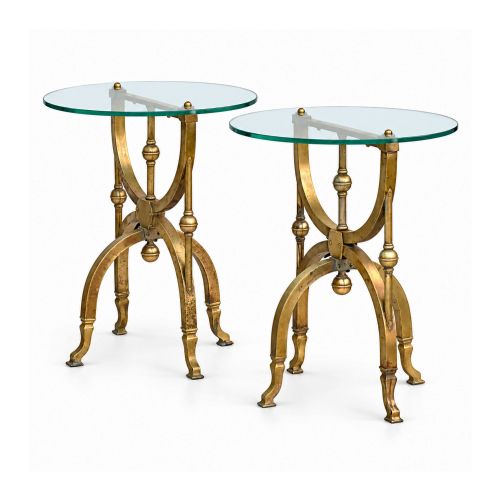
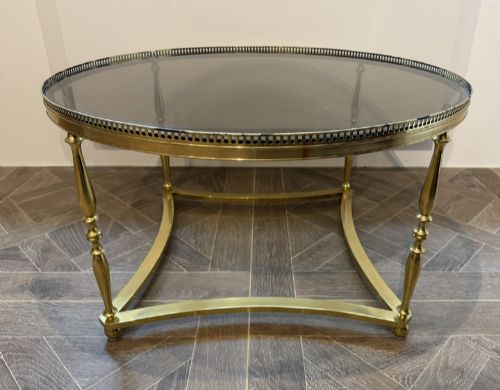
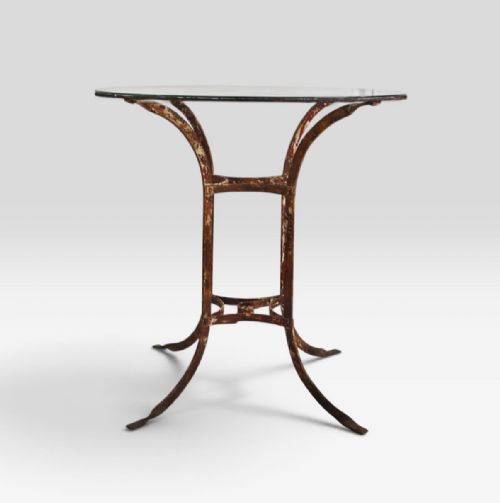
A round glass table spans several distinct forms, ranging from side and coffee tables to garden furniture and low display surfaces. These pieces appear across multiple historical periods, including the Georgian era, Victorian times, and the 1920s and 1930s Art Deco movement.
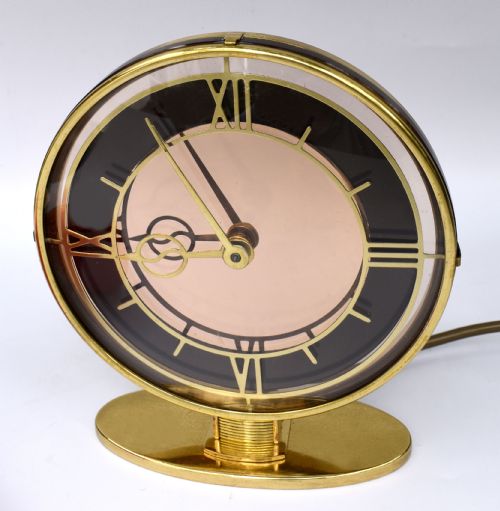
Buyers are most likely to encounter tables featuring brass frames, carved walnut, wrought iron, or chrome structures paired with transparent or smoked glass tops. Alongside conventional tables, the selection includes related glazed vitrines, mantel clocks, and mirror plateaus that share similar decorative vocabulary.
How they were made
The construction of these pieces relies on combining rigid structural frames with fitted glass surfaces or mirror plates. Metal elements utilise brass, rhodium plating, and wrought iron, whilst wooden counterparts incorporate walnut, rosewood, and kingwood.
Makers shaped structural supports through carving, folding mechanisms, and metal casting, securing glass inserts into brass or wooden bezels. Decorative finishes frequently involve etched detailing on the glass or painted highlights on the framework.
Round Glass Table Retail Price Guide 2026
Typical asking prices for round glass table among the pieces listed under this phrase on Sellingantiques today, from the lower quarter to the upper quarter. They describe what is for sale here now, not the wider market.
Listings span periods from the 18th century through the Victorian era into the 1920s, 1930s, and 1960s.
What varies in quality
Quality reveals itself in the weight and finish of the framework, whether it is cast brass, solid carved walnut, or plated metal. Superior examples exhibit crisp detailing in the metalwork and precise joinery in any wooden supports.
The integration of the glass top into the surrounding frame also marks the standard of manufacture. Well-made pieces ensure a secure, flush fit between the transparent or smoked surface and its supporting structure.
The Round Glass Table Glossary
- Bijouterie table
- A glazed display table designed to hold small ornaments and valuables. These pieces often feature hinged glass tops and velvet-lined interiors.
- Art Deco
- A design style from the early twentieth century characterisable by geometric abstraction and modern industrial materials like chrome and glass. It emerged strongly in the 1920s and 1930s.
- Smoked glass
- Darkened transparent glass utilised in table tops and decorative panels. This material gained popularity for its subdued, atmospheric reflection.
- Centre table
- A freestanding table designed to be viewed from all sides rather than pushed against a wall. These forms occupy prominent positions in larger rooms.
- Rhodium plating
- A metallic coating applied to underlying surfaces to provide a durable, bright finish. It appears on mid-century items to prevent tarnishing.
Round Glass Table: Frequently Asked Questions
Where should I place a round glass table?
These tables suit reception rooms, studies, or hallways where their reflective surfaces can bounce light around the space. Their compact shapes work well in corners or as central accents.
Because the materials include brass, wood, and iron, consider the surrounding furniture tones to ensure the frame complements the existing interior palette.
How do I clean the glass surface?
Use a soft cloth and standard glass cleaner to maintain clarity without scratching the material. Avoid abrasive pads that might damage surrounding metal or wooden bezels.
Take care around etched or mirrored sections to prevent moisture from seeping behind the plate edges during routine wiping.
Are these tables sturdy enough for daily use?
Frames constructed from solid walnut, cast brass, or wrought iron provide robust support for everyday living. The thickness and setting of the glass determine the load capacity.
Occasional tables and coffee variants handle normal placement of books and decorative objects comfortably, though heavier items require mindful positioning.
How can I tell the period of a table?
Stylistic markers offer the clearest indication of age, such as geometric chrome frames from the 1930s or heavily carved wooden cabriole legs from earlier eras. Materials like rhodium plating point directly to mid-century production.
Examining the underside joinery, screw types, and mounting techniques further helps distinguish Victorian cabinetwork from later twentieth-century manufacturing.