







Round China Cabinet
These round china cabinet pieces combine bold geometric curves with practical storage, offering the ideal showcase for fine porcelain and glassware.
Round China Cabinet
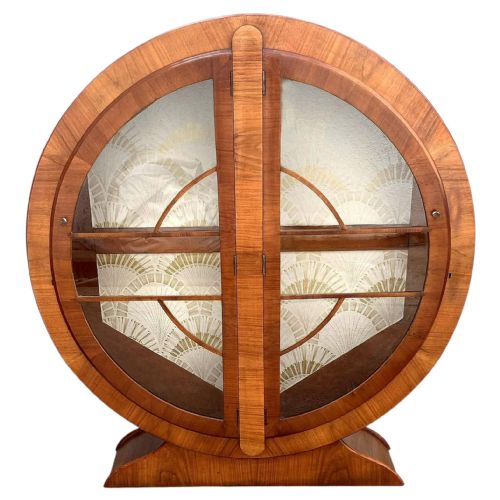
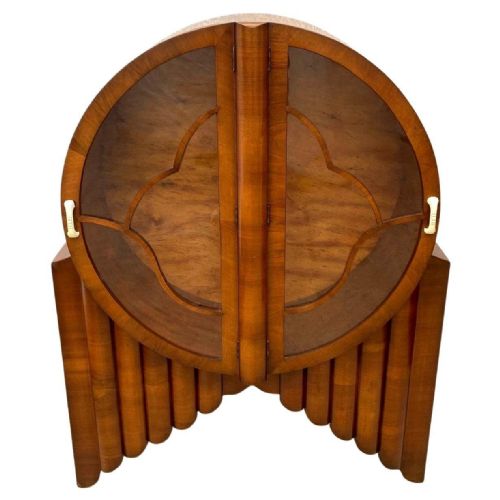
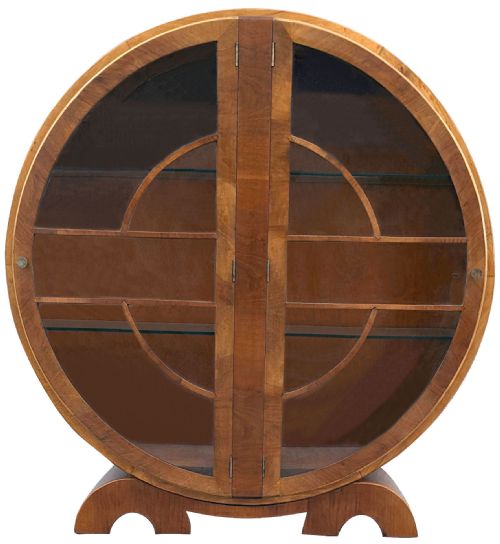
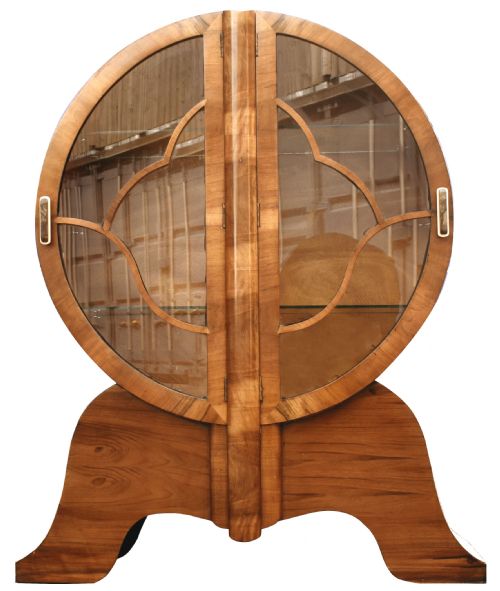
A round china cabinet brings the striking geometry of the interwar period into a domestic interior, serving as both a storage unit and a display piece. These items date from around nineteen thirty and follow the distinctive Art Deco aesthetic.
Most examples found here take the form of circular or curved vitrines designed to make the most of limited floor space while offering panoramic views of the contents. Makers employed clever silhouettes, including clove shapes and rocket cabinet profiles, to break away from traditional rectangular furniture.
English workshops of the nineteen thirties produced these display cabinets to house prized china and glassware collections. The curved glazed doors draw the eye directly to the shelves within, creating a focal point in a dining room or drawing room.
Materials and construction methods
Cabinet makers relied primarily on walnut and walnut veneer, often selecting burr or figured walnut to exploit the natural grain patterns across the curved surfaces. Maple appears occasionally to provide a lighter contrasting element alongside the darker woods.
Glazing takes multiple forms, with leaded glass panels frequently dividing the door view into geometric segments. Metal and brass components provide structural support and subtle hardware accents, while interior linings often utilise fabric.
Round China Cabinet Retail Price Guide 2026
Typical asking prices for round china cabinet among the pieces listed under this phrase on Sellingantiques today, from the lower quarter to the upper quarter. They describe what is for sale here now, not the wider market.
Some cabinet makers abandoned strict circles entirely, dreaming up mischievous clove and rocket silhouettes to baffle future collectors.
Distinctions in craftsmanship and finish
The choice of wood veneer dictates much of the visual appeal, with highly figured burr walnut creating far more dramatic surface movement than plain timber. Exceptional execution shows in the seamless wrapping of veneer around tight circular frames without buckling.
Glazing technique also separates standard production from superior pieces, particularly where leaded glass or complex curved panes demand precise joinery. The alignment of doors and the integration of internal shelving reveal the maker's underlying skill.
The Round China Cabinet Glossary
- Art Deco
- A design style of the nineteen thirties characterised by sleek geometric shapes, streamlined forms and modern industrial materials. It replaced the ornate floral motifs of earlier decades with bold, symmetrical lines.
- Vitrine
- A glass-fronted display cabinet intended for showing porcelain, curiosities or glassware. The transparent panels allow visibility from multiple angles.
- Burr Walnut
- A specialised wood cut from a tree growth or burl, yielding intricate, swirling grain patterns. Cabinet makers prize it for high-end decorative veneering.
- Veneer
- A thin slice of superior wood applied over a stable secondary timber base. This technique prevents warping while displaying expensive grain figures.
- Leaded Glass
- Glass panes held together by narrow strips of lead came to form geometric or decorative patterns. It adds structural division and traditional texture to cabinet doors.
Round China Cabinet: Frequently Asked Questions
What is a round china cabinet?
A round china cabinet is a display piece featuring curved or circular wooden framing and glass panels. It was designed during the interwar period to hold and exhibit porcelain collections.
These items use their unusual geometry to fit corners or act as freestanding focal points in a room. The curved glass provides uninterrupted visibility from various angles.
When were round china cabinets made?
The examples available date primarily from around nineteen thirty, firmly within the Art Deco era. English workshops drove much of this particular production.
Designers of this period favoured curved silhouettes and modern materials over historical revivals. This specific era produced the distinctive rocket and clove shapes seen in these listings.
What woods were used for these cabinets?
Walnut and walnut veneer form the primary structure of almost every piece in this category. Makers selected burr and figured walnut varieties to create rich, patterned surfaces.
Maple appears occasionally to offer a contrasting lighter tone against the dark walnut body. Brass, metal, and lead are incorporated into the hardware and glazing.