
Round Center Table
A round centre table anchors a room with its circular form, offering a functional surface designed to stand free in an interior rather than against a wall.
Round Center Table
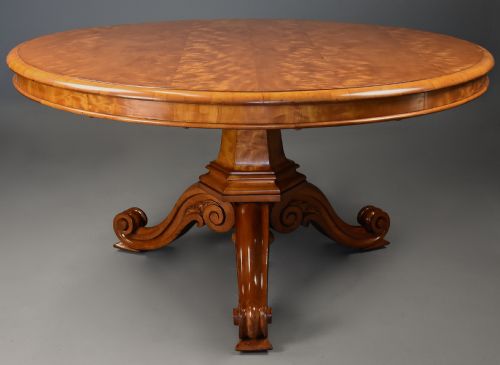
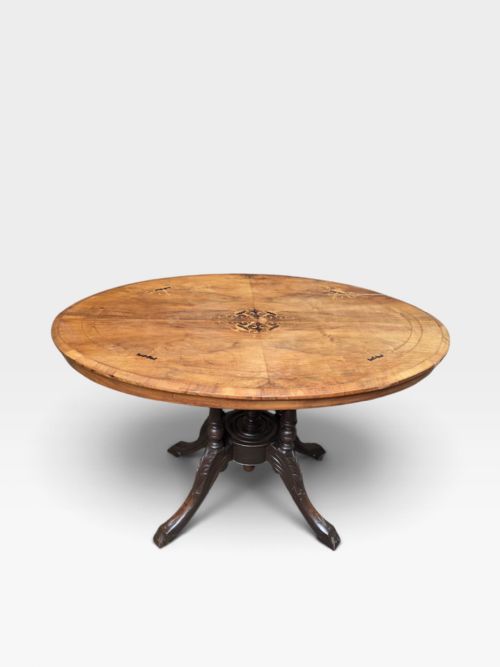
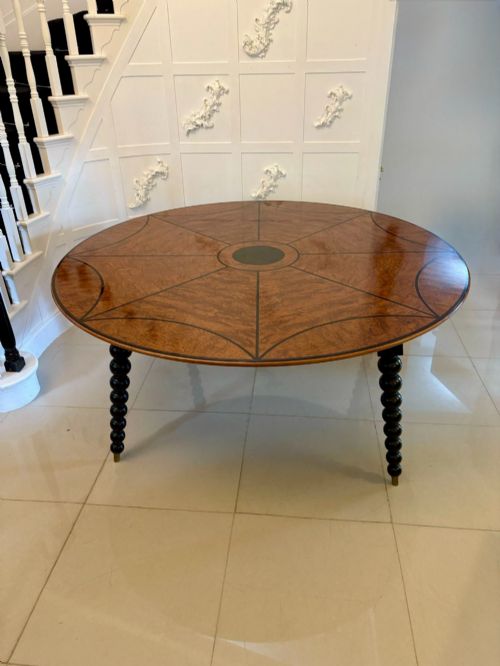
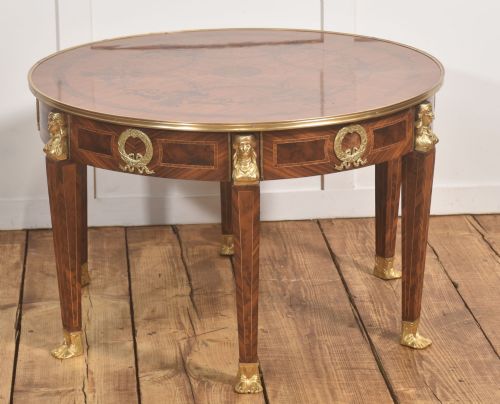
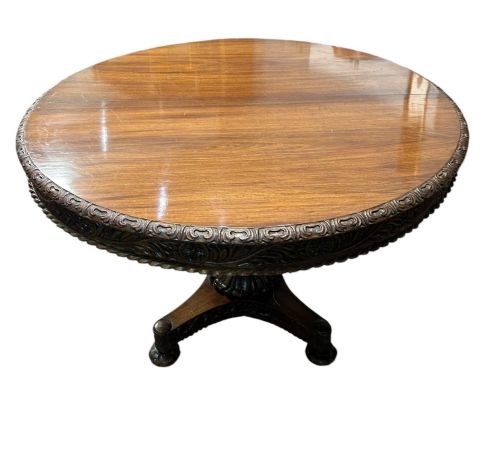
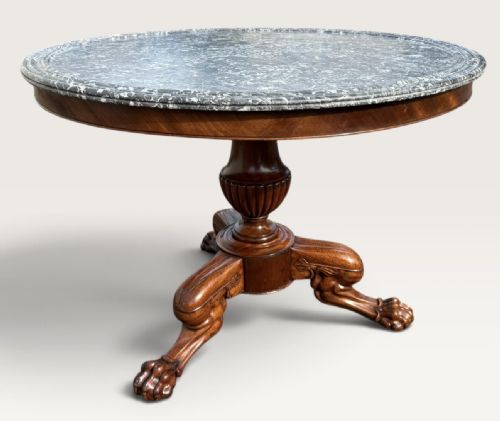
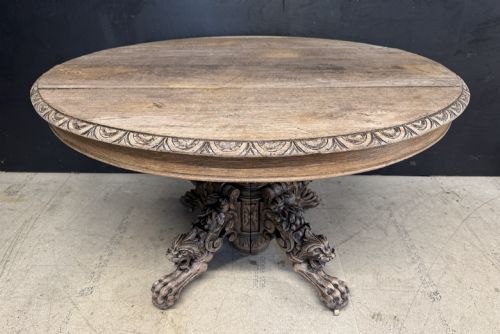
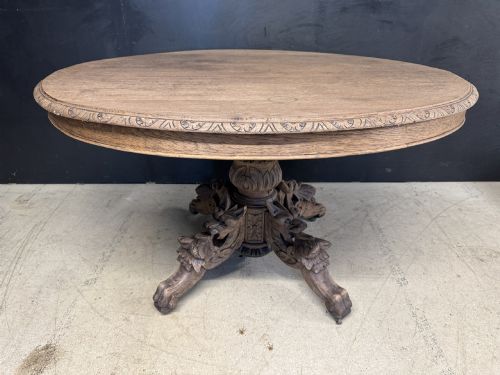
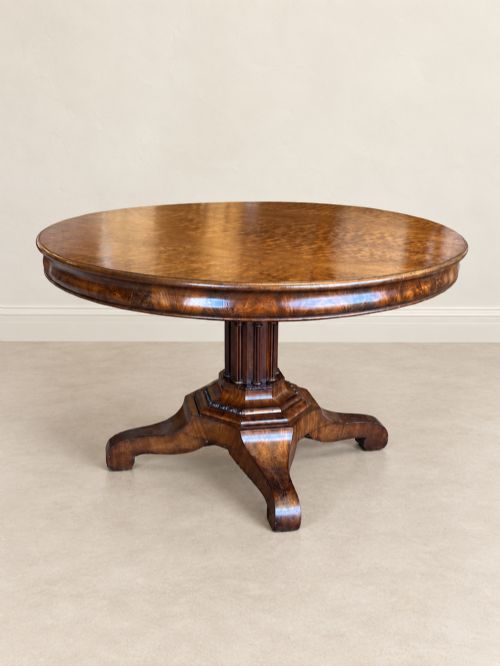
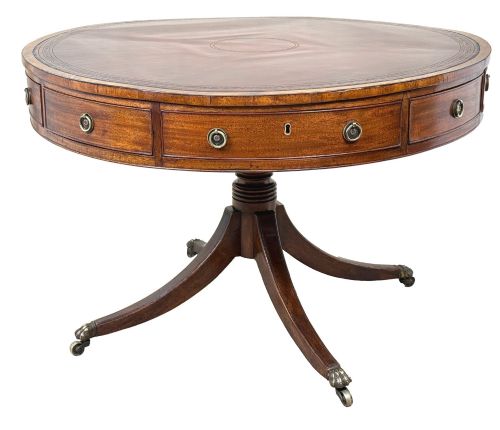
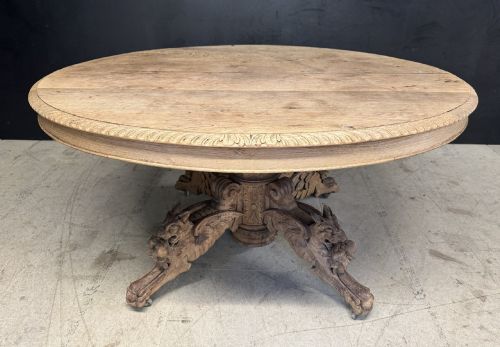
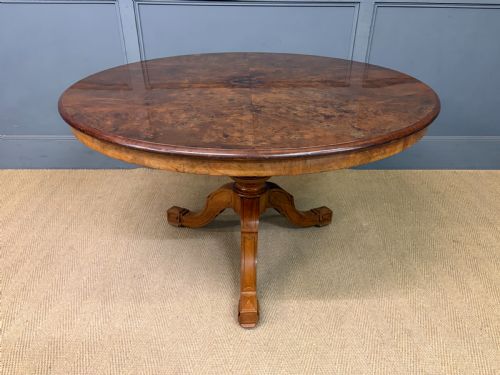
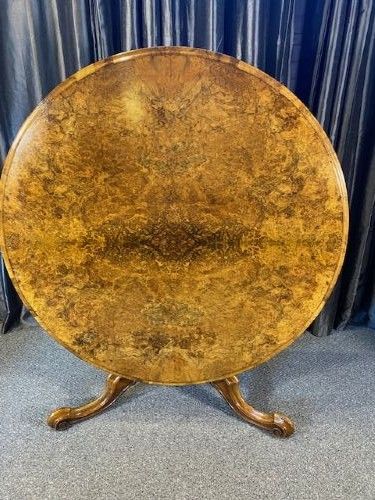
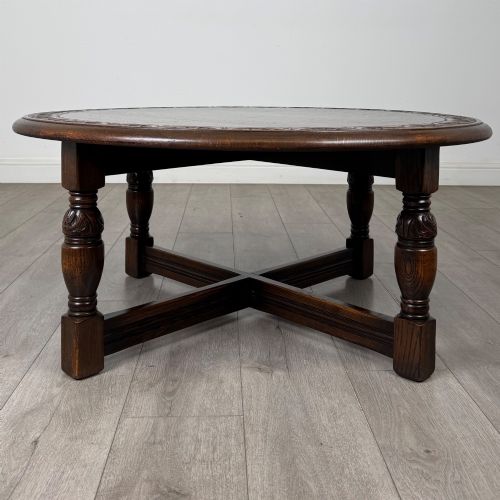
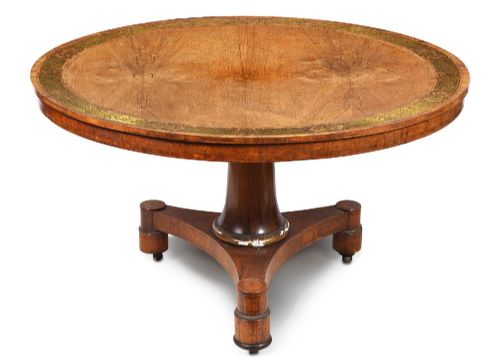
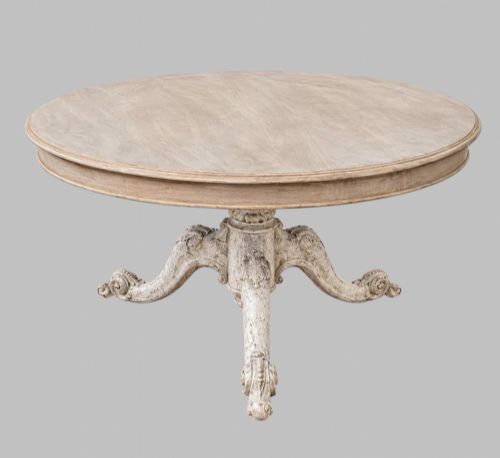
When searching for a round centre table, buyers encounter freestanding circular tables designed to sit in the middle of a room rather than against a wall. The pieces appearing here span the nineteenth century, the Edwardian period and the early twentieth century, showing influences from Regency, William IV, Victorian and French Empire eras. Forms include guéridons, breakfast tables, dining tables and occasional tables.
The most common versions met on this page are nineteenth-century rosewood and mahogany examples, frequently featuring central pedestals and circular tops. French influence appears often through the guéridon form, alongside British Victorian library and dining tables. Walnut, burr walnut and painted finishes also occur regularly across these periods.
How they were made
Cabinet makers utilised dense hardwoods such as mahogany, rosewood, padauk and walnut, often applying veneers and intricate marquetry over secondary timbers. Flame mahogany and burr walnut provided decorative grain patterns across the circular tops, while brass fittings and giltwood details offered contrast.
Pedestal bases frequently relied on heavy triform or circular plinths weighted to support the expansive circular tops. Marble inserts, leather tops and paint finishes added alternative surface textures to the polished wood constructions.
The listings here include circular tables spanning from the early nineteenth-century Georgian and Regency eras through the Victorian period into Edwardian and Art Deco designs.
What varies in quality
The division between ordinary and exceptional pieces rests on the choice of timber and the precision of the cabinet work. Superior examples display carefully matched veneer grains across segmented circular tops and refined carving on pedestals and bases.
Proportion and stability determine the success of the construction, as heavy marble or timber tops require robust internal framing and solid joinery. Signed pieces or those retaining original brass mounts and secret drawers hold a distinct standing in the range.
Edwards & Roberts·Maples & Co·Peters of Genoa·Gillows
The Round Center Table Glossary
- Guéridon
- A small French round table, often supported by a central pillar and used for display or as an occasional piece. These tables frequently feature marble tops and decorative wood veneers.
- Marquetry
- The art of applying pieces of veneer to a structure to form decorative patterns and pictures. Makers utilised contrasting timbers to create elaborate geometric or floral designs on table tops.
- Tilt top
- A mechanism allowing the circular table top to pivot vertically for storage against a wall when not in use. This construction was common in breakfast and supper tables from the nineteenth century.
- Triform base
- A three-sided pedestal support providing stability for a heavy circular table. It often sits upon scrolled feet or castors.
- Padauk
- A dense tropical hardwood known for its deep reddish-brown colour. Cabinet makers used this durable material for fine nineteenth-century tables.
Round Center Table: Frequently Asked Questions
What is a round centre table used for?
These tables served various domestic functions depending on their size and height, ranging from breakfast and dining to displaying decorative objects in the middle of a room. Their freestanding design allowed access from all sides.
Smaller guéridons and occasional tables held lamps or books, while larger tilt-top and dining versions anchored principal reception rooms.
How do I tell Regency from Victorian tables?
Regency tables typically display restrained classical lines, often utilising dark mahogany or rosewood with minimal brass inlay and crisp pedestal geometry. They reflect early nineteenth-century neoclassical tastes.
Victorian pieces frequently introduce heavier proportions, bolder carved details, and richer burr veneers or marquetry work as industrial techniques allowed more elaborate decoration.
Can I use a breakfast table for dining?
Many nineteenth-century breakfast tables were built with sturdy central pedestals and generous circular tops suited for informal meals. Their freestanding nature makes them adaptable for modern dining spaces.
Check the height and legroom beneath the tilt-top mechanism to ensure comfortable seating for daily use.
What woods were used for these tables?
Makers relied heavily on mahogany and rosewood throughout the nineteenth century, often selecting figured veneers such as flame mahogany or burr walnut for the top surfaces. Walnut, satinwood, oak and padauk also appear.
Exotic timbers were imported to create striking grain patterns and rich dark tones favoured by period cabinet makers.