




Round Carved Wood Mirror
A round carved wood mirror brings immediate depth and reflected light to a room, drawing the eye instantly to its circular frame.
Round Carved Wood Mirror
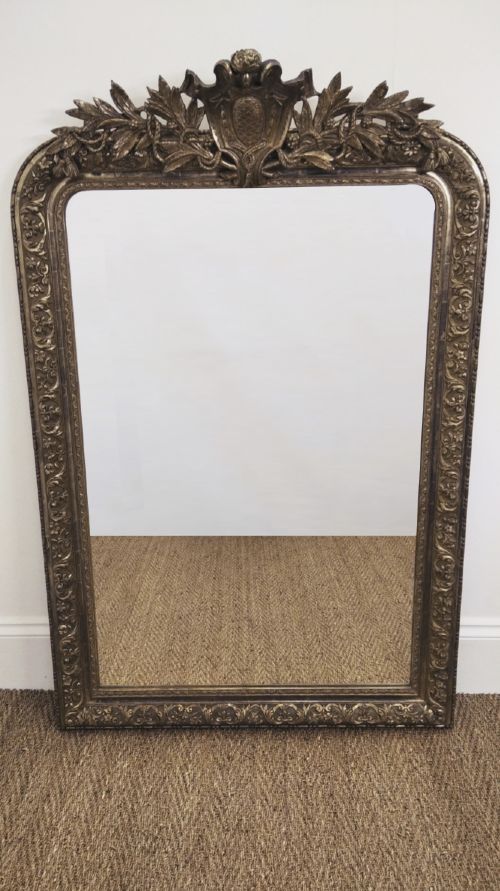
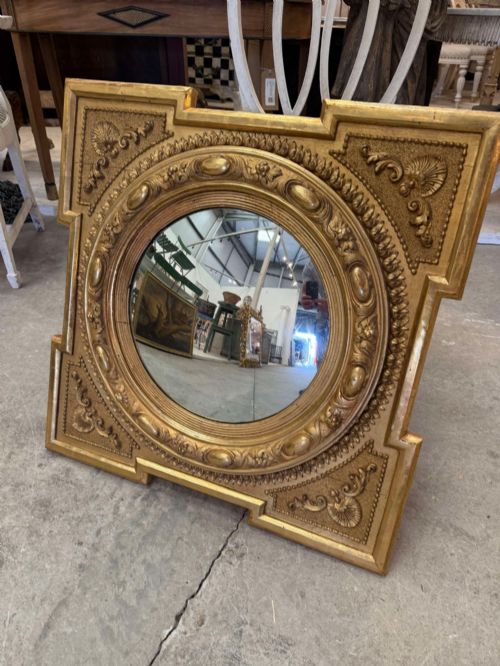
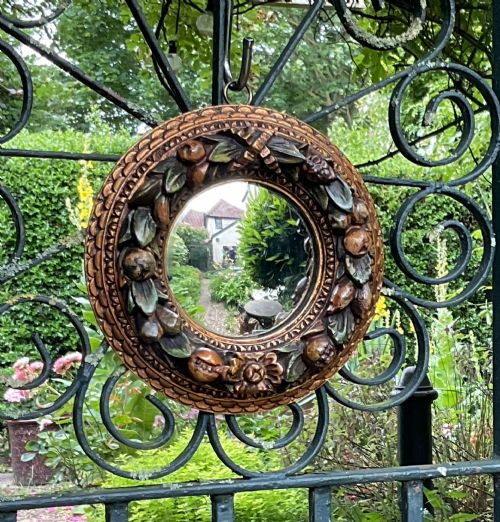
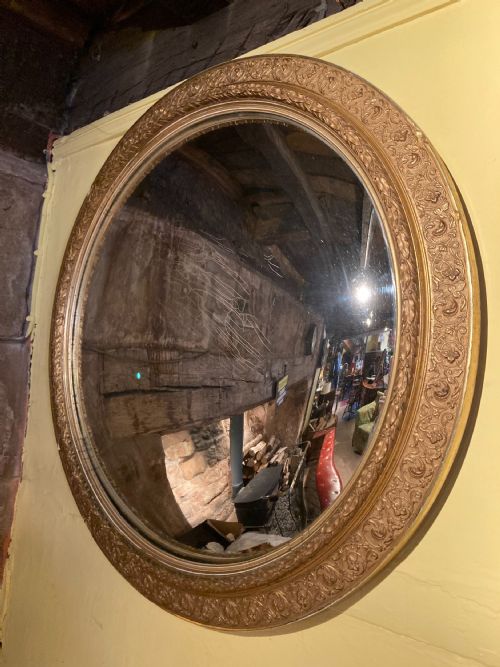
A round carved wood mirror typically presents a convex or circular glass plate held within a timber, gesso, or giltwood frame. These pieces span the Regency, Victorian, and early twentieth-century periods, alongside styles such as Florentine Rococo and Arts and Crafts.
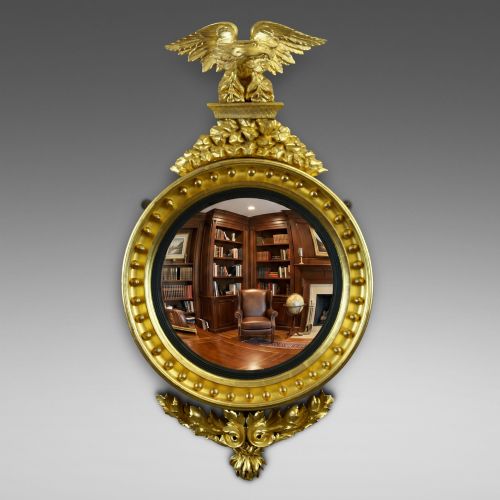
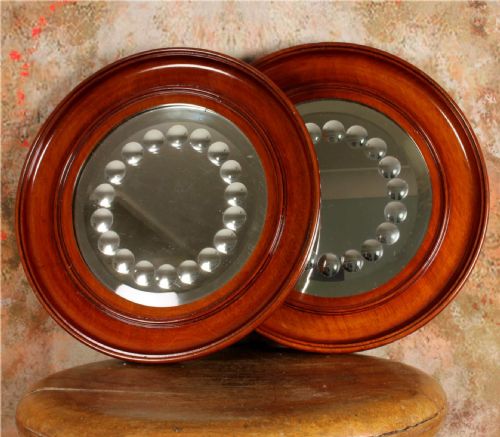
Convex and witch mirror variations appear frequently, often featuring moulded frames, ebonised details, or decorative crests like eagles. Buyers will also encounter circular mahogany designs and architectural overmantel or wall formats dating from the nineteenth century onward.
Materials and construction
Frames are built from carved wood, timber, and mahogany, frequently layered with gesso to build up intricate relief decoration before gilding. Giltwood finishes provide a metallic sheen across the wooden mouldings and decorative elements.
Mirror glass plates are set within these heavy timber structures, sometimes shaped as convex or arched top panels. Traditional joinery and hand-carving techniques define the frames across both nineteenth-century and twentieth-century examples.
Round Carved Wood Mirror Retail Price Guide 2026
Typical asking prices for round carved wood mirror among the pieces listed under this phrase on Sellingantiques today, from the lower quarter to the upper quarter. They describe what is for sale here now, not the wider market.
Listings feature wood, gesso, and giltwood materials across nineteenth-century and early twentieth-century periods.
Judgements of quality
The crispness of the hand-carved detail within the wood or gesso frame distinguishes finer examples from simpler production. Preservation of the original gilding and the depth of the moulded decoration also influence the character of each piece.
The clarity and age of the mirror glass plate, whether flat or convex, contribute to the overall integrity of the object. Heavier timber construction and balanced proportions indicate superior craftsmanship across different periods.
The Round Carved Wood Mirror Glossary
- Convex mirror
- A curved mirror glass that creates a wide-angle, distorted reflection of the room. It is commonly found in Regency and Victorian round wall mirrors.
- Giltwood
- Wood that has been coated with a thin layer of gold leaf. This finish is typical on nineteenth-century decorative frames.
- Gesso
- A plaster-like mixture applied to wood frames to create a smooth surface for carving and gilding. It allows for intricate relief ornamentation.
- Ebonised wood
- Timber treated to resemble ebony, providing a dark, contrasting finish. This treatment appears on selected nineteenth-century frames.
- Overmantel mirror
- A large mirror designed to hang above a fireplace mantel. Examples often incorporate arched tops and carved wooden frames.
Round Carved Wood Mirror: Frequently Asked Questions
Where should I hang a convex mirror?
A convex mirror works best on a focal wall where its wide-angle reflection can capture the entire room. Placing it opposite a window maximises the natural light it brings into the space.
Avoid hanging these mirrors in narrow corridors where the curved reflection cannot be appreciated from a distance. They suit living rooms, halls, and dining spaces as a central decorative point.
How do I date a gilded wooden mirror?
Dating relies on examining the construction of the wooden frame, the preparation layers beneath the gilding, and the backing materials. Earlier nineteenth-century pieces often show hand-cut timber joints and heavier gesso application.
Twentieth-century examples tend to display more uniform machine working and different chemical compositions in the mirror glass. Comparing the frame style with documented period designs helps confirm the era.
What is a witch mirror?
A witch mirror is a historical term for a convex circular mirror popular during the Regency and Victorian periods. Their curved glass was traditionally believed to protect homes by reflecting intruders and warding off evil spirits.
Today, they are valued for their distinctive optical effect and decorative frames. They bring a strong focal point and historic character to interior schemes.