






Round Brilliant Engagement Ring
A round brilliant engagement ring delivers classic sparkle, spanning periods from Edwardian designs to later twentieth-century styles.
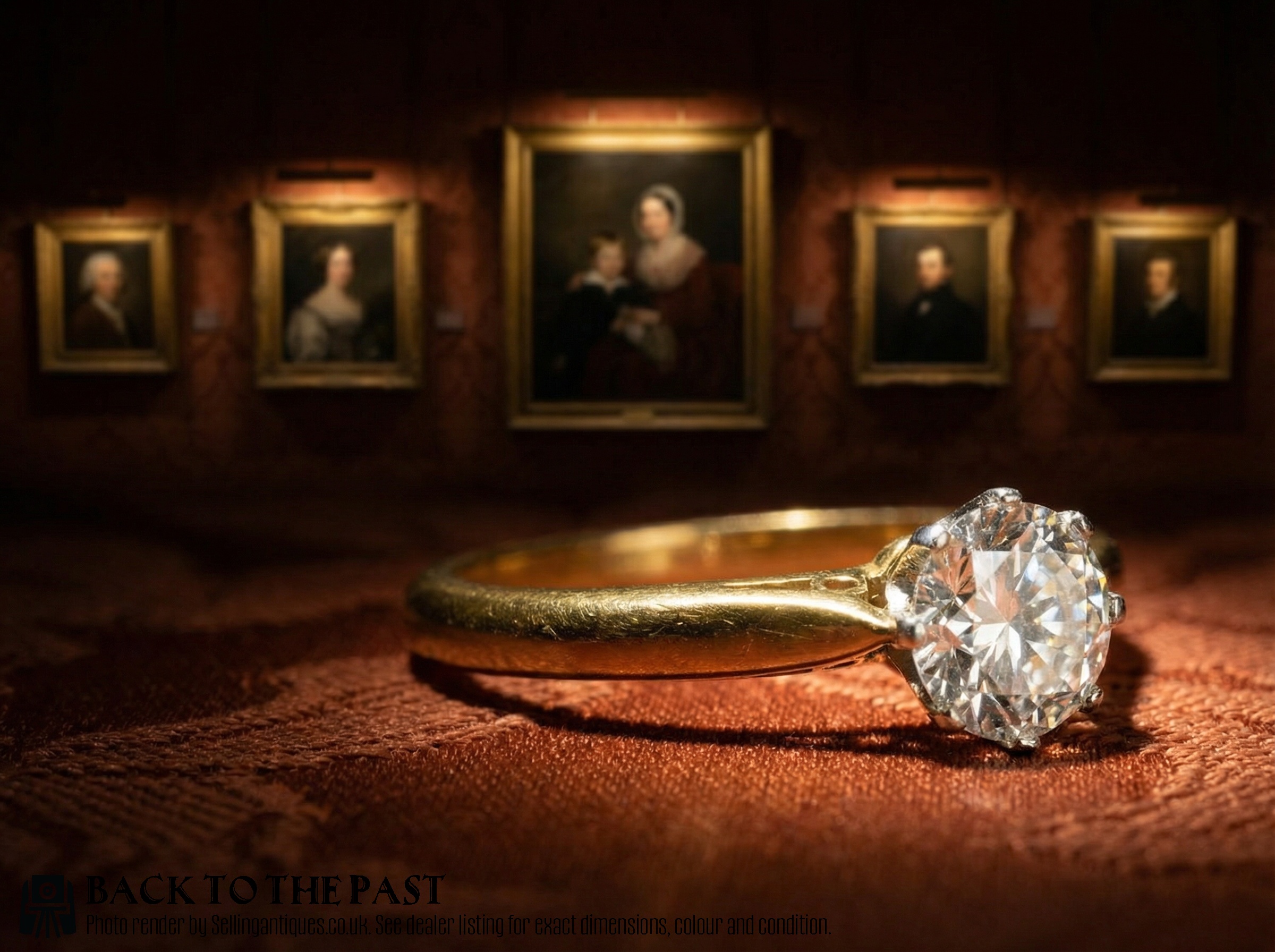
Round Brilliant Engagement Ring
A round brilliant engagement ring is a finger ornament centred on a faceted diamond, appearing across Edwardian, Art Deco, and mid-century periods. The selections here range from single-stone solitaires to multi-stone trilogy and cluster formations.
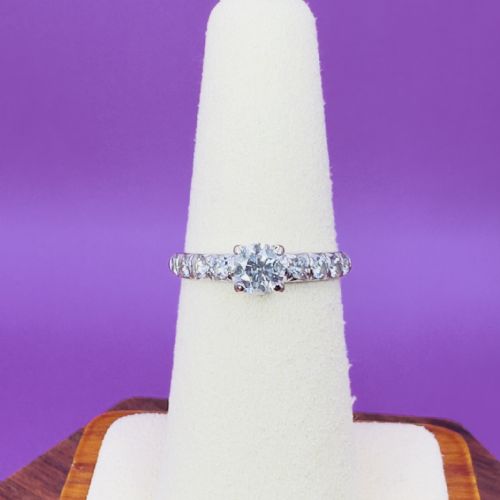
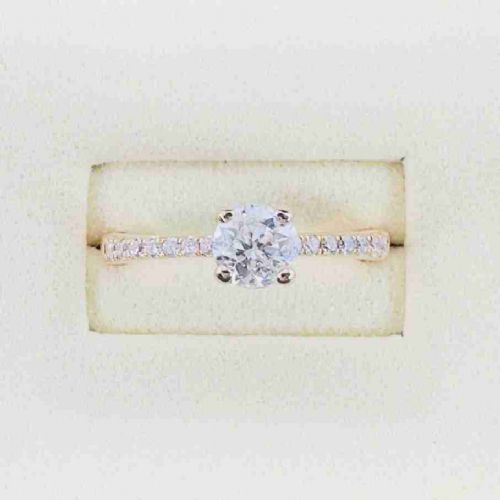
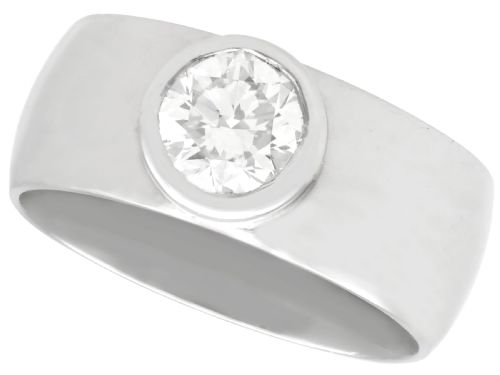
Solitaires dominate the available forms, often mounted with shoulder diamonds or set against plain metallic bands. Buyers meet these rings in decades spanning the 1920s through the 1960s and beyond.
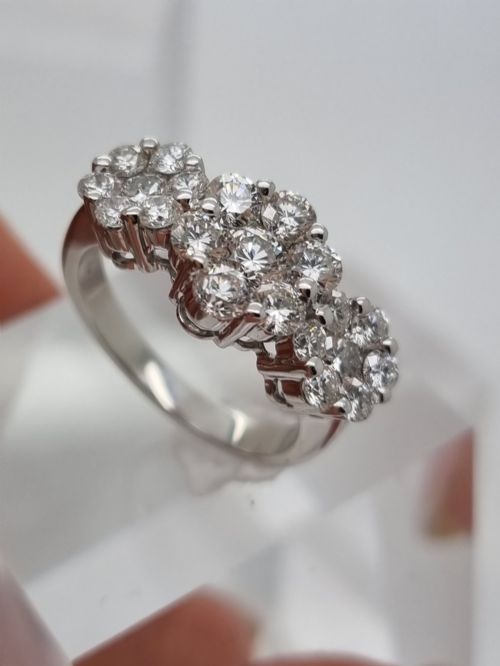
Cluster and trilogy configurations provide alternative layouts, grouping several stones together to create floral or geometric arrangements. These pieces utilise yellow gold, white gold, and platinum to secure the diamonds.
How they were made
The construction relies on precious metals such as platinum, 18ct white gold, 18ct yellow gold, and 14ct white gold to form the bands and settings. Metals are cast or forged to hold the central diamond securely in place.
Stones are cut into round brilliant, transitional, or rose shapes to maximise light reflection within the mountings. Skilled setters secure the diamonds using claws, bezels, or flush mountings integrated directly into the metal.
One cheerful daisy ring blooms entirely in gold and diamonds.
What varies in quality
Quality differences emerge in the weight, cut precision, and colour grading of the diamond itself, alongside the integrity of the precious metal setting. Heavier carat weights and higher colour grades distinguish superior examples.
The harmony between the central stone and its supporting shoulder diamonds or cluster arrangements determines the overall visual balance. Finer workmanship shows in the secure integration of small melee stones and the finish of the platinum or gold band.
The Round Brilliant Engagement Ring Glossary
- Solitaire
- A ring featuring a single diamond as the primary focal point. This traditional mounting style places the entire emphasis on one central stone.
- Trilogy
- A ring set with three stones representing past, present, and future. The central diamond is typically larger than the two flanking side stones.
- Cluster
- A setting style that groups multiple smaller diamonds tightly around a central stone or in a geometric pattern. This arrangement creates a larger overall visual impact on the finger.
- Platinum
- A dense, durable white metal prized for secure jewellery mountings. It holds small claws firmly without losing shape over decades of wear.
Round Brilliant Engagement Ring: Frequently Asked Questions
What periods do these rings come from?
The inventory spans the Edwardian era, the Art Deco 1930s, and mid-century decades up to the 1960s and later. Each period brings distinct mounting styles and metal choices.
Edwardian and Art Deco pieces favour intricate platinum work, while 1950s and 1960s examples often utilise 18ct white or yellow gold.
Which metals are used in these mountings?
Makers utilised platinum, 18ct white gold, 18ct yellow gold, 18ct rose gold, and 14ct white gold across these decades. Platinum was frequently chosen for its strength in fine Edwardian and Art Deco settings.
Gold variations appear widely in mid-century designs, sometimes paired with platinum heads to secure the white diamonds.
How should I wear an antique engagement ring?
Antique and vintage rings require mindful daily wear, particularly when featuring delicate platinum settings or older diamond cuts. Removing the ring during heavy manual tasks protects the metal and stones.
Regular checks by a jeweller ensure the claws holding the diamond remain tight and secure over time.