

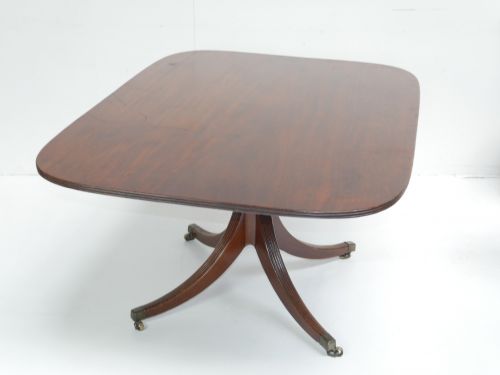


Round Brass Castor Table
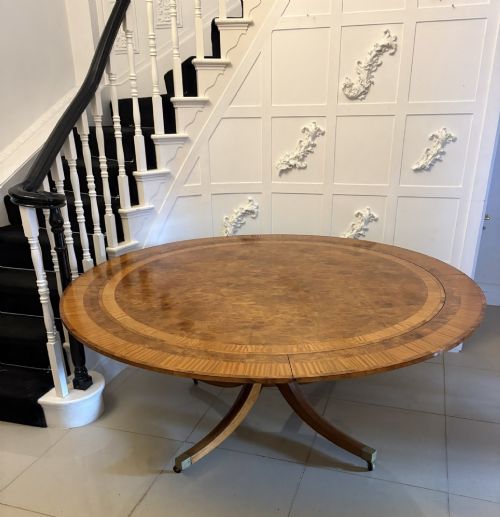
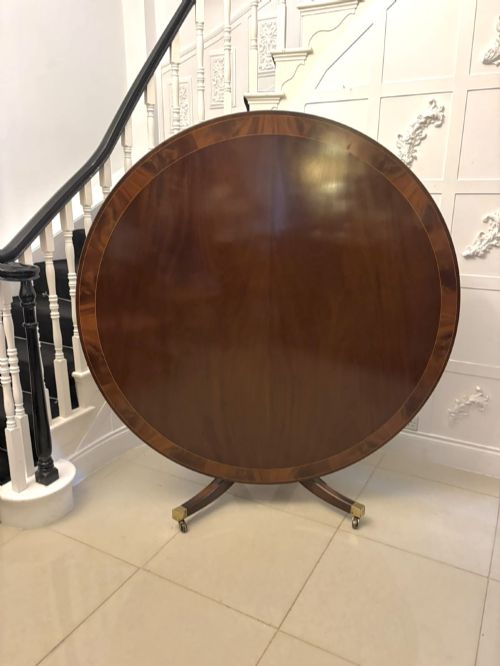
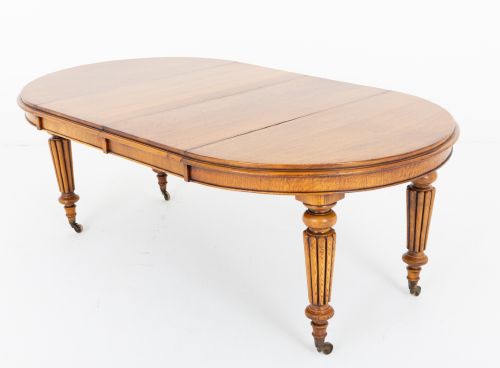
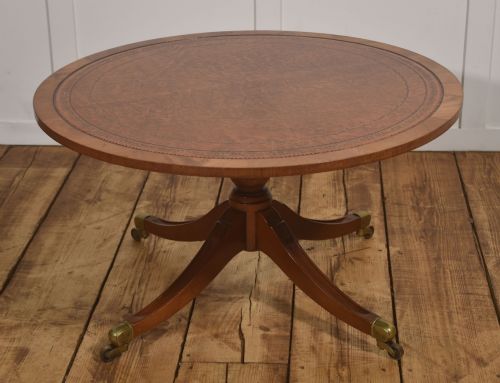
These round brass castor table pieces are robust circular furniture pieces fitted with metal wheel mounts, designed to move with ease.
Round Brass Castor Table
When you search for a round brass castor table, you are looking at circular tables supported on metal wheels, spanning periods from the eighteenth century to the twentieth century. These pieces appear in forms such as dining tables, centre tables, drum tables, and occasional tables.
The most common versions on this page are mahogany dining and drum tables dating from the Georgian, Regency, and Victorian periods, alongside later revivals. They serve practical functions in living spaces, libraries, and dining rooms while displaying traditional timber construction.
How They Were Made
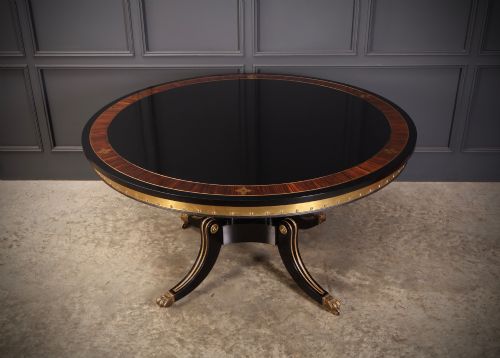
These tables are constructed primarily from timber such as mahogany, satinwood, rosewood, walnut, and burr walnut, frequently featuring figured crossbanded tops or brass inlay. The structural framework relies on solid wood joinery, supporting circular tops that may tilt, flip, or extend.
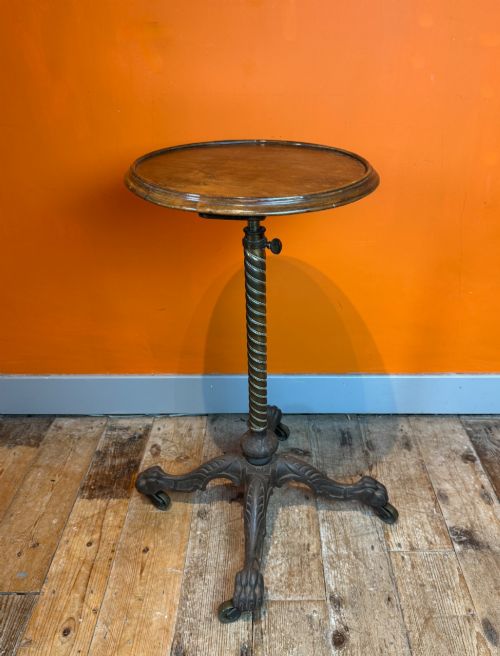
Metal components play a structural and decorative role, incorporating brass and cast iron in the bases, mechanisms, and castor wheels. These castors allow the heavy timber tables to be repositioned smoothly across floor surfaces.
Round Brass Castor Table Retail Price Guide 2026
Typical asking prices for round brass castor table among the pieces listed under this phrase on Sellingantiques today, from the lower quarter to the upper quarter. They describe what is for sale here now, not the wider market.
Some tables come equipped with secret drawers hidden within the deep wooden drum of the top.
What Varies in Quality
The standard of timber selection and preparation marks the primary difference across the range, with figured veneers and crossbanding showing greater care in execution. Superior examples display balanced grain patterns and precise inlay work on the circular tops.
The integrity of the mechanical elements, including tilt-top mechanisms, telescopic adjustable stands, and original brass castors, dictates the functional quality. Solid construction in the pillar and base supports ensures stability during daily use.
The Round Brass Castor Table Glossary
- Castor
- A small wheel mounted on a swivel assembly attached to the legs of a piece of furniture to allow easy movement. They are commonly cast from brass on these tables.
- Drum Table
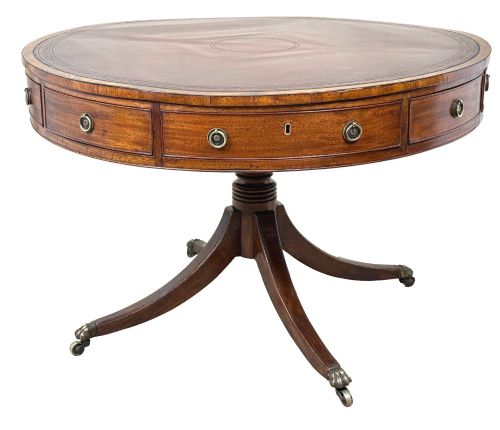
- A circular library or occasional table with a deep top containing drawers around the circumference, resting on a central pillar and base. They frequently date from the Georgian and Regency periods.
- Crossbanding
- A strip of veneer applied to the border of a table top so that the grain runs at right angles to the central wood. It creates a contrasting decorative frame.
- Tilt-Top
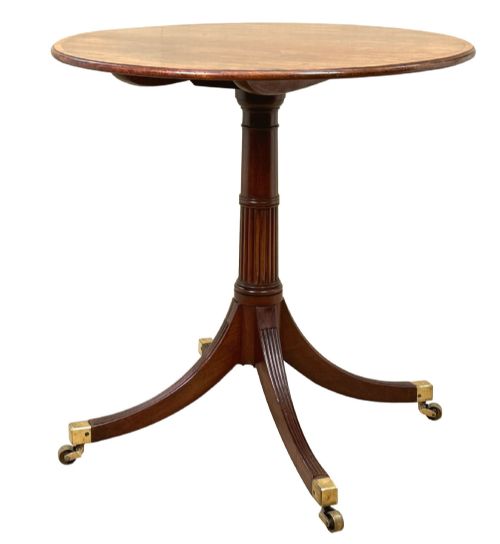
- A table mechanism allowing the circular top to pivot vertically on its base for storage when not in use. This form is typical of breakfast and supper tables.
- Centre Table
- A freestanding table designed to be viewed from all sides and placed in the middle of a room rather than against a wall. They appear in styles ranging from Regency to later revivals.
Round Brass Castor Table: Frequently Asked Questions
What is a round brass castor table?
A round brass castor table is a circular furniture piece equipped with metal wheels for mobility. These tables encompass various forms including dining tables, drum tables, and occasional pieces.
They combine timber construction with metal hardware to provide both a stable surface and ease of movement within a room.
How do I use a drum table?
A drum table functions as a central library or occasional table, often featuring drawers set into its deep rim. The surface accommodates books, lamps, or decorative items.
The drawers around the perimeter provide practical storage for small items while maintaining the circular symmetry of the piece.
What are tilt-top tables for?
Tilt-top tables allow the circular surface to pivot into a vertical position when not in use. This design enables the table to be stored flat against a wall to save space.
They were traditionally used for breakfast, supper, or general occasional tasks in period homes.
How do I identify a Regency table?
Regency tables typically feature dark timbers like mahogany or rosewood, sometimes with brass inlay or crossbanding. They often rest on a central pillar supported by splayed legs with brass castors.
Proportions tend to be classical and clean, reflecting the neoclassical design influences of the early nineteenth century.