

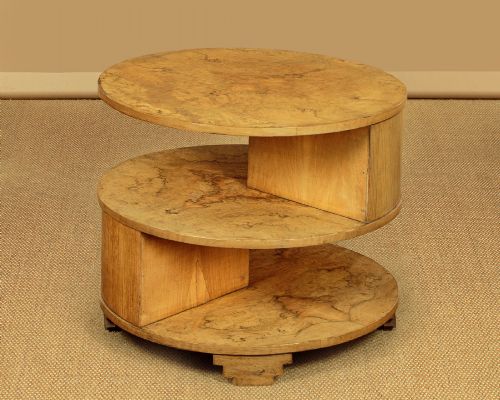


Round Birch Table
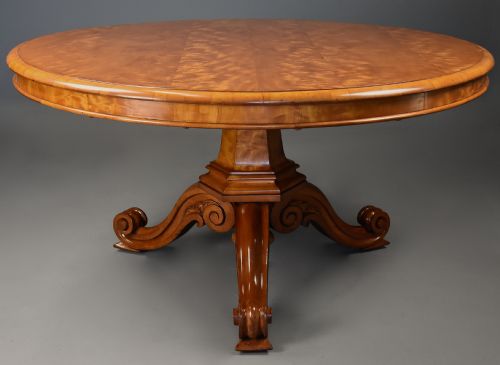
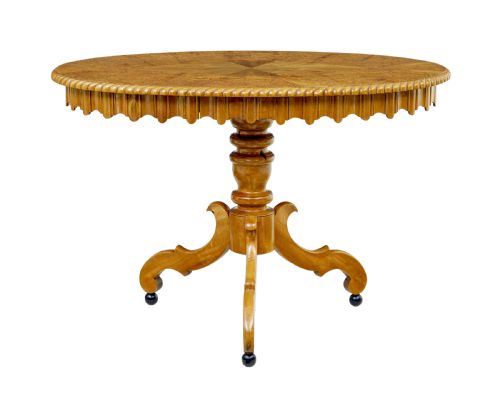
A round birch table brings pale timber warmth and strong grain movement into a room, spanning nineteenth-century Swedish craft to twentieth-century modernism.
Round Birch Table
A round birch table encompasses centre tables, occasional tables, and coffee tables that draw the eye with pale figured timber. When buyers search for a round birch table, they typically encounter nineteenth-century Swedish circular designs or twentieth-century Scandinavian Art Deco forms.
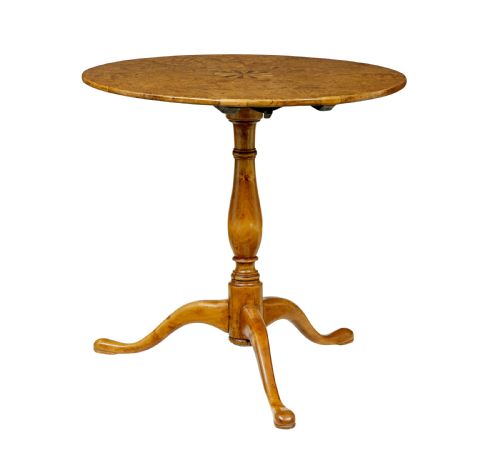
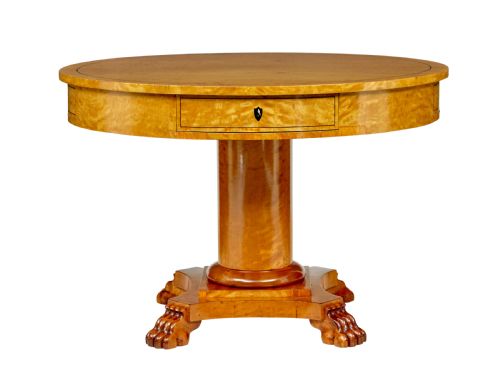
The selection ranges from early nineteenth-century tilt-top breakfast tables and drum tables to 1930s coffee tables and Victorian lamp tables. Swedish workshops feature prominently, bringing classical proportion and refined circular tops to the domestic interior.
Forms vary from pedestal occasional pieces on tripod or platform bases to substantial centre tables designed for the middle of a room. Satin birch and burr birch variants dominate the selection, offering rich patterns across the tabletop.
Materials and construction
Makers utilised solid birch, satin birch, and burr birch veneer laid over stable timber cores to create dynamic grain patterns on circular tops. Figured sections such as burr maple or ebony occasionally provide contrasting borders and inlay work.
Construction methods include pedestal supports, tilting mechanisms, and drum formations that required expert cabinetmaking to prevent warping in round tabletops. Carved details and occasional marble inserts demonstrate the varied skills applied to nineteenth and twentieth-century examples.
Round Birch Table Retail Price Guide 2026
Typical asking prices for round birch table among the pieces listed under this phrase on Sellingantiques today, from the lower quarter to the upper quarter. They describe what is for sale here now, not the wider market.
Listings span the nineteenth century through to 1930, uniting Victorian designs with Swedish Biedermeier and Scandinavian Art Deco aesthetics.
Assessing quality and finish
The distinction in quality rests upon the choice of veneer, the liveliness of the timber figure, and the precision of the joinery around circular tops. Highly figured satin birch or burr birch displays superior visual depth compared to plain timber surfaces.
Proportion and structural integrity dictate the standing of a piece, from the stability of a pedestal base to the crispness of inlaid details. Finer examples maintain original surfaces that highlight the natural blonde tones and figuring of the birch.
The Round Birch Table Glossary
- Satin birch
- A timber possessing a natural sheen and satiny texture that catches the light across a tabletop. It creates a bright surface finish highly favoured in nineteenth-century cabinetmaking.
- Burr birch
- Wood harvested from tree growths that produce swirling, highly complex grain patterns. This material was sliced into veneers for decorative table tops.
- Centre table
- A freestanding table designed to be viewed from all sides rather than pushed against a wall. These anchor the middle of a room with circular tops.
- Tilt-top
- A mechanism allowing the circular tabletop to pivot vertically when not in use. This clever design saved space in period interiors.
Round Birch Table: Frequently Asked Questions
How do I style a round birch table?
A round birch table brings brightness to a seating area or hallway, pairing well with darker contrasting furniture.
Keep surface decoration minimal to let the natural grain patterns and pale timber tones remain the visual focus.
Are these tables suitable for daily use?
These tables function well for everyday placement as lamp stands, coffee tables, or occasional surfaces.
Standard care involving coasters and soft cloths protects the historical polished finish from moisture and heat damage.
How do I identify a Swedish period table?
Swedish pieces often display clean lines, blonde birch veneers, and restrained classical proportions originating from Biedermeier or Art Deco movements.
Examining the underside construction and secondary timbers helps confirm the Scandinavian origin and nineteenth or twentieth-century date.