





Rosewood Whatnot Table
A rosewood whatnot table offers multi-tiered display space with rich grain, bringing practical elegance to any room.
Rosewood Whatnot Table
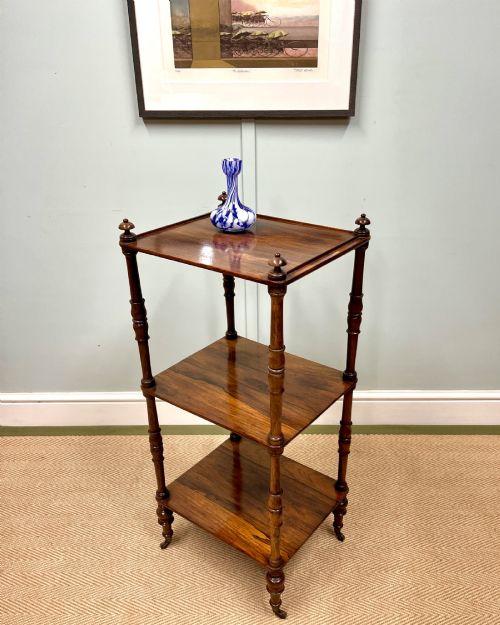
A rosewood whatnot table is a multi-tiered piece of furniture designed for display and storage, appearing primarily across the nineteenth century, Victorian, Regency, and Georgian periods. These items function as etagere stands, dumb waiters, and occasional tables, serving as versatile additions to period interiors.
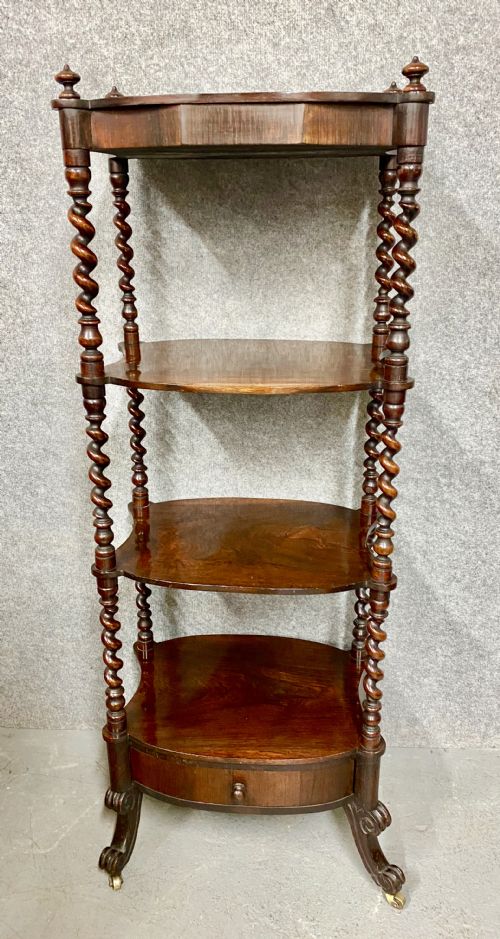
The versions most commonly met on this page include three-tier and four-tier examples fashioned in rich timber, often incorporating specialised forms like the Canterbury or circular occasional tables. Makers utilised the dense grain of the wood to create striking silhouettes that catch the eye without dominating the floor space.
How they were made
Craftsmen built these tiered stands predominantly from rosewood, selecting the timber for its deep colour and decorative figuring. Mahogany also appears among the listings, providing a sturdy carcase for the multi-level shelving.
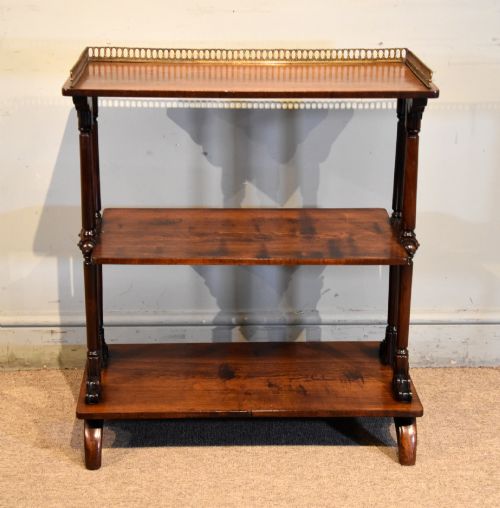
Metal detailing completes the construction of finer examples, with brass galleries fitted to the edges of shelves to keep displayed items secure. Turnings and upright supports hold the tiers apart, creating light yet rigid frameworks designed to carry books, ceramics, or ornaments.
Rosewood Whatnot Table Retail Price Guide 2026
Typical asking prices for rosewood whatnot table among the pieces listed under this phrase on Sellingantiques today, from the lower quarter to the upper quarter. They describe what is for sale here now, not the wider market.
A Canterbury whatnot hides sheet music in its base, proving that even a display table enjoys a musical secret.
What varies in quality
The refinement of the timber figure and the crispness of the turning on the upright supports set the better pieces apart from standard examples. Superior specimens display careful matching of the rosewood grain across the shelves, while simpler items rely on plain dark surfaces.
The presence of integrated fittings such as brass galleries or functional partitions, as seen in Canterbury variants, elevates the status of a piece. Robust construction that keeps multiple tiers steady without excessive bulk distinguishes the finest workshops from more utilitarian production.
The Rosewood Whatnot Table Glossary
- Whatnot
- A piece of furniture with shelves placed one above another, used for displaying ornaments or books. These items gained popularity in the nineteenth century for domestic storage.
- Etagere
- A piece of furniture consisting of a set of open shelves for displaying small objects. This French term is frequently used interchangeably with whatnot on this page.
- Canterbury
- A low stand with partitioned vertical sections for holding sheet music, folios, or books, sometimes incorporated into the lower tier of a multi-level stand. The design originated in the late eighteenth century.
- Gallery
- A raised pierced brass or wooden rail fitted along the edge of a shelf to prevent objects from sliding off. This feature is commonly found on the upper tiers of nineteenth-century display stands.
- Dumb waiter
- A tiered stand traditionally used in dining rooms for holding dishes or serving items without servant assistance. Examples in rosewood served similar practical functions in drawing rooms and parlours.
Rosewood Whatnot Table: Frequently Asked Questions
What is a rosewood whatnot table used for?
These pieces were designed to hold books, ceramics, and ornaments across multiple open tiers. They provide vertical display space in sitting rooms without taking up a large floor footprint.
In period homes, they also functioned as dumb waiters or small occasional tables for holding daily items near seating areas.
How do I date a rosewood whatnot?
Dating relies on observing the overall style, turning details, and structural proportions across different eras. Regency and William IV pieces often display heavier architectural styling, whereas mid-Victorian examples tend towards lighter frames and brass gallery work.
Reference to specific decades within the nineteenth century helps narrow down the period of manufacture based on prevailing design tastes.
Where should I place a whatnot table?
These items suit corners, alcoves, or spaces beside seating where vertical display is beneficial. Their open shelving ensures they do not block light or make a room feel cramped.
Care should be taken to keep them away from direct sunlight and strong heat sources to protect the polished timber finish.
What are the tiers on a whatnot for?
Each successive shelf offers a surface for arranging decorative objects, small collections, or reading materials. The graduation of shelf sizes from top to bottom provides stability and visual balance.
Lower tiers often accommodate heavier volumes, while upper tiers hold smaller porcelain or glass pieces safely.