



Rosewood Whatnot Stand
A rosewood whatnot stand brings tiered display to a room, offering open shelves for books, music, and decorative objects.
What these pieces are
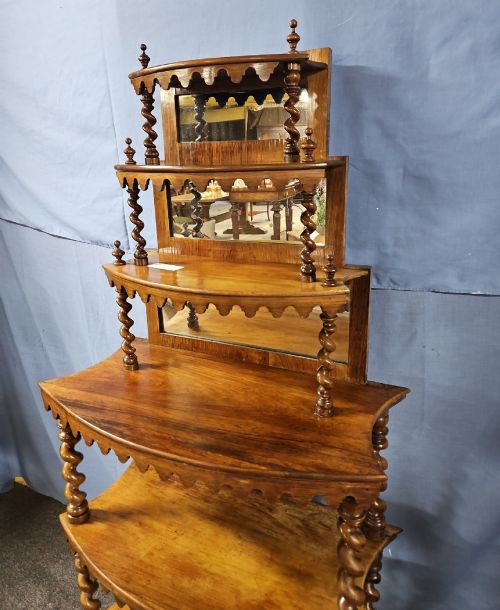
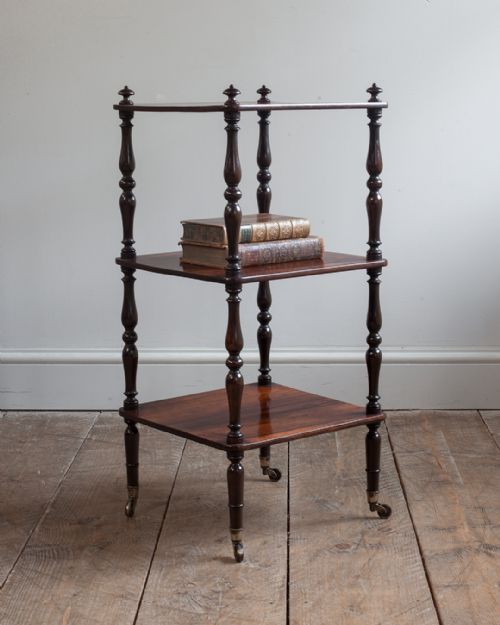
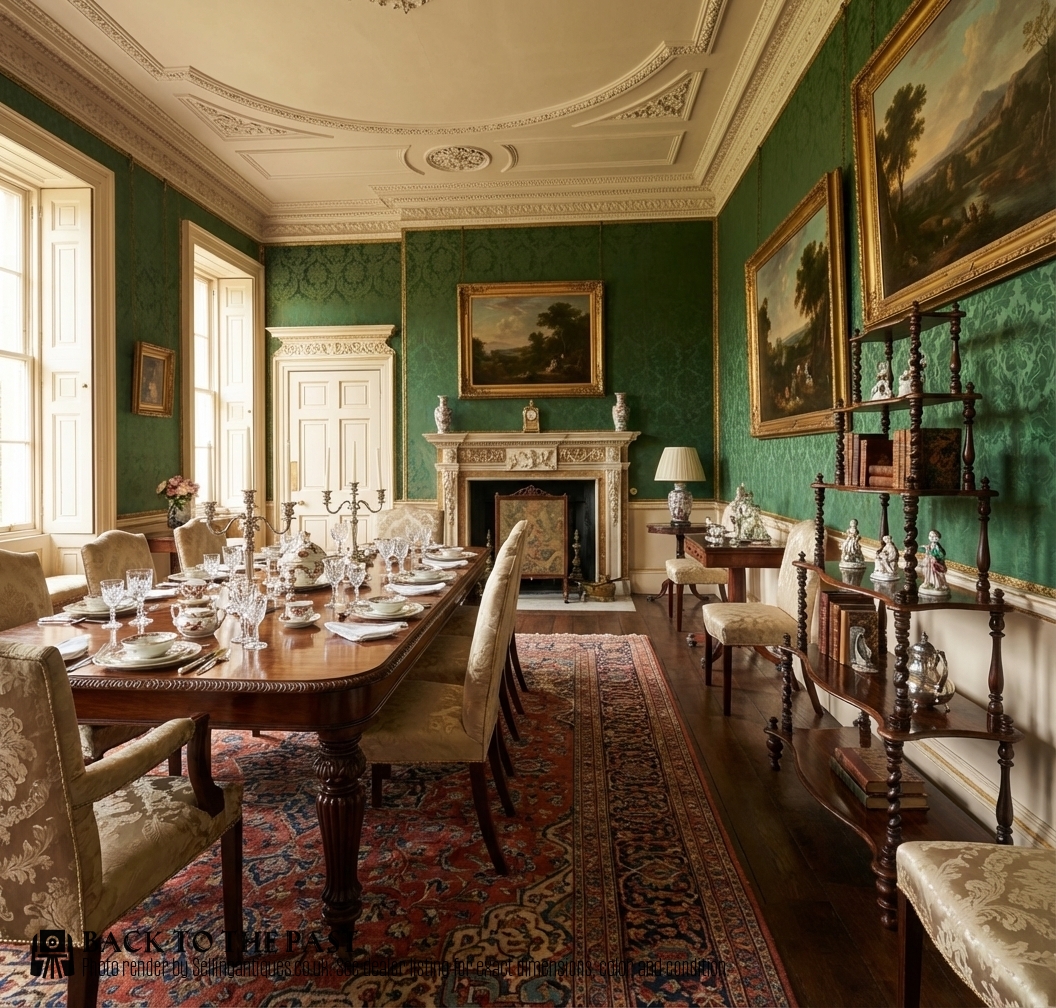
A rosewood whatnot stand is an open-tiered furniture piece designed for display and storage in nineteenth-century interiors. These pieces appear in both Regency and Victorian styles, spanning multi-tiered shelving units and freestanding etageres.
The form ranges from compact two-tier reading stands to six-tier display units, incorporating brass details and glass elements. Many examples serve specific functions such as music stands, newspaper racks, or corner display units.
Victorian and nineteenth-century examples dominate the selection, showing continuous evolution in tier count and structural refinement. Each piece provides vertical storage while maintaining a light, open profile in the room.

How they were made
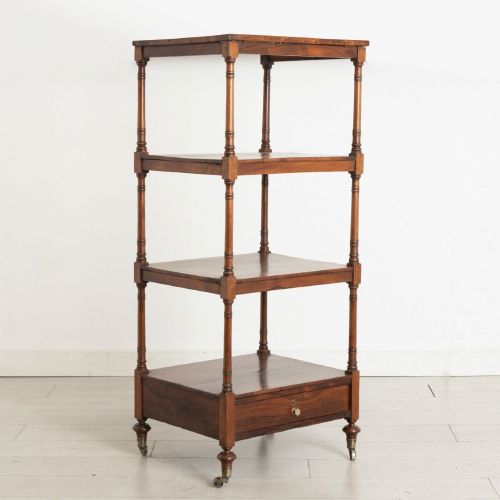
Cabinet makers utilised dense rosewood timber for frames and shelves, taking advantage of its deep grain patterns and natural sheen. Brass components appear in structural hardware, casters, and decorative mounts.
Tiered platforms receive careful jointing to support books, music folios, and display objects across multiple levels. Selected pieces incorporate specialised reading surfaces or integrated racks for newspapers and magazines.
Retail Price Guide 2026
Typical UK retail prices for rosewood whatnot stand, calculated from the Sellingantiques database of over a million retail prices indexed since 2003. This retail price guide relies exclusively on Sellingantiques data; no external sources or auction records are used, so the figures do not describe the wider market.
Some nineteenth-century makers doubled as newspaper hoarders, squeezing music racks and reading desks directly into the display shelves.
What varies in quality
Quality rests upon the selection of timber grain, the crispness of turned supports, and the structural integrity of the multi-tiered joints. Finer examples display balanced proportions across four, five, or six tiers without heavy visual bulk.
Attribution to known workshops or the inclusion of specialised functions like reading desks and integrated music racks elevate the standing of a piece. The integration of quality brass fittings and thoughtful corner execution separates standard utility pieces from exceptional display items.
Samson & Son London·Gillows
The Rosewood Whatnot Stand Glossary
- Whatnot
- A piece of furniture consisting of a set of open shelves for displaying small objects, popular in the nineteenth century. These items stand freely or fit into corners.
- Etagere
- A piece of furniture consisting of a set of open shelves for displaying ornaments, closely related to the whatnot form. The term often describes French-influenced display pieces.
- Regency
- An English architectural and decorative style dating from the early nineteenth century, characterised by classical restraint and refined proportions. Pieces from this period often feature elegant turned columns.
- Victorian
- A style spanning the reign of Queen Victoria, encompassing varied revival movements and substantial domestic furniture production. Pieces from this era show robust tier construction and diverse functional adaptations.
- Canterbury
- A low stand with partitioned sections, used for holding sheet music, newspapers, or books. This form occasionally combines with whatnot shelving units.
Frequently Asked Questions
What is a rosewood whatnot stand used for?
These tiered stands provide open shelving for displaying ornaments, books, and collections in domestic interiors.
Certain variations incorporate dedicated sections for newspapers, music folios, or adjustable reading surfaces.
How do I tell a Regency whatnot from a Victorian one?
Regency pieces often display lighter proportions, cleaner classical lines, and dates originating around the early nineteenth century.
Victorian examples frequently expand to higher tier counts, such as five or six shelves, with heavier turned supports.
Are these pieces freestanding?
Most examples function as freestanding furniture items designed to be viewed from multiple angles in a room.
Specific variations construct their shelves specifically to fit into room corners.