




Rosewood Tiered Shelving
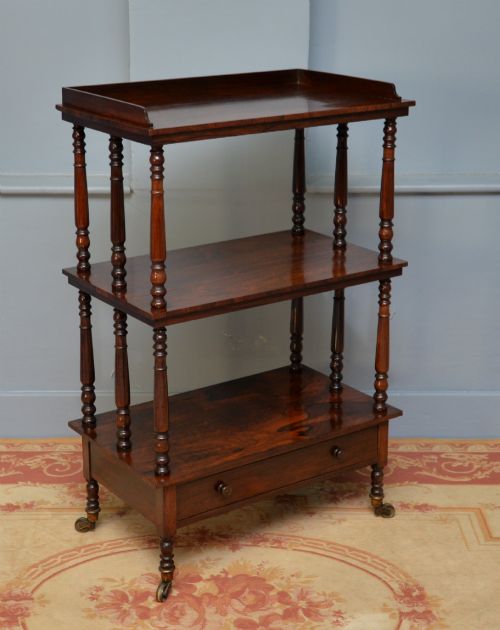
Rosewood tiered shelving brings elegance to a room, offering multiple open tiers designed to display books and cherished objects.
Rosewood Tiered Shelving
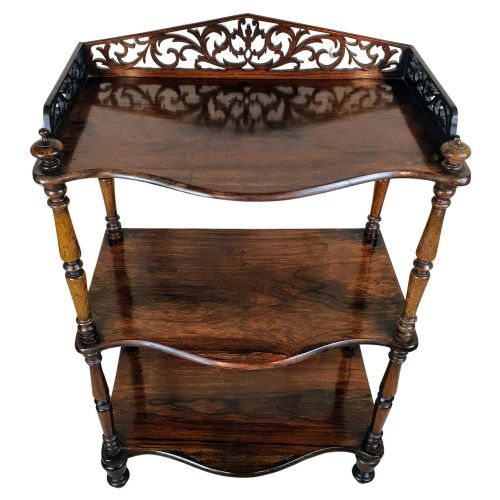
Rosewood tiered shelving encompasses multi-level display pieces such as whatnots, étagères, and open bookcases that organise and elevate interior spaces. Buyers searching this phrase meet various iterations spanning the Regency, Victorian, and Edwardian periods.
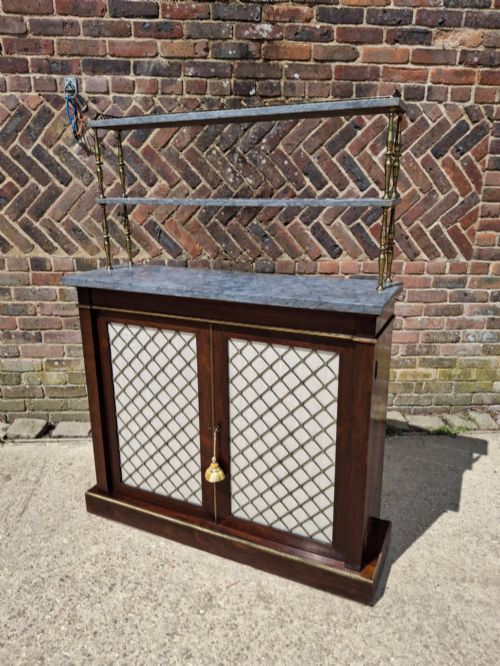
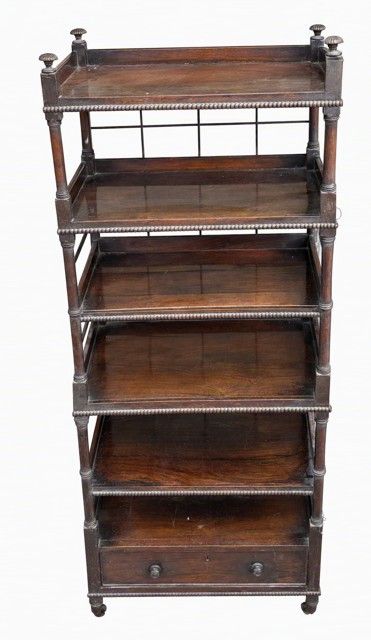
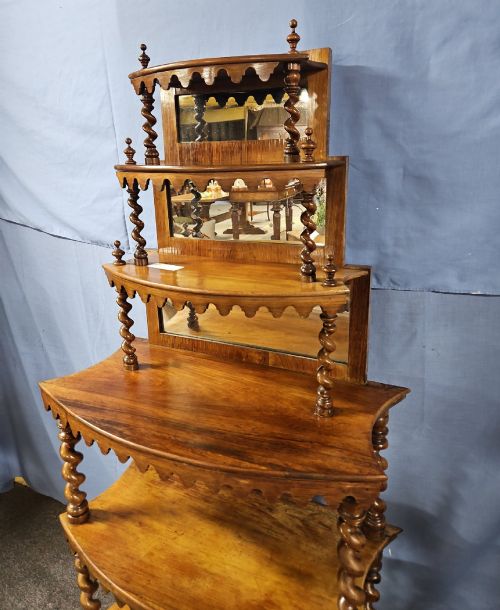
The most common form on this page is the freestanding multi-tier whatnot or étagère, often featuring graduated shelves supported by turned columns. These pieces frequently incorporate lower cupboards or open gracefully into the room as central standing buffet shelves.
Origins stretch from the eighteenth century through to the early twentieth century, taking in William IV, George IV, and later revival styles. Pieces appear as corner units, wall shelves, and tall waterfall bookcases.
Construction and Materials
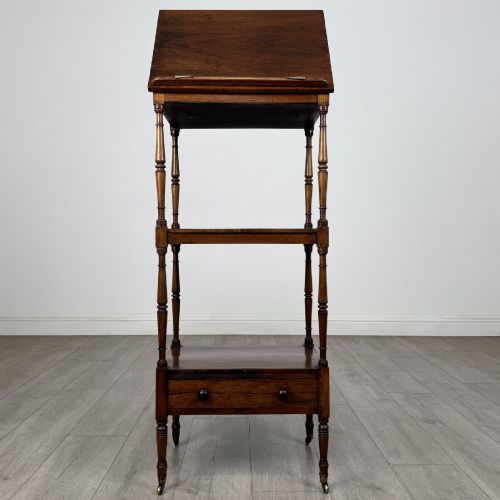
Joinery techniques involve precise turning for upright supports and sturdy housing for tiered shelves. Selected examples introduce glass panels, ormolu details, and intricate marquetry to enrich the primary wood grain.
Rosewood Tiered Shelving Retail Price Guide 2026
Typical asking prices for rosewood tiered shelving among the pieces listed under this phrase on Sellingantiques today, from the lower quarter to the upper quarter. They describe what is for sale here now, not the wider market.
Current listings span the eighteenth, nineteenth, and early twentieth centuries, featuring walnut and painted wood alongside solid rosewood.
Judging Quality
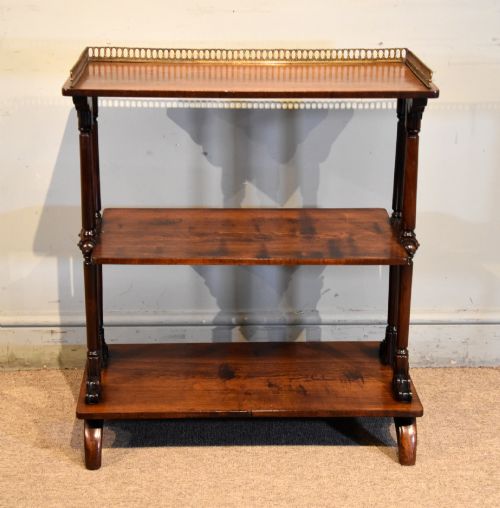
Quality reveals itself in the depth of the timber grain, the crispness of turned columns, and the integration of brass galleries. Superior pieces display harmonious proportions across multiple tiers, whilst lesser examples feel heavy or unbalanced.
Finishing touches such as finely cast brass mounts and precise marquetry separate standard utility items from exceptional display pieces. The integrity of the tiers and the stability of the upright supports govern the long-term utility of each unit.
Samson and Son London
The Rosewood Tiered Shelving Glossary
- Whatnot
- A piece of furniture consisting of a set of open shelves for displaying small objects. They became popular in the eighteenth century and evolved into varied multi-tiered formats.
- Étagère
- A piece of furniture with a number of open shelves for holding ornaments. These French-derived items often mirror the function of British whatnots.
- Waterfall bookcase
- A standing set of open shelves where each successive shelf steps back from the one below it. The profile resembles cascading water.
- Canterbury
- A low stand with partitioned sections for sheet music or books, frequently incorporated beneath lower shelves. They combine storage with open display tiers.
- Gallery
- A small ornamental rail running around the edge of a shelf or table. They are often pierced from brass to secure displayed items.
Rosewood Tiered Shelving: Frequently Asked Questions
How were these shelves used?
They served to display ornaments, books, and collections in principal rooms of the house.
Some designs doubled as dumb waiters or incorporated lower cabinets for concealed storage.
How do I date a piece?
Dating relies on stylistic markers such as Regency curves, Victorian turning, or Edwardian proportions.
Materials like brass galleries and construction methods further anchor pieces to specific decades.
Where should I place it?
Freestanding units suit corners, hallways, or living rooms as central display focal points.
Wall-mounted versions fit smaller spaces where floor area remains at a premium.