





Rosewood Pendulum Clock
A rosewood pendulum clock brings rich timber grain and steady motion to a room, uniting functional timekeeping with fine period craftsmanship.
Rosewood Pendulum Clock
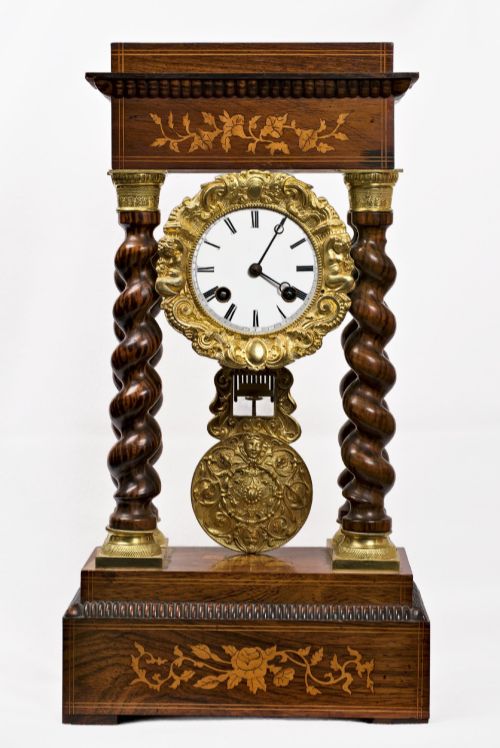
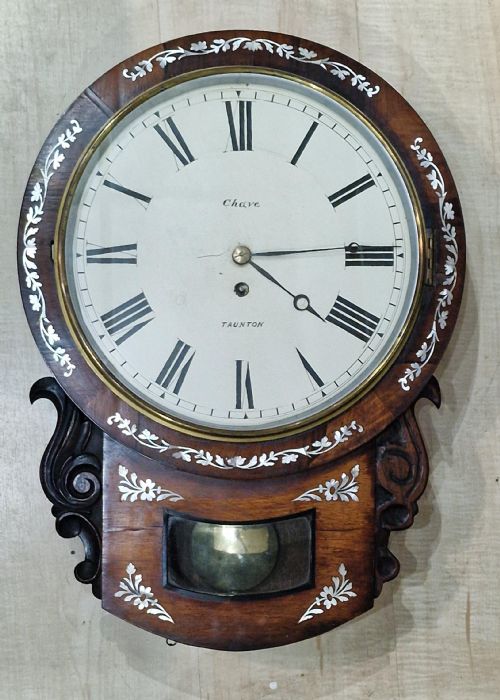
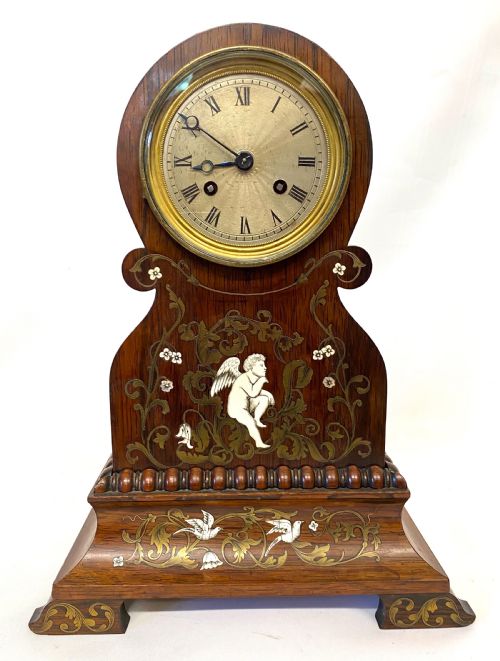
A rosewood pendulum clock typically presents as either a wall-hanging timepiece or a mantel clock designed for a shelf or table. The examples found here span the eighteenth, nineteenth, and twentieth centuries, originating from English and French workshops.
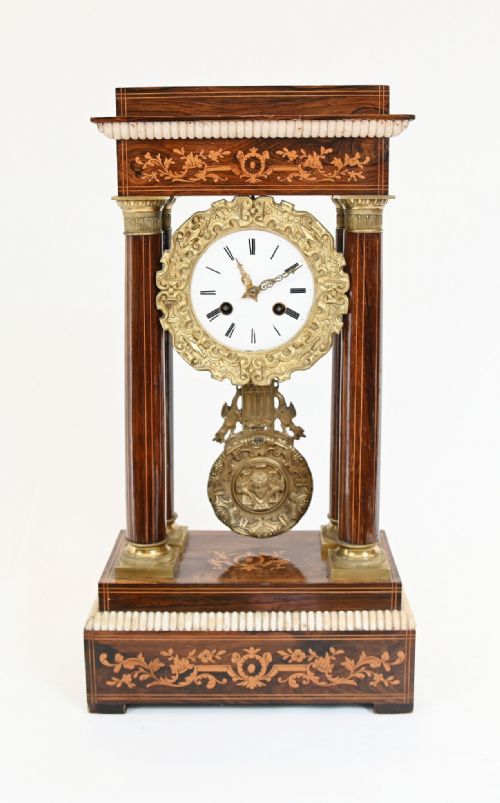
Drop-dial wall clocks and tall French portico models form the most common variants on this page. These pieces range from simple round dials to octagonal shapes and architectural pillar frames.
Maker signatures, dial configurations, and marquetry details help distinguish regional English fusee movements from continental eight-day French mantel designs.
Materials and construction methods
Makers built these clock cases using dense rosewood timbers, frequently embellished with brass, ormolu, boxwood, and mother-of-pearl inlay. Marquetry and satinwood banding appear across French portico models and drop-dial wall cases.
Movements rely on brass gear trains, enamel dials, and glass viewing covers, paired with traditional fusee or double-barrel mechanisms. Dial faces use painted numerals behind protective glass bezels to measure passing hours.
Rosewood Pendulum Clock Retail Price Guide 2026
Typical asking prices for rosewood pendulum clock among the pieces listed under this phrase on Sellingantiques today, from the lower quarter to the upper quarter. They describe what is for sale here now, not the wider market.
One past piece featured a mystery pendulum that appeared to swing unsupported within a lyre-shaped rosewood and ormolu frame.
Qualities that set examples apart
The refinement of the rosewood veneer and the intricacy of any boxwood, brass, or mother-of-pearl inlay define the visual tier of a piece. Crisp casting on ormolu mounts and careful proportions in portico columns separate standard production from finer output.
The sophistication of the internal movement dictates mechanical standard, particularly the presence of a reliable fusee system. Original components and signed maker plates add historical depth to the clock.
Samuel Chave Taunton·Halliday and Rich Bridgwater·Savory and Fils A Paris·Dumont·James Bell Bath·Henri Marc
The Rosewood Pendulum Clock Glossary
- Fusee
- A conical pulley connected to the mainspring by a chain or cord. This mechanism equalises the torque of the driving spring as it unwinds, ensuring steady timekeeping.
- Portico clock
- A mantel clock style featuring architectural columns supporting a central movement housing. These French pieces often incorporate glass panels and pendulum chambers.
- Drop-dial wall clock
- A wall-mounted timepiece featuring an extended lower case beneath the dial face. This drop accommodates the swing of the pendulum.
- Marquetry
- Decorative veneer patterns assembled from various coloured woods to form pictorial or geometric designs. It appears across nineteenth-century French and English clock cases.
- Ormolu
- Gilded bronze used for decorative mounts and accents on mantel clocks. This material provides metallic contrast against dark rosewood.
Rosewood Pendulum Clock: Frequently Asked Questions
How do fusee wall clocks work?
A fusee movement uses a conical pulley and a delicate chain to maintain even tension on the gears as the mainspring runs down. This design delivers consistent force to the pendulum for greater accuracy.
Such movements require careful winding using a dedicated key. They represent a traditional standard in British clockmaking.
Where should I place a portico clock?
Portico clocks suit mantelpieces, sideboards, or deep shelves where their architectural columns remain visible. They need a stable, level surface to keep the pendulum swinging evenly.
Keep these clocks away from direct sunlight and damp walls to protect the rosewood veneer and internal brass components.
How do I identify a French portico clock?
French portico clocks feature twin vertical pillars supporting an upper entablature that houses the dial. A suspended pendulum swings freely in the central void between the columns.
These models frequently display ormolu mounts, floral marquetry, or inlaid brass details on the rosewood base.
What is a drop-dial wall clock?
A drop-dial clock combines a circular dial housing at the top with a trunk or box below. The lower section houses the pendulum and allows it to swing.
These clocks hung in halls, offices, and parlours during the Victorian era for clear visibility and reliable timekeeping.