

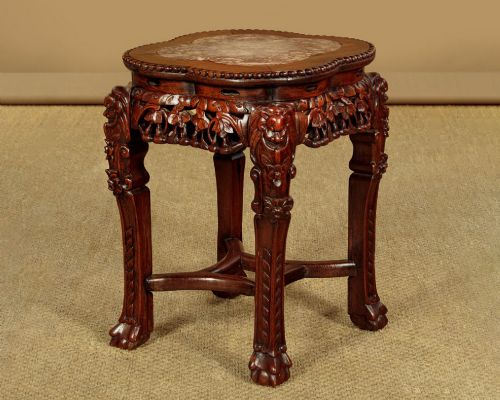
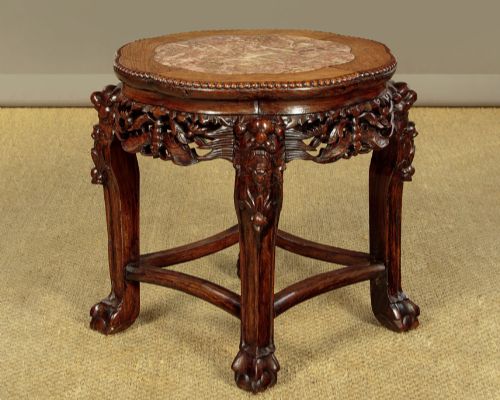
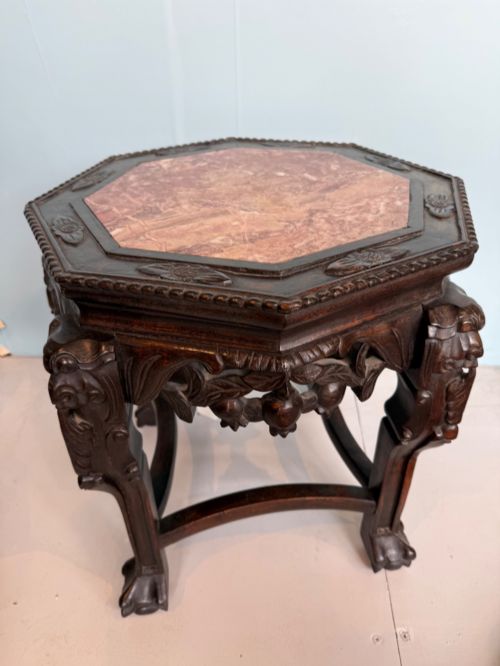


Rosewood Marble Top Stool
A rosewood marble top stool brings a solid stone surface and rich timber grain to an interior, offering a steady low perch or display base.
Rosewood Marble Top Stool
Buyers seeking a rosewood marble top stool often encounter low Chinese tables, plant stands, and barrel-form occasional pieces spanning the nineteenth century and the Victorian era. These items combine dense dark timbers with cool inset stone surfaces designed to display ornaments or serve as compact side furniture.
The pieces on this page originate predominantly from Chinese export workshops and the Qing dynasty, featuring carved hardwood frames made for both domestic use and Western markets. While termed stools or low tables in various listings, their robust construction suits the support of heavy ceramic planters and lamps.
Examples range from simple circular lamp tables to low occasional stands and pedestals, capturing the distinctive aesthetic of late nineteenth-century craftsmanship. Each object demonstrates the integration of heavy tropical hardwoods with smooth stone panels set flush into the timber frame.
Materials and construction methods
Craftsmen utilised dense tropical timbers such as rosewood, hongmu, and general hardwoods to build rigid frames capable of supporting heavy stone inserts. These structural components were shaped through traditional joinery techniques, often incorporating intricate carved details around the apron and legs.
Rouge marble and standard white or grey marble panels were cut and polished to fit precisely into recessed top frames, creating a stable surface resistant to heat and moisture. Additional decorative touches sometimes included mother-of-pearl inlay to accent the dark grain of the timber.
Rosewood Marble Top Stool Retail Price Guide 2026
Typical asking prices for rosewood marble top stool among the pieces listed under this phrase on Sellingantiques today, from the lower quarter to the upper quarter. They describe what is for sale here now, not the wider market.
Current listings demonstrate a concentration of nineteenth-century Chinese export pieces utilising rosewood, hongmu, and inset marble tops.
Factors of quality and execution
The fineness of the carved decoration defines the upper tier of these pieces, distinguishing deeply undercut floral and geometric motifs from simpler, shallow work. Crisp definition in the timber carving reflects the skill of the original workshop and the time invested in shaping the hardwood.
The quality of the inset marble surface also marks a clear division, with uniform grain, attractive veining, and a precise flush fit into the wooden frame indicating superior production. Conversely, crude framing or poorly fitted stone panels suggest a more utilitarian origin.
The Rosewood Marble Top Stool Glossary
- Rosewood
- A dense, heavy timber prized for its dark colour and prominent grain patterns. It provides the robust structural foundation for many traditional stands.
- Marble
- A metamorphic rock cut into smooth slabs to form cool, flat table surfaces. Inset panels provide a durable top resistant to heat and water.
- Hongmu
- A category of heavy red and dark hardwoods utilised in Chinese furniture making. The material takes a fine polish and supports intricate carving.
- Qing Dynasty
- The imperial dynasty spanning from the seventeenth to the early twentieth century. Pieces from this era often display traditional Chinese carving styles.
- Plant Stand
- A tall or low piece of furniture designed to elevate heavy ceramic pots and jardinières. These items feature sturdy frames to bear considerable weight.
Rosewood Marble Top Stool: Frequently Asked Questions
What were these stands originally used for?
These pieces served primarily as sturdy platforms for heavy porcelain planters, bronze vessels, and decorative lamps within the home. Their robust construction ensured they could safely bear concentrated vertical weights.
Over time, collectors and interior designers repurposed them as low side tables or compact coffee tables in modern living spaces. The stone surface provides a practical resistance against spills and heat from cups or candles.
How do I date a nineteenth century Chinese stand?
Dating relies heavily on observing the depth and style of the wood carving, the choice of timber, and the construction methods visible underneath. Nineteenth-century examples often exhibit hand-cut joinery and dense hongmu or rosewood frames without modern mechanical fasteners.
Comparing the specific patina of the timber and the wear patterns on the feet helps distinguish Victorian-era imports from later twentieth-century reproductions. Subtle variations in the marble polishing techniques also offer clues to the period of manufacture.
How should I care for the marble top?
The stone surface requires simple wiping with a damp cloth and mild soap to remove dust and everyday marks. Avoid acidic cleaners or harsh chemicals that can etch or dull the polished finish of the marble.
Using coasters and felt pads under heavy objects prevents scratching the stone and protects the surrounding wooden frame from impact damage. Periodic waxing of the rosewood keeps the timber nourished and maintains its deep natural lustre.
Are these pieces suitable for everyday use?
The dense hardwoods and solid stone construction make these items exceptionally durable for daily living requirements. They function reliably as lamp tables, bedside stands, or decorative focal points in high-traffic rooms.
Care should be taken to place them on even flooring to avoid stressing the traditional joinery over extended periods. Their compact footprint allows them to fit easily into smaller interior layouts while offering a functional surface.