



Rosewood Fire Guard
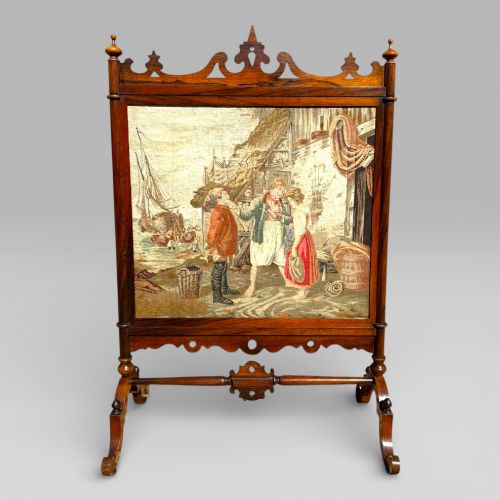
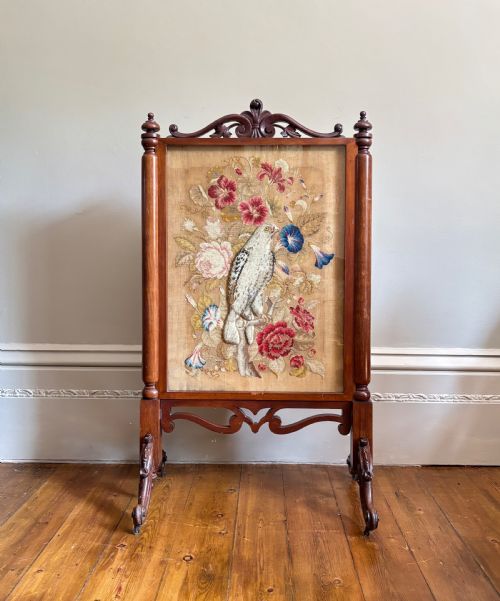
A rosewood fire guard brings warmth and elegance to a hearth, shielding a room from radiant heat with a framed textile panel.
Rosewood Fire Guard
When you search for a rosewood fire guard, you are looking at decorative screens designed to protect inhabitants from the fierce heat of an open coal fire. These pieces range from upright pole screens to adjustable cheval panels, serving both a practical function and a decorative purpose in period interiors.
The versions you are most likely to meet on this page hail primarily from the Victorian and Regency eras, constructed from rich timbers and fitted with hand-worked textile panels. They combine sturdy wooden frames with intricate needlework, tapestry, or embroidery.
Examples from this selection span Georgian, Regency, and Victorian periods, showcasing how the form evolved from tripod pole screens to larger floor-standing cheval frames. Each piece demonstrates the integration of fine cabinet making with textile arts.
How They Were Made
The frames are constructed using dense timbers such as rosewood, mahogany, and palisander, often shaped through carving or inlaid with lighter woods. These structural elements provide the necessary stability to hold suspended or mounted textile panels upright near a heat source.
The protective inserts utilise textile crafts of the period, including Berlin work, needlepoint, tapestry, and poker work on canvas or wool. Skilled artisans hand-wove pastoral scenes and intricate patterns to form the central visual panels of each screen.
Rosewood Fire Guard Retail Price Guide 2026
Typical asking prices for rosewood fire guard among the pieces listed under this phrase on Sellingantiques today, from the lower quarter to the upper quarter. They describe what is for sale here now, not the wider market.
Early makers designed these nimble guards so ladies could protect their facial makeup from melting near the hearth.
What Varies in Quality
Quality in these pieces rests heavily on the crispness of the woodwork and the finesse of the textile panel. Superior examples display deeply carved hardwood frames and finely detailed, hand-woven needlework rather than simpler mechanical production.
The sophistication of the mechanism also marks the difference between standard and superior pieces, particularly in adjustable pole screens and cheval mounts. Solid construction and well-preserved fabrics elevate an item from a basic utility to a work of decorative art.
The Rosewood Fire Guard Glossary
- Cheval screen
- A floor-standing fire screen supported by two side pillars and feet, allowing the central panel to swing or remain fixed in a vertical frame. These offer a broader protective surface than traditional pole screens.
- Pole screen
- A type of fire guard featuring a vertical wooden pole on a tripod base, upon which an adjustable needlework panel slides up and down. This allowed users to position the shield at the exact height required to block the heat.
- Berlin work
- A style of colourful needlepoint embroidery popular in the nineteenth century, worked on canvas from printed grid patterns. It provides the vivid pictorial scenes seen on many fire screen panels.
- Palisander
- A dense, dark tropical hardwood akin to rosewood, frequently utilised in Regency furniture. Its rich grain adds striking visual depth to the frames of fine screens.
- Poker work
- The technique of decorating wood or leather by burning designs with a heated metal tool. In fire screens, this method appears on adjustable wooden panels alongside or instead of textiles.
Rosewood Fire Guard: Frequently Asked Questions
What is a rosewood fire guard used for?
These screens were placed strategically between seated occupants and the fireplace to block the intense radiant heat of open coal fires. They protected delicate complexions and expensive furniture varnishes from excessive warmth.
Over time, their protective utility diminished as central heating became common, leaving them to serve purely as decorative furnishings that anchor a room's aesthetic.
How do I tell a Regency screen from a Victorian one?
Regency pieces often display restrained classical lines, sometimes utilising palisander timber and poker work panels that reflect earlier neoclassical tastes. They tend to feel lighter in scale compared to later designs.
Victorian screens frequently embrace bolder carvings, heavier rosewood frames, and elaborate Berlin work tapestries depicting pastoral or sentimental scenes. The shift reflects a Victorian preference for rich textures and ornamental detail.
Are pole screens adjustable?
Yes, traditional pole screens feature a clever sliding mechanism mounted on a vertical shaft, allowing the needlework panel to move vertically. This enabled individuals to adjust the height of the shield relative to their seating position.
Cheval screens operate differently, usually swinging within a fixed standing frame rather than sliding up and down a central pole.
How do I live with a fire guard today?
Position your screen near a fireplace, in a corner, or against an empty wall where the textile panel can be appreciated as a piece of textile art. Ensure it sits away from direct, scorching heat sources to preserve the antique wood and wool.
They work exceptionally well in drawing rooms or studies, adding period character and soft texture to empty corners.