



Rosewood Dressing Table Stool
A rosewood dressing table stool brings rich timber grain and compact seating to a dressing room or bedroom.
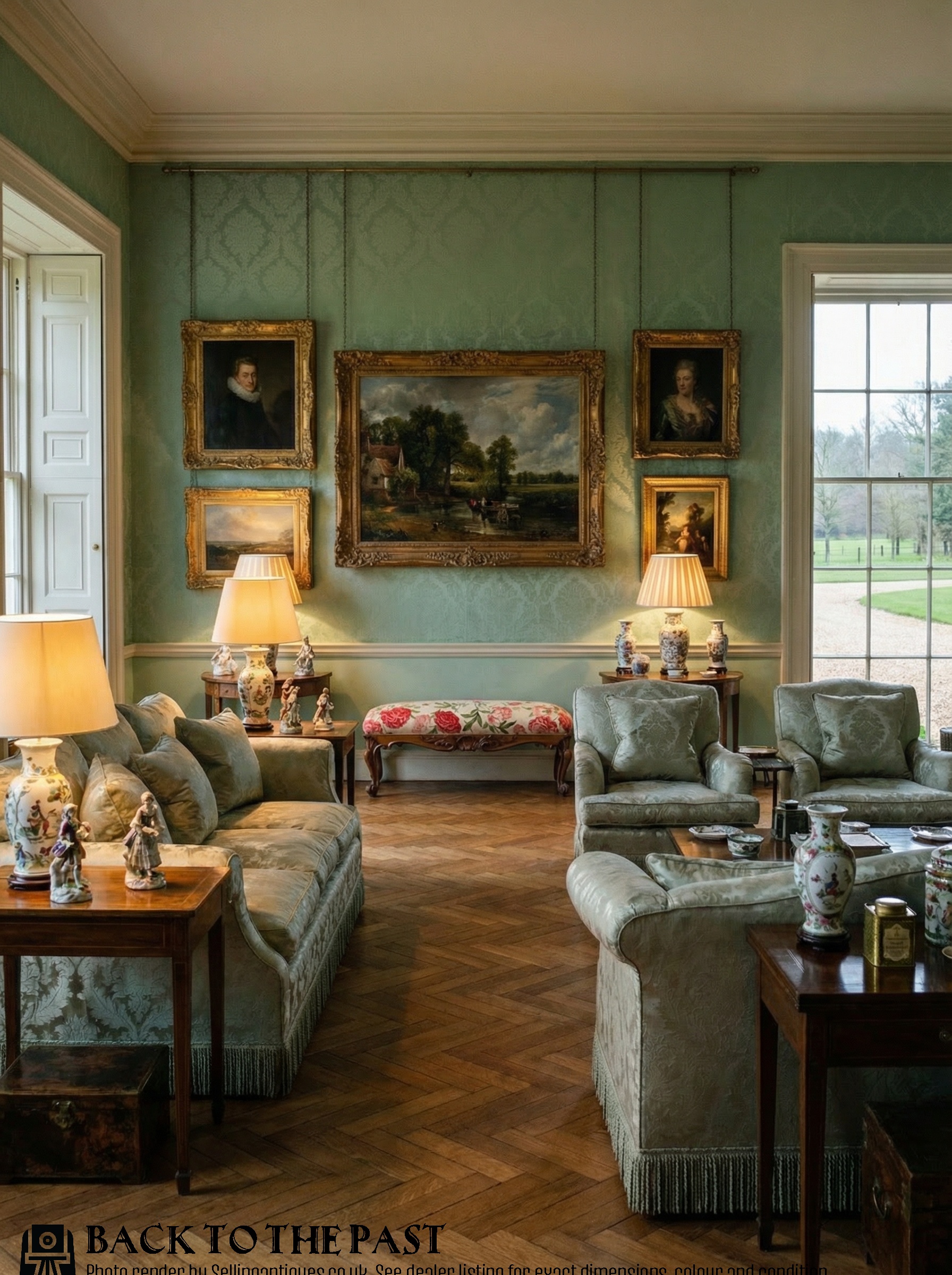
Rosewood Dressing Table Stool
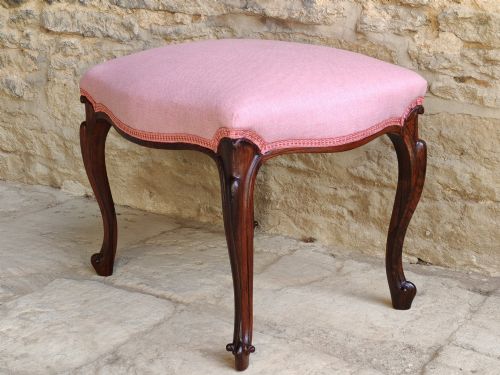
A rosewood dressing table stool is a small seat designed to sit beneath a dressing table, dressing mirror or piano. The pieces gathered here belong predominantly to the Victorian period, including items dated to eighteen-fifty and the wider nineteenth century.
The forms found in this category include oval shapes, cross frames and revolving tops. Makers also produced Anglo-Indian and Regency variations alongside standard Victorian pieces.
Buyers seeking a rosewood dressing table stool will encounter both low static footstools and height-adjustable variants meant for music rooms or dressing areas. These seats frequently appear paired with original upholstery such as tapestry and textile finishes.
How they were made
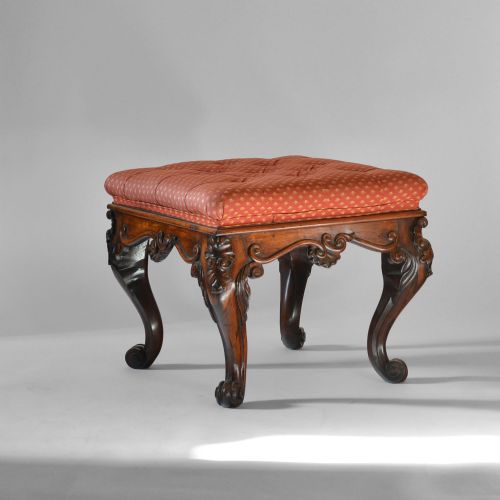
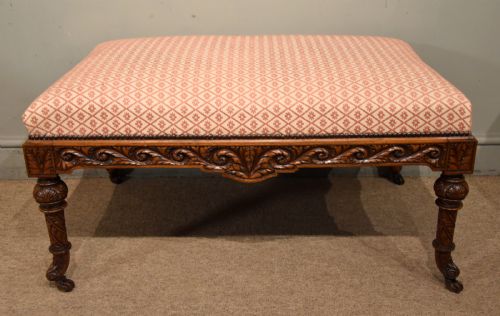
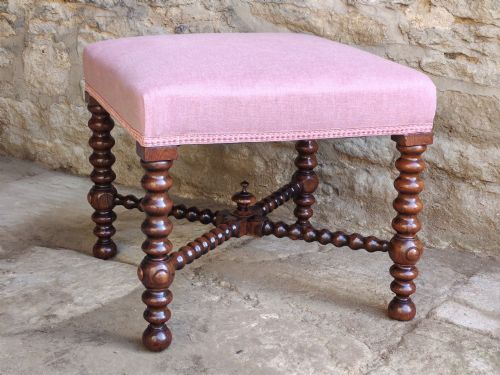
Cabinet makers utilised solid and veneered rosewood for the frames, often incorporating carved details and bobbin turned legs. Structural turns and carved supports give these small seats their characteristic nineteenth-century weight and presence.
Upholstery techniques combined traditional textile covers with stuffing fixed over webbed frames. Brass fittings and gold braid often completed the edges of the tapestry and fabric seats.
Rosewood Dressing Table Stool Retail Price Guide 2026
Typical asking prices for rosewood dressing table stool among the pieces listed under this phrase on Sellingantiques today, from the lower quarter to the upper quarter. They describe what is for sale here now, not the wider market.
Materials recorded across the inventory include solid rosewood, brass hardware, tapestry fabric, textile covers and decorative gold braid.
What varies in quality
The distinction between standard examples and superior pieces rests upon the crispness of the carving and the complexity of the frame construction. Elaborate cross-frame designs and revolving mechanisms require sophisticated joinery that elevates the piece.
Materials used for the secondary coverings also mark out better examples, with fine tapestry fabrics and original gold braid indicating higher workshop standards during the Victorian era.
The Rosewood Dressing Table Stool Glossary
- Rosewood
- A dense, dark timber prized for its rich grain and deep colour, frequently utilised in nineteenth-century cabinet work. It takes a high polish and forms the primary structure of these stools.
- Cross frame
- A structural base formed of intersecting timbers that create an X shape beneath the seat. This style provides both stability and visual lightness.
- Revolving
- A top mechanism that allows the seat to turn on a central screw, enabling height adjustment for dressing or playing an instrument. This function appears frequently on piano and dressing stools.
- Tapestry fabric
- A heavy woven textile used to cover the seat pads of period stools, often featuring floral or geometric patterns. It provides a durable and decorative surface.
- Gold braid
- A narrow decorative metallic trimming applied to the edges of upholstery to conceal tacks and finish the seam. It adds a formal accent to the textile seat.
Rosewood Dressing Table Stool: Frequently Asked Questions
What is a rosewood dressing table stool used for?
These small seats provide functional seating designed specifically to tuck beneath a dressing table or vanity unit. Their compact proportions allow them to sit out of the way when not in use.
Many examples were also built with adjustable mechanisms to serve double duty at a piano or music stand.
Are these stools adjustable in height?
Certain examples feature revolving mechanisms that let the user raise or lower the seat level by turning it. This was particularly useful when the stool served multiple purposes in a bedroom or music room.
Fixed-height variants with static legs also appear frequently across the inventory.
What fabrics are used on the seats?
Original and replacement upholstery typically consists of heavy textiles, woven tapestry fabrics and occasional needlework. These covers are frequently secured with brass tacks and trimmed with gold braid.
The choice of textile often reflects the broader decorative tastes of the Victorian period.
What is an Anglo-Indian rosewood stool?
This variant reflects British colonial trade and manufacturing links, incorporating distinctive regional carving styles into traditional stool forms. The rosewood used in these pieces often displays unique regional finishing characteristics.
Such pieces share the compact dimensions of standard dressing stools while offering more elaborate surface decoration.