




Rosewood Dressing Footstool
These rosewood dressing footstool pieces offer sturdy timber frames and soft textile upholstery, bringing period character and practical seating to any dressing room.
Rosewood Dressing Footstool
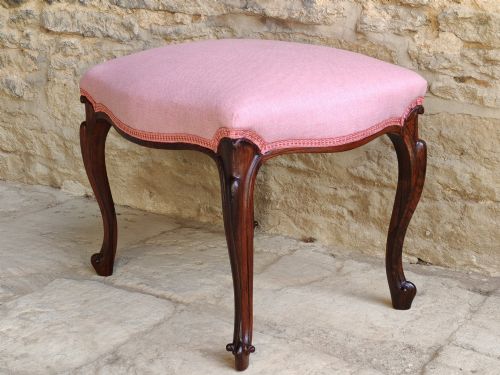
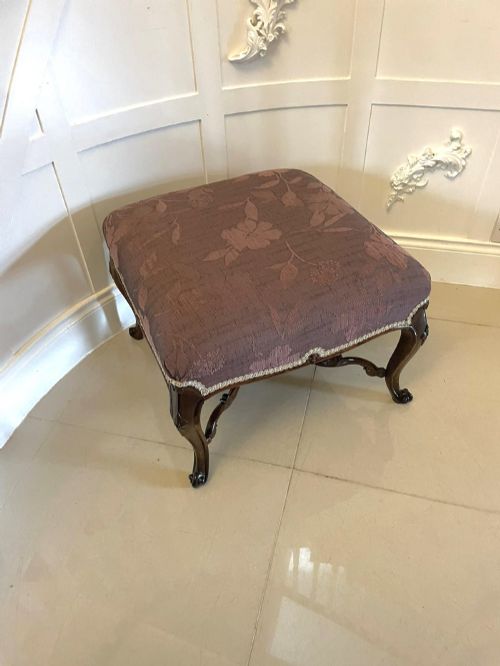
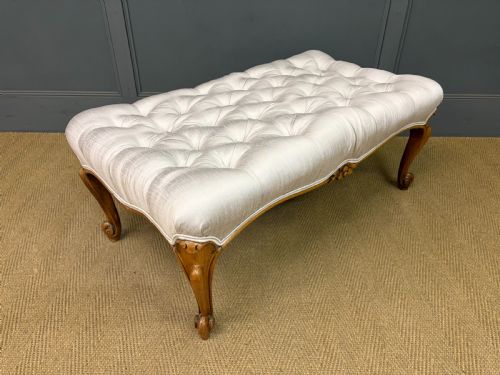
When you search for a rosewood dressing footstool, you encounter low seating designed for nineteenth-century dressing rooms and parlours. The pieces on this page span the Georgian, Regency and Victorian eras, with the vast majority hailing from the Victorian period.
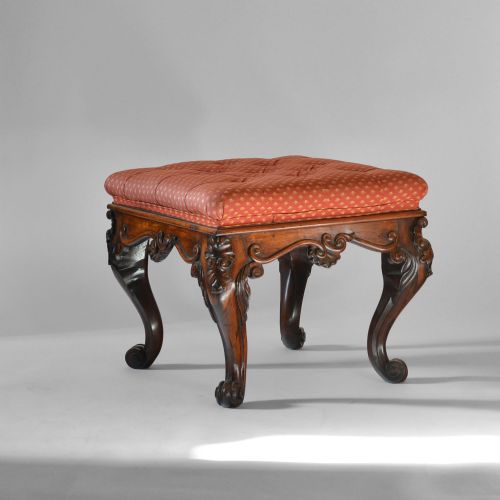
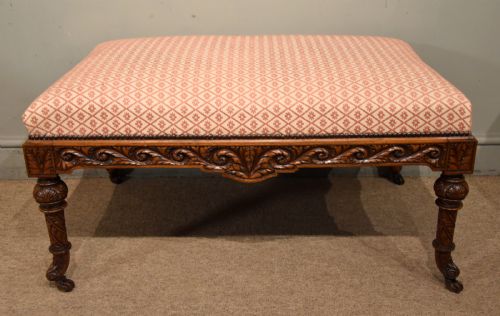
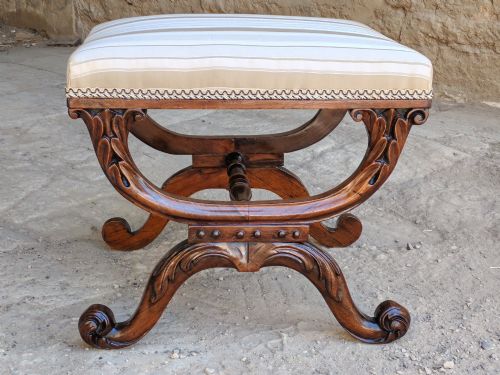
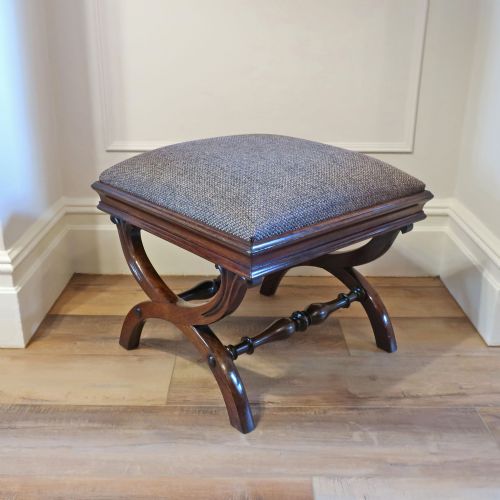
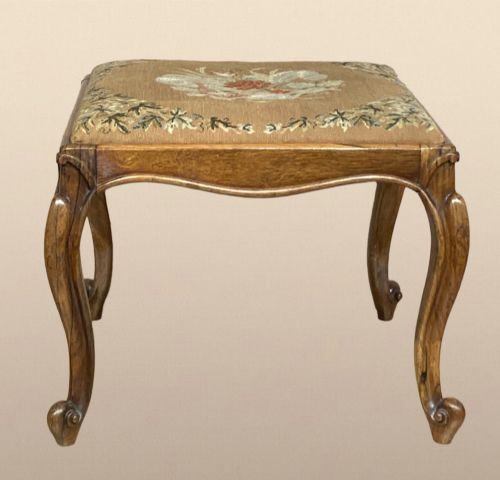
The common formats include oblong, oval and cross-frame designs resting on cabriole legs, bobbin legs or carved timber supports. Surviving examples range from simple domestic stools to large carved pieces and Anglo-Indian variations.
These items were originally paired with dressing tables and mirrors, offering a comfortable seat during morning routines. Today they function equally well as low footstools or decorative accent seats in traditional interiors.
How these pieces were constructed
Makers built the structural frames from dense rosewood, often shaping the timber into cabriole legs or turning it into bobbin details. Carved ornamentation appears on many Victorian and Early Victorian variants.
Upholstery forms a vital component, utilising textiles such as wool, tapestry, fabric, leather and modern replacement upholstery fabrics. Brass elements sometimes accent the joinery or support mechanisms on cross-frame and swivel variants.
Rosewood Dressing Footstool Retail Price Guide 2026
Typical asking prices for rosewood dressing footstool among the pieces listed under this phrase on Sellingantiques today, from the lower quarter to the upper quarter. They describe what is for sale here now, not the wider market.
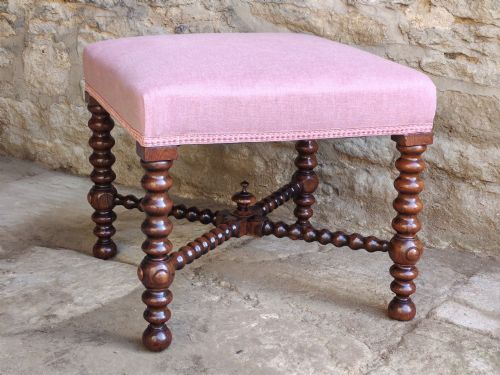
Several nineteenth-century makers evidently enjoyed the humble bobbin, turning solid rosewood into rows of tiny wooden beads that somehow survived two centuries of heels.
What separates the finest examples
The distinction between standard domestic seating and superior pieces lies in the crispness of the timber carving and the elegance of the frame proportions. Deeply carved details and balanced cabriole legs elevate the visual weight of the wood.
The integrity of the rosewood timber and the tightness of the joinery dictate the durability of the structure. Original frames that retain their structural firmness without excessive reinforcement represent the upper tier of surviving items.
The Rosewood Dressing Footstool Glossary
- Rosewood
- A dense, richly grained tropical timber prized for its dark colour and polished finish. It forms the primary structural material for these nineteenth-century stools.
- Cabriole leg
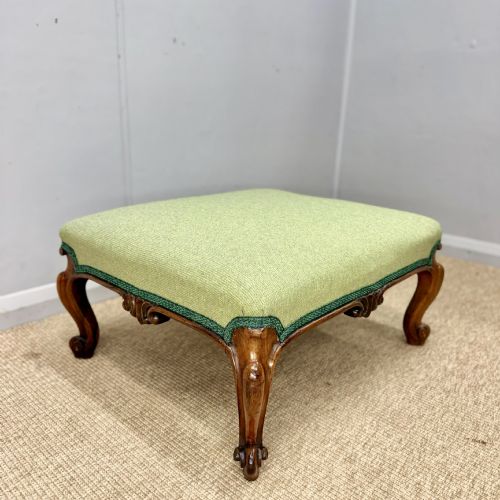
- A furniture leg that curves outward and then tapers inward, finishing in a pad or scroll foot. This shape defines many Victorian examples on this page.
- Cross-frame
- A structural support system where intersecting timber members form an X-shape beneath the seat. This configuration often includes brass pivot points or decorative central turnings.
- Bobbin leg
- A turned wooden support shaped to resemble a string of beads or bobbins. This decorative turning appears frequently on mid-nineteenth-century variants.
- Tapestry
- A heavy, hand-woven or jacquard textile used historically for durable seat coverings. Many period pieces retain or have been restored using similar woven fabrics.
Rosewood Dressing Footstool: Frequently Asked Questions
How do I date a rosewood footstool?
Dating relies on stylistic clues like cabriole legs, bobbin turnings and cross-frame construction methods. Victorian pieces typically feature heavier carved ornamentation compared to earlier Regency examples.
Material analysis of the underlying timber and the upholstery tack style also help narrow down the decade of production.
Were these stools used at dressing tables?
Yes, these low seats were specifically designed for placement in front of dressing tables and mirrors during the nineteenth century. Their compact height allowed comfortable seating while attending to hair and attire.
Over time, many transitioned into general parlour seating or low footstools placed before armchairs.
Can I use modern fabric for reupholstery?
Many surviving pieces arrive with newly updated upholstery fabrics that suit contemporary domestic interiors. Choosing durable textiles ensures the stool withstands daily use as a footrest or seat.
Traditional wools and tapestries remain popular choices for buyers wishing to maintain a strictly historical appearance.
What is an Anglo-Indian rosewood stool?
Anglo-Indian pieces combine traditional British furniture forms with distinct regional carving techniques executed abroad during the nineteenth century. These items feature denser floral or geometric relief work across the rosewood frame.
They represent the global reach of cabinet-making styles during the height of the Victorian era.