






Rosewood Bureau Table
These rosewood bureau table pieces bring together rich tropical timber and functional writing surfaces for the home, spanning periods from the eighteenth century to the twentieth.
Rosewood Bureau Table
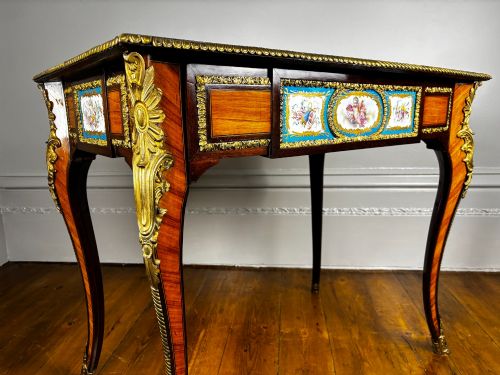
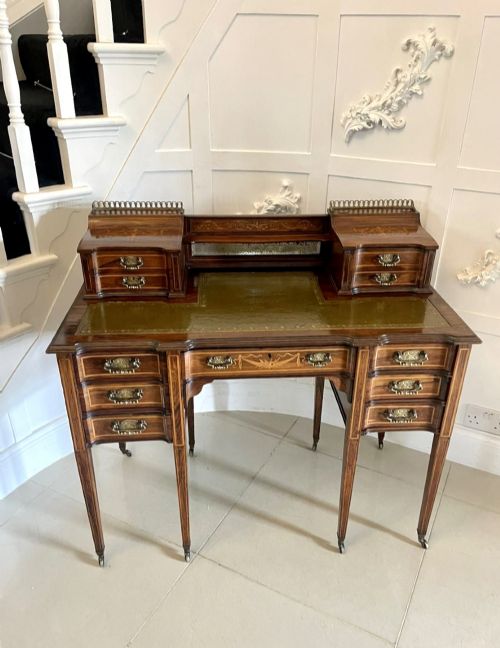
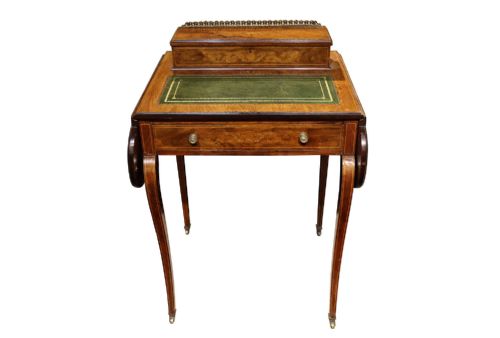
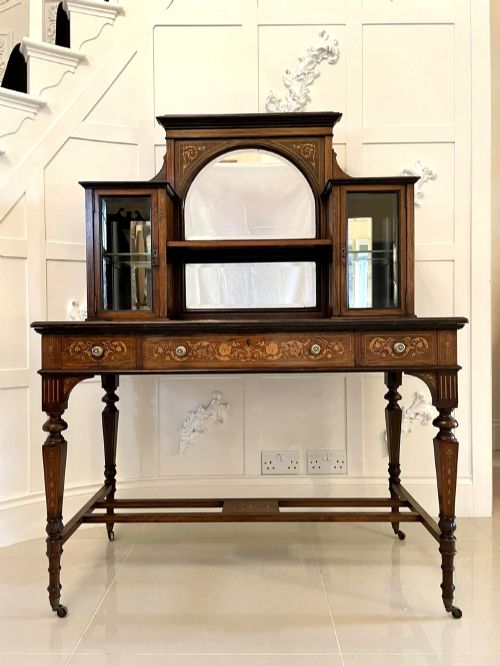
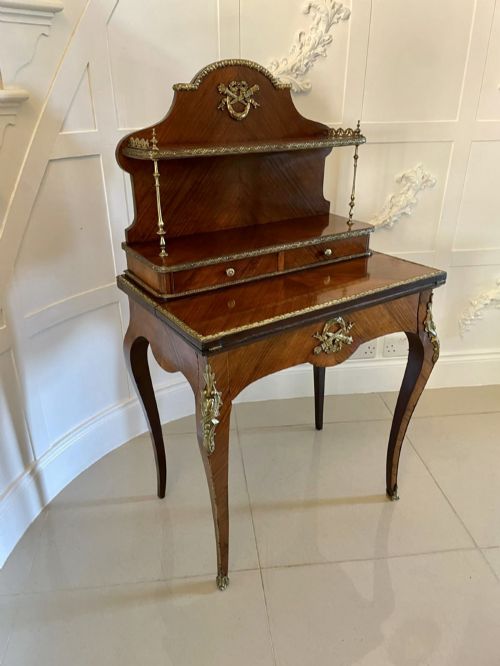
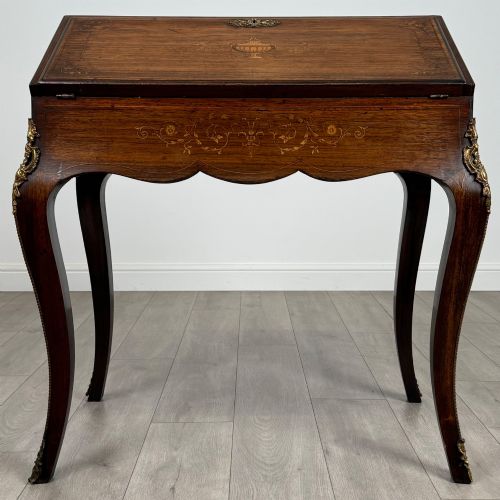
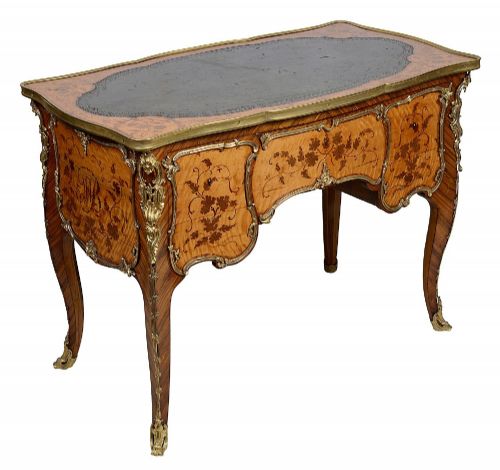
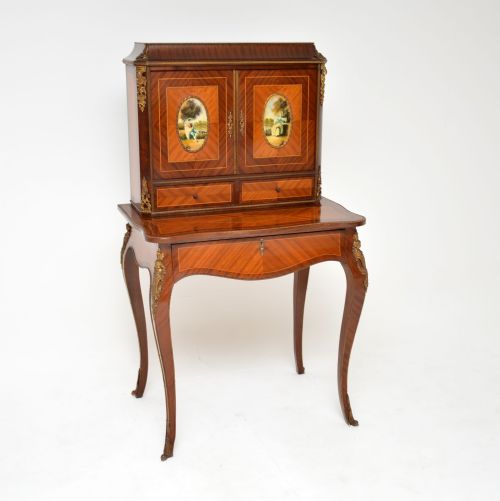
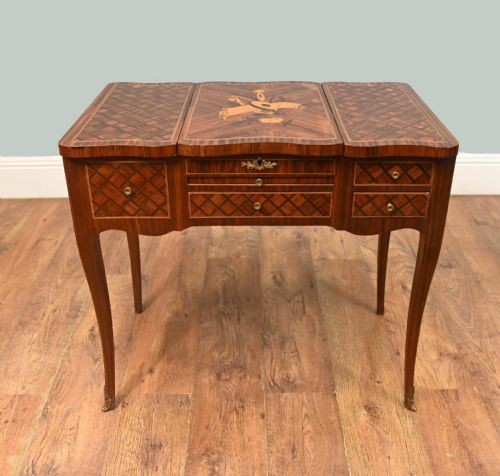
A rosewood bureau table encompasses various forms of writing furniture, from compact lady's desks and bonheur du jour designs to larger bureau plat tables and Davenport desks. The pieces emerging here span the eighteenth, nineteenth, and early twentieth centuries, with a strong representation of Victorian English craftsmanship and French revival styles.
Buyers encounter freestanding writing desks, kidney-shaped tables, and intricate side work tables equipped with fitted interiors for correspondence. Many examples originate from French workshops following Louis XV and Louis XVI designs, alongside English interpretations bearing characteristic marquetry and parquetry patterns.
The assortment includes pieces designed for specific domestic tasks, such as handling letters, storing jewellery, and managing household accounts. These items function as central focal points in a study or drawing room, combining display surfaces with practical enclosed compartments.
Materials and Technique
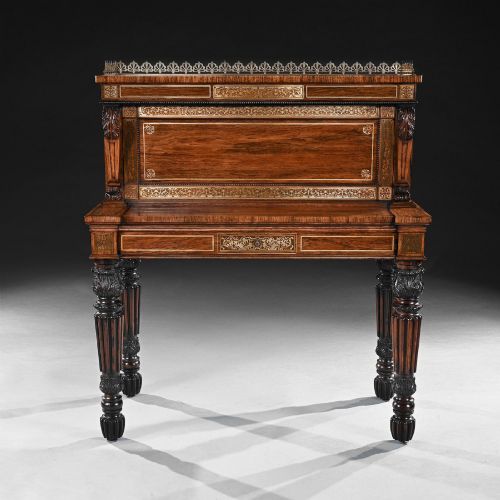
Cabinet makers utilised dense rosewood veneers over supportive secondary timbers, often embellishing surfaces with intricate satinwood, kingwood, and tulipwood inlay. Brass and ormolu mounts provide structural definition and decorative accents along edges and drawers.
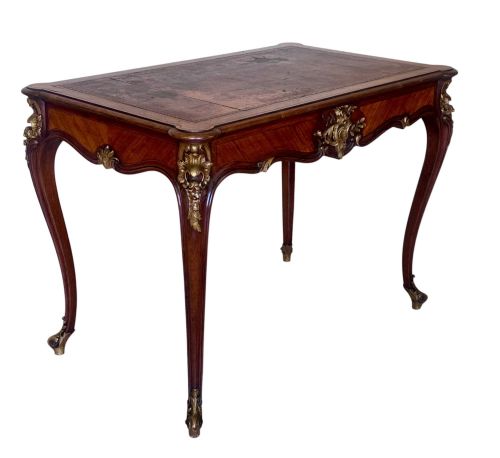
Workshop methods involved precision marquetry and parquetry to create geometric or floral motifs across writing surfaces and fall fronts. Leather inserts frequently form the writing plane, framed by elaborate gilt bronze hardware and cast brass galleries.
Rosewood Bureau Table Retail Price Guide 2026
Typical asking prices for rosewood bureau table among the pieces listed under this phrase on Sellingantiques today, from the lower quarter to the upper quarter. They describe what is for sale here now, not the wider market.
Listings feature rosewood alongside kingwood, satinwood, and glass, spanning Victorian, Regency, and eighteenth-century periods.
Craftsmanship and Execution
The distinction between tiers of production lies in the precision of the timber matching and the crispness of the gilt bronze or ormolu mounts. Finer examples display meticulous attention to interior compartments and secret drawers, executed by established cabinet makers rather than anonymous workshops.
Surface finishing dictates the integrity of the piece, with skilled parquetry and marquetry remaining flush and stable within the surrounding rosewood grain. The complexity of the mechanism, such as sliding tops or lockable fitted interiors, reflects the standard of workmanship applied to the original commission.
Maple & Co.·Gillows Oxford Street Workshop·CH. Jeanselme & Co·Donald Ross·Edwards and Roberts·Jas Shoolbred·John MaClean
The Rosewood Bureau Table Glossary
- Bureau plat
- A freestanding writing table with a flat top, typically featuring one or more drawers along the frieze and mounted with ormolu or brass.
- Bonheur du jour
- A light lady's writing desk featuring a small cabinet or set of pigeonholes and drawers on the upper surface.
- Marquetry
- Decorative veneer work forming pictorial or abstract patterns using various coloured woods applied to the carcase.
- Ormolu
- Gilded bronze ornamentation applied to the mounts, feet, and edges of high-status furniture pieces.
- Parquetry
- Geometric wood inlay patterns forming checkerboard or mosaic designs across tabletops and fall fronts.
Rosewood Bureau Table: Frequently Asked Questions
What is a bureau table?
A bureau table combines a flat writing surface with storage compartments, drawers, or a small upper cabinet designed for correspondence and paperwork.
These pieces function as compact desks suitable for drawing rooms or bedrooms, offering enclosed spaces for letters and small valuables.
How do I identify French revival styles?
French revival pieces incorporate curved cabriole legs, asymmetrical floral marquetry, and prominent gilt bronze or ormolu mounts characteristic of Louis XV and Louis XVI designs.
Maker attribution and workshop stamps often appear on the bronze mounts or within the drawer linings of these nineteenth-century interpretations.
Where should I place a writing table?
Freestanding writing tables suit placement in the centre of a room or against a wall, as finished rosewood veneer covers all sides of the carcase.
Avoid positioning the timber directly beside heat sources or in prolonged direct sunlight to prevent the veneers and leather inserts from drying out.