

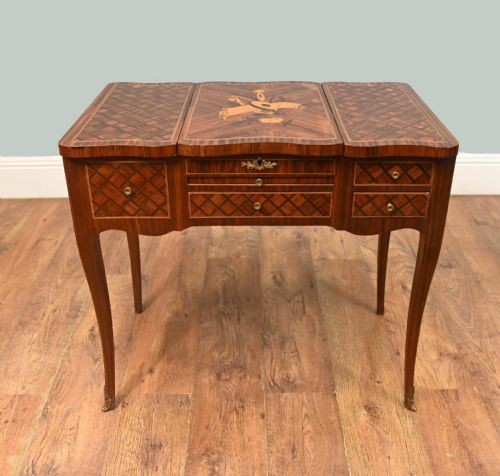


Rosewood and Kingwood Desk
A rosewood and kingwood desk brings French elegance to a study, offering fine timbers and rich mounts that elevate daily writing.
Rosewood and Kingwood Desk
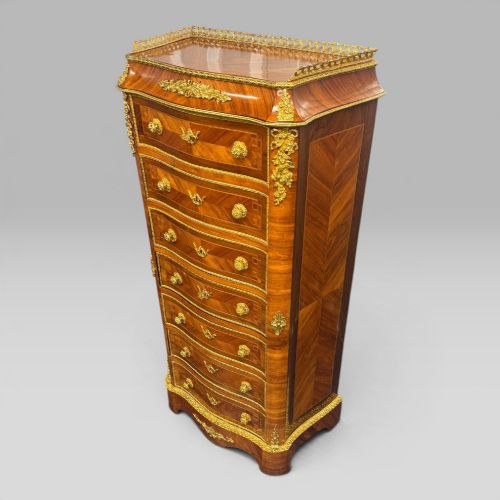
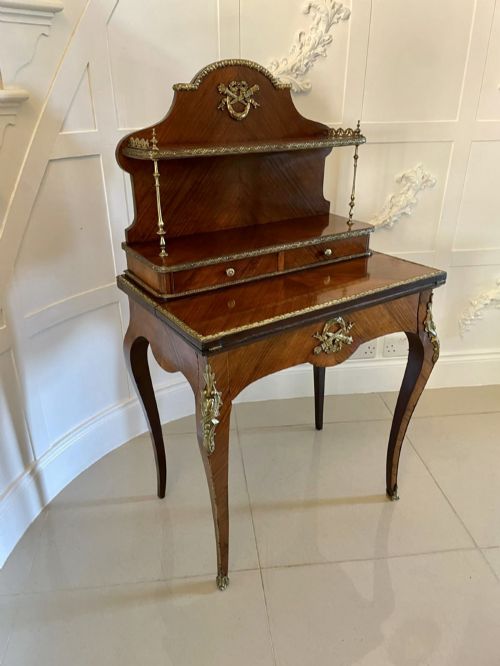
When searching for a rosewood and kingwood desk, buyers encounter sophisticated French forms primarily from the nineteenth century, including bureau plat, writing tables, and bonheur du jour varieties. These pieces reflect revival aesthetics like Louis XV and Louis XVI styles, bringing ornate curves and marquetry inlay into domestic spaces.
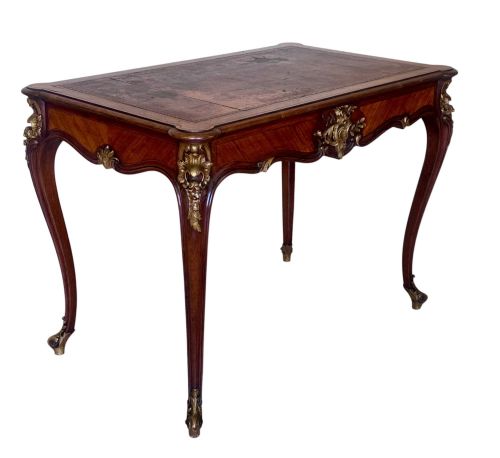
The version most commonly met on this page is the French writing table or bureau plat, often featuring elaborate parquetry and crossbanded details. These items span periods from the eighteenth century up to the mid-twentieth century, dominated by Victorian-era interpretations.
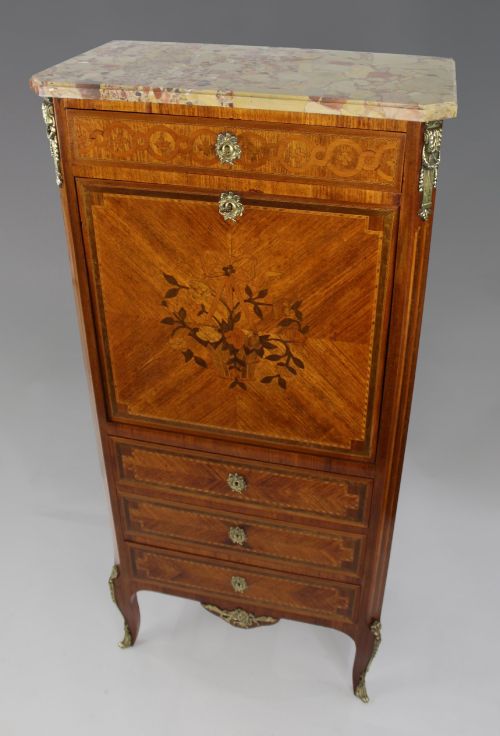
Forms extend beyond standard writing desks to encompass escritoires, dressing tables, and compact jewellery cabinets designed for domestic writing and correspondence. Each type exhibits distinct regional characteristics tied closely to French cabinet-making traditions.
Evaluating craftsmanship and execution
The finest examples display precision in their marquetry, where different wood species fit seamlessly together without gaps or filler. Superior execution shows in the crispness of the ormolu mounts, which feature sharp chased details rather than soft, mass-produced casting.
Proportion and balance separate standard production from exceptional work, particularly in the curvature of cabriole legs and the symmetry of bronze mounts. The selection of veneers demonstrates skill, with book-matched grain patterns creating harmonious visual symmetry across the top and drawer fronts.
Originality of components, such as functional brass locks, fitted interior drawers, and leather writing panels, defines the standing of a piece within its period.
Rosewood and Kingwood Desk Retail Price Guide 2026
Typical asking prices for rosewood and kingwood desk among the pieces listed under this phrase on Sellingantiques today, from the lower quarter to the upper quarter. They describe what is for sale here now, not the wider market.
Listings feature 19th-century French forms utilising kingwood, rosewood, ormolu, and leather across writing tables and bureaus.
CH. Jeanselme and Co
The Rosewood and Kingwood Desk Glossary
- Marquetry
- Decorative veneer work forming pictorial or geometric patterns using various coloured woods. This technique requires meticulous hand-cutting and fitting of timber veneers.
- Ormolu
- Gilded bronze used for decorative mounts and accents on furniture. It provides a bright metallic contrast against dark kingwood and rosewood surfaces.
- Bureau plat
- A freestanding double-sided writing table with drawers in the frieze. These pieces sit in the centre of a room rather than against a wall.
- Bonheur du jour
- A light lady's writing desk featuring a small cabinet or set of shelves on the upper surface. This form gained popularity during the eighteenth century and saw revivals later.
- Escritoire
- A writing cabinet with a sloping or drop-front writing surface concealing internal compartments. It combines storage with a dedicated writing space.
Rosewood and Kingwood Desk: Frequently Asked Questions
How do I care for kingwood surfaces?
Kingwood veneers require stable indoor humidity and protection from direct sunlight to prevent fading and veneer cracking. Regular dusting with a soft, dry cloth maintains the polished finish without chemical buildup.
Avoid placing damp items directly on the timber or leather writing surfaces to protect the historical finish from water marks and staining.
What is a bonheur du jour?
A bonheur du jour is a small, light writing desk featuring a superstructure of shelves, drawers, or a small cabinet on top. Designed for correspondence, it became a staple of refined Victorian and nineteenth-century interiors.
These pieces combine compact proportions with intricate marquetry and gilt-bronze mounts, making them suitable for smaller reception rooms or bedrooms.
How do I distinguish Louis XV and Louis XVI styles?
Louis XV style furniture is characterised by asymmetrical curves, serpentine lines, and ornate cabriole legs influenced by the Rococo movement. Ormolu mounts follow these fluid, organic shapes closely.
Louis XVI style shifts toward neoclassical geometry, featuring straight tapered legs, fluted columns, and symmetrical rectangular forms with crisp architectural details.