
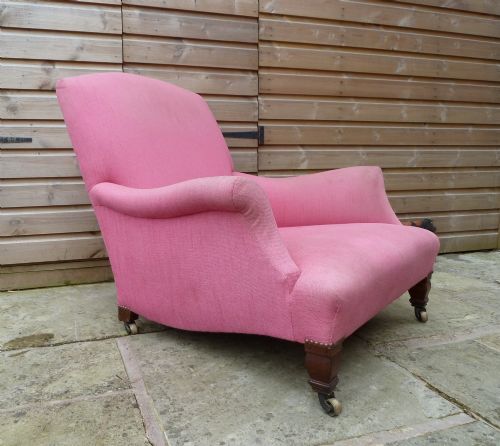

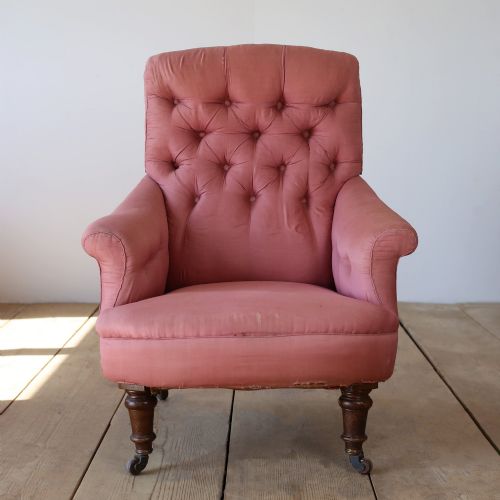
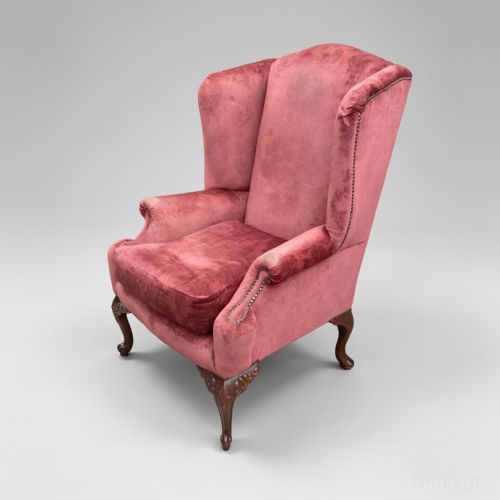
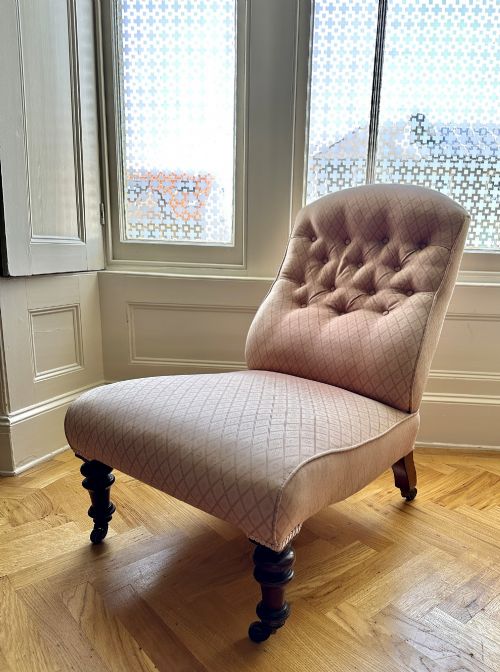


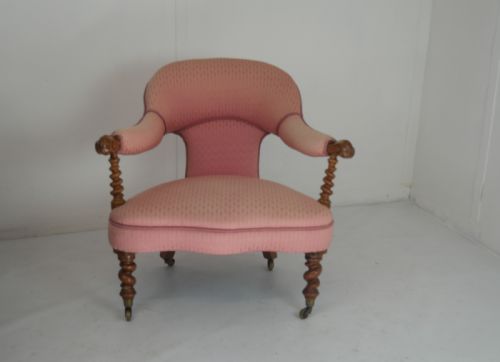

Rose Pink Fireside Chair
A rose pink fireside chair brings warmth and traditional comfort to a room, spanning Victorian button-backs to early twentieth-century wingbacks.
Rose Pink Fireside Chair
When you search for a rose pink fireside chair, you encounter a selection of historic upholstered seating designed for warmth and comfort by the hearth. These pieces primarily date from the nineteenth and early twentieth centuries, encompassing Victorian, Edwardian, and revival styles.
The forms on this page include traditional wingback armchairs, button-backed drawing room seats, and low slipper chairs. Walnut and mahogany frames frequently support the plush upholstery, often styled after earlier Georgian, Chippendale, or Queen Anne designs.
Most examples rely on generous padding and sprung seats built for domestic ease. The survival of these chairs demonstrates the enduring appeal of traditional British seating forms in pink textile finishes.
How they were made
The structural frames of these chairs rely on hardwoods such as mahogany, walnut, and various solid timbers. Joinery methods of the period ensure stability, often concealed beneath heavy textile coverings.
Upholstery techniques involve traditional stuffing materials held by webbing and springs, finished with hand-tacked velvet, tapestry, or plain fabric. Buttoning techniques provide structural tension and decorative relief on the backrests.
Common revival aesthetics represented here include George III style, Chippendale revival, and Queen Anne revival forms.
What varies in quality
The sophistication of the timber framing separates standard production from finer workshop output. Carved details on mahogany or walnut legs reflect the attention given by the maker.
The execution of the upholstery, from the depth of the buttoning to the selection of velvet or tapestry, dictates the overall character. Original frame integrity underpins the long-term presence of each piece.
Gillows
The Rose Pink Fireside Chair Glossary
- Button back
- A traditional upholstery method where deep indentations are secured with twine and buttons, creating a padded diamond pattern across the backrest.
- Wingback
- An armchair featuring protective side panels designed to shield the occupant from drafts near an open fireplace.
- Slipper chair
- A low-seated bedroom chair traditionally used by ladies while dressing, requiring minimal height off the floor.
- Spoonback
- A chair with an oval backrest curved inward to resemble the bowl of a spoon, typical of mid-Victorian seating design.
- Revival style
- Nineteenth-century furniture design that consciously emulates historical aesthetics such as Georgian, Chippendale, or Queen Anne.
Rose Pink Fireside Chair: Frequently Asked Questions
How do I identify a Victorian fireside chair?
Victorian fireside chairs often feature walnut or mahogany frames with sprung upholstery and button-backed detailing. They draw upon established nineteenth-century forms designed for domestic comfort.
Look for traditional joinery beneath the fabric and proportions suited to nineteenth-century parlours and drawing rooms.
What is a wingback armchair?
A wingback armchair incorporates protective side panels extending from the arms to the backrest. These panels originally deflected drafts from open fireplaces.
Such chairs appear across Victorian, Edwardian, and revival periods, upholstered in materials like velvet or tapestry.
Where should I place a fireside chair?
These chairs suit living rooms, studies, or bedrooms where traditional seating creates a focal point. Their upholstered forms provide functional comfort by a fireplace or in a quiet reading corner.
Consider the scale of the wooden frame and the height of the backrest when positioning the chair within a room.
What is the difference between a slipper chair and an armchair?
Slipper chairs possess low seats and lack arms, originating as bedroom furniture for ease of dressing. Armchairs offer taller proportions and supportive armrests designed for extended sitting.
Both forms utilise period timber frames and textile upholstery.