

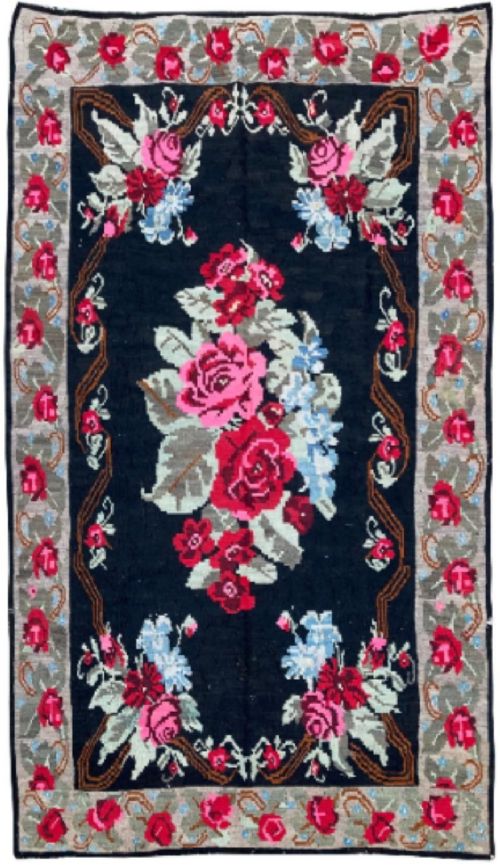


Rose Kilim Carpet
A rose kilim carpet brings floral panels and flatweave structure together, offering a distinct alternative to standard pile rugs.
Rose Kilim Carpet
A rose kilim carpet represents a specific category of flatweave textiles that feature floral designs, combining traditional weave techniques with naturalistic motifs. When you search for a rose kilim carpet, you encounter flatwoven floor coverings originating from the late nineteenth century and the early twentieth century.
The selections on this page span several decades from 1890 to 1930, capturing production periods associated with Bessarabian, Moldovan, and Caucasian workshops. These pieces appear primarily as rugs and larger carpets rather than smaller utility mats.
You are most likely to meet Bessarabian kilims on this page, as they dominate the current listings. These examples frequently showcase large-scale rose motifs against dark grounds, following regional traditions from the turn of the twentieth century.
How rose kilim carpets were made
Makers constructed these textiles using wool for the structural warps and wefts, supplemented by cotton in various foundational elements. This flatweave method avoids knotted piles, resulting in a smooth surface where the pattern is created by interlocking weft threads.
Weavers utilised hand-spun wool fibres dyed with regional colour palettes to render detailed floral arrangements. The resulting flat structure allows the textile to function as both a decorative wall hanging and a functional floor covering.
Rose Kilim Carpet Retail Price Guide 2026
Typical asking prices for rose kilim carpet among the pieces listed under this phrase on Sellingantiques today, from the lower quarter to the upper quarter. They describe what is for sale here now, not the wider market.
Current listings feature wool and cotton materials across four distinct decades from 1890 to 1930.
What varies in quality
The refinement of the floral rendering separates standard examples from superior ones. Tonal graduation within the rose petals and leaves determines the visual depth of the design.
Structural tightness in the weave affects longevity and crispness of the pattern edges. Tighter weft packing secures the wool yarns more firmly, maintaining the integrity of the flatweave over decades of use.
The Rose Kilim Carpet Glossary
- Kilim
- A flatwoven textile produced without a pile. This technique creates a lightweight fabric with identical patterns visible on both sides.
- Bessarabian
- A regional style originating from historical Bessarabia, known for dark backgrounds paired with large, realistic floral bouquets. These pieces often date from the nineteenth and early twentieth centuries.
- Warps
- The stationary vertical threads stretched on a loom before weaving begins. They form the foundational grid that supports the weft yarns.
- Wefts
- The horizontal threads passed through the warp yarns to build the pattern and colour. In kilims, these threads are tightly packed to conceal the vertical foundation.
Rose Kilim Carpet: Frequently Asked Questions
What is a rose kilim carpet?
A rose kilim carpet is a flatwoven textile featuring floral ornamentation, produced predominantly in regions such as Bessarabia and the Caucasus. These pieces utilise a tapestry weave rather than a knotted pile.
They offer a flatter profile than traditional carpets while displaying naturalistic floral bouquets, particularly roses, set against dark backgrounds.
How do I date a rose kilim carpet?
Dating relies on stylistic markers, materials, and documented production eras visible in pieces from 1890 through 1930. Earlier examples often show specific regional colour palettes.
Examining the wool types and dye characteristics helps place a textile within the late nineteenth or early twentieth century.
Where were these carpets made?
The available pieces originate from Bessarabia, Moldova, and the Caucasus. Each region developed distinct approaches to floral flatweaves.
Bessarabian and Moldovan workshops are particularly noted for large rose motifs, while Caucasian pieces such as Karabagh kilims incorporate local geometric sensibilities.
Are rose kilims fragile?
Flatweave carpets lack a protective pile, meaning the structural threads take direct contact during use. Wool construction provides natural resilience against normal foot traffic.
Using an appropriate underlay helps distribute weight and prevents slipping, extending the lifespan of antique flatweaves.