


Rose Gold Bangles
Rose gold bangles bring a warm, coppery glow to the wrist, offering lasting durability alongside unmistakable antique character.
Rose Gold Bangles
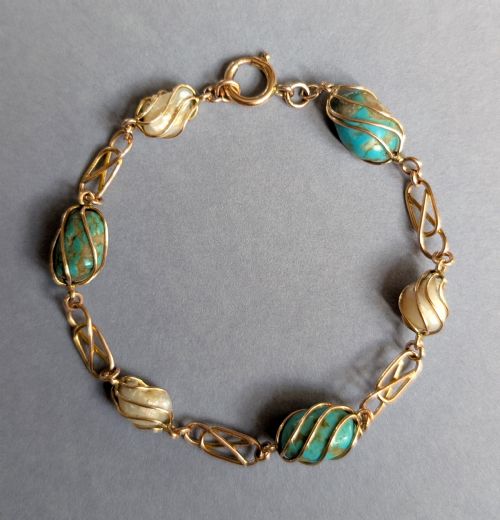
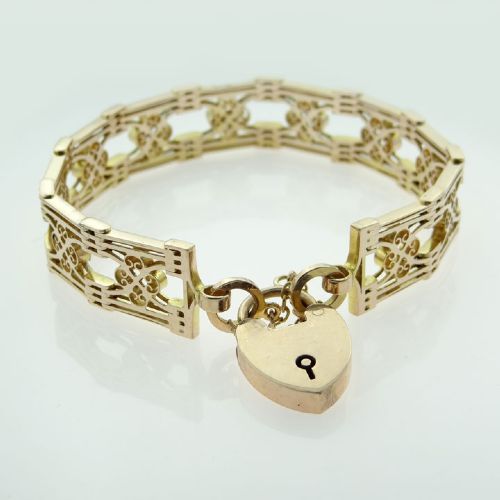
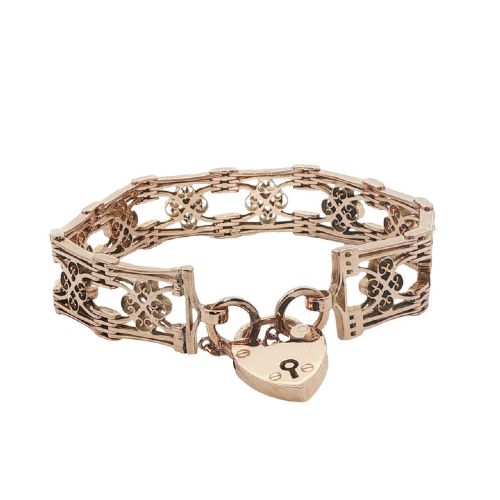
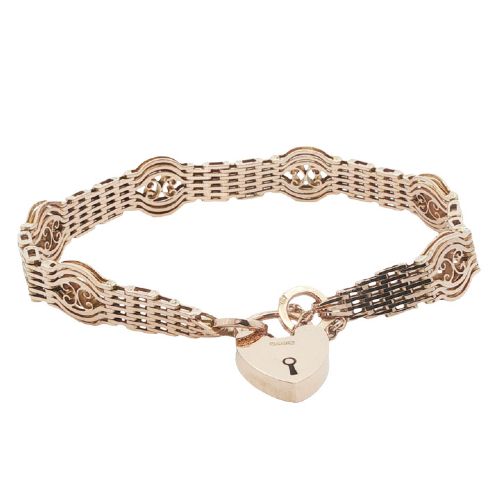
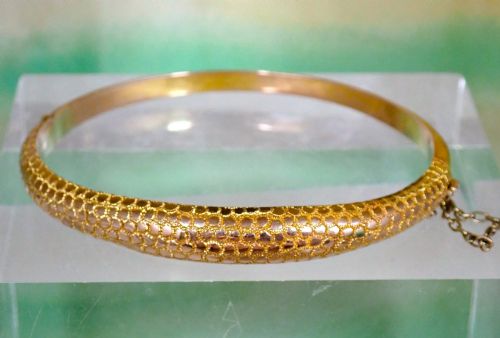
When you search for rose gold bangles, you encounter a selection spanning the Victorian, Edwardian, Art Deco and 1940s Retro eras. The listings here primarily comprise rigid hinged cuffs alongside flexible link styles such as traditional gate bracelets and patterned link bands.
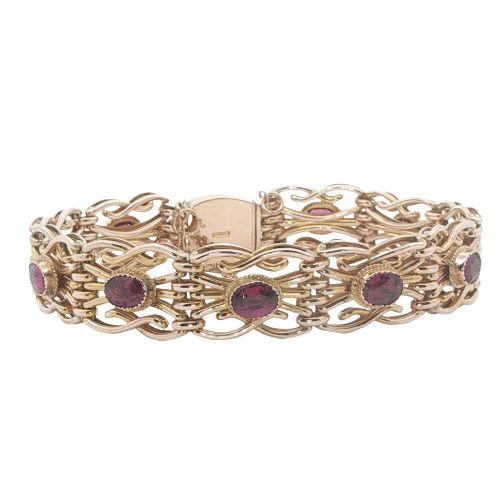
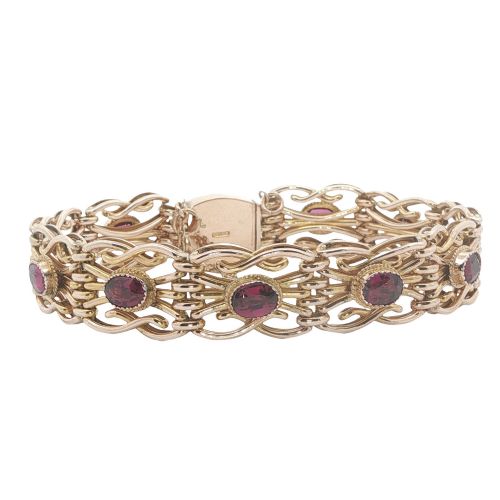
Most pieces date from the nineteenth and early twentieth centuries, featuring distinct period motifs including heart padlocks, lovers knots, and snake designs. The majority are wrought in nine carat or fifteen carat rose gold, often accented with gemstones like turquoise, garnet, ruby, and diamond.
How They Were Made
Jewellers shaped these pieces using varying purities of rose gold, predominantly nine carat and fifteen carat, sometimes combining them with yellow gold or silver. Metal components were frequently hollow-formed to achieve volume without excessive weight, or constructed with articulated gate links for flexibility.
Gemstones such as almandine garnets, rubies, sapphires, and seed pearls were securely set using star settings, bezel settings, or claw mounts. Catch mechanisms, safety chains, and heart padlocks were meticulously engineered by hand to ensure secure daily wear.
Listings feature nine carat rose gold, fifteen carat rose gold, and eighteen carat rose gold across Victorian, Edwardian, Art Deco, and 1940s Retro eras.
What Varies in Quality
The standard of a piece rests heavily on the crispness of its metalwork and the integrity of its hinges and clasps. Superior examples display robust link construction, crisp chasing or engraving, and secure gemstone settings that withstand the rigours of regular fastening and unfastening.
Design complexity also dictates the tier of the piece, moving from simple hollow bands to intricately articulated gate bracelets featuring heart padlocks, multiple gemstones, and multi-coloured gold work. The presence of well-matched natural stones and fully intact original safety chains elevates the distinction of the jewel.
The Rose Gold Bangles Glossary
- Gate bracelet
- A flexible link bracelet fashioned to resemble traditional wooden garden gates, often finished with a padlock clasp. This form was immensely popular during the Victorian and Edwardian periods.
- Padlock clasp
- A functional heart-shaped lock used as a secure fastening mechanism on antique bracelets. They frequently served as sentimental tokens in Victorian jewellery.
- Lovers knot
- A decorative motif formed by intertwining two strands of metal to represent an unbreakable bond. It appears frequently in sentimental Victorian gem-set bangles.
- Almandine garnet
- A deep red variety of garnet commonly utilised in Victorian and Edwardian cluster rings and bracelets. Its dark hue complements the warm tone of rose gold.
- Hinged cuff
- A rigid bracelet constructed from two semicircular metal halves joined by a hinge and secured with a tongue clasp. This structural form allows the piece to fit snugly around the wrist.
Rose Gold Bangles: Frequently Asked Questions
How do I fasten a heart padlock bracelet?
Most antique gate bracelets utilise a spring-loaded latch within the heart-shaped padlock that depresses to hook onto a designated jump ring. Ensure the safety chain is intact before securing the main clasp.
Take care not to force the mechanism if it resists, as older springs can be delicate. A gentle press usually releases the catch smoothly.
Are these bangles suitable for daily wear?
Many Victorian and Edwardian rose gold bangles are robust enough for regular wear, provided they are treated with appropriate care. Hollow-formed pieces require extra mindfulness to prevent denting.
Remove your bracelet during manual labour, swimming, or sleeping to protect delicate gemstones like pearls and turquoise from impact and moisture.
What is the difference between a bangle and a gate bracelet?
A bangle is a rigid, solid circle or hinged cuff that maintains its shape on the wrist. A gate bracelet is flexible, constructed from numerous parallel metal links joined together.
Both styles were produced in rose gold across the nineteenth and twentieth centuries but offer entirely different tactile experiences when worn.