




Rose Cut Diamond Earrings
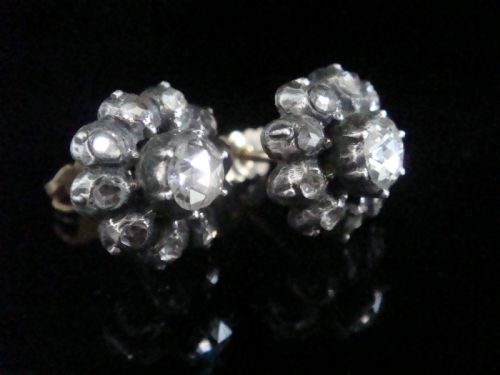
Rose cut diamond earrings bring a soft, historic sparkle to the ear, combining flat bases with domed, faceted crowns.
Rose Cut Diamond Earrings
Rose cut diamond earrings encompass a range of historic styles from Georgian, Victorian, and Edwardian periods, stretching through to Art Deco designs. Buyers searching this phrase look for authentic antique pieces that showcase characteristic hand-cut stones rather than modern brilliant cuts.
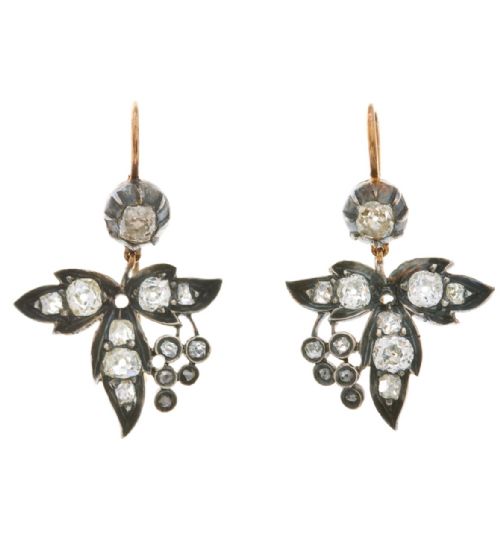
The most common examples on this page are Edwardian and Victorian drop or cluster earrings, frequently paired with yellow gold, platinum, or natural pearls. These historic jewels often incorporate additional gems like emeralds, sapphires, and rubies alongside the central diamonds.
Design formats vary considerably, moving from simple cluster studs to elaborate night and day pairs and intricate bow drop configurations. Each period brings distinct metalwork choices, transitioning from early silver-topped gold settings to later platinum and high-karat gold constructions.
Materials and construction techniques
The stones are cut by hand to feature triangular facets rising to a distinct apex, sitting upon a flat bottom that allows them to capture candle or gas light differently than modern cuts. Craftsmen set these diamonds into metals such as silver, 18ct yellow gold, rose gold, and platinum.
Early examples often utilise a silver-topped gold technique, mounting stones in silver to enhance their whiteness while using gold underneath for structural strength. Later Edwardian and Art Deco pieces employ platinum and white gold to create delicate, lace-like settings and secure bezels.
Rose Cut Diamond Earrings Retail Price Guide 2026
Typical asking prices for rose cut diamond earrings among the pieces listed under this phrase on Sellingantiques today, from the lower quarter to the upper quarter. They describe what is for sale here now, not the wider market.
The inventory records spanning Georgian, Victorian, and Edwardian eras feature yellow gold, platinum, and silver alongside natural pearls and coloured gemstones.
Assessing quality in antique diamond earrings
Quality depends heavily on the symmetry of the hand-cut facets and the transparency of the stones, which determines how effectively the diamond reflects light. Superior examples display clean symmetry and secure original settings that have not suffered from heavy modern reconstruction or claw replacement.
The integration of supporting materials such as natural pearls, emeralds, or sapphires dictates the overall desirability of the piece. Well-matched side stones and intact original closures, including French hook wires or screw backs, elevate the integrity of the design.
The Rose Cut Diamond Earrings Glossary
- Rose cut
- A historic diamond cut featuring a flat base and a domed crown with triangular facets. This cut originated in the 16th century and predates the modern brilliant cut.
- Cluster
- A style of setting where a central stone is surrounded by a ring of smaller gems. This configuration maximises visual impact and light reflection.
- Night and day
- Convertible earrings featuring a removable lower drop section. This clever design allows the wearer to transition from a simple day stud to an elaborate evening drop.
- Dormeuse
- A type of historic French sleeping earring designed with a secure hinged wire closure. They sit comfortably close to the earlobe.
- Trefoil
- An ornamental design incorporating three overlapping lobes or leaf shapes. It appears frequently in Edwardian cluster and drop configurations.
Rose Cut Diamond Earrings: Frequently Asked Questions
Can I wear antique diamond earrings every day?
Historic earrings require careful handling, particularly older silver-topped gold examples which are sensitive to moisture and harsh cosmetics. Regular checks by a jeweller ensure the stones remain secure in their handcrafted settings.
Storing them in individual compartments prevents scratching against other pieces in your collection. Gentle cleaning with a soft brush and warm soapy water maintains their historic lustre without causing damage.
How do I identify Georgian earrings?
Georgian pieces often feature closed-back foil settings where a thin sheet of coloured metallic foil sits beneath the diamond to enhance its brilliance under candlelight. The hand-cut stones tend to have irregular, organic facet patterns unique to the period.
The metalwork frequently employs low-carat gold or silver over gold, reflecting the manual techniques of the 18th and early 19th centuries. Closed backs mean these earrings should be kept away from water during cleaning.
What is the difference between old cut and rose cut?
Rose cut stones have a flat base and a single domed top covered in triangular facets, lacking the deep pavilion and table found in modern stones. Old cut diamonds, such as old mine cuts, possess both a crown and a pavilion with a distinct culet.
While old cuts approximate the geometry of modern brilliant cuts with greater depth and sparkle, rose cuts offer a translucent, shimmering quality reminiscent of early candlelight jewellery.
Are French antique earrings marked differently?
Many continental pieces feature tiny punch marks known as hallmarks, such as the eagle head indicating French manufacture in 18ct gold during the 19th and 20th centuries. These tiny stamps appear on the exterior of the wire or mounting.
British and other European items rely on distinct styles and construction methods rather than standardised stamps to indicate their period of origin.