


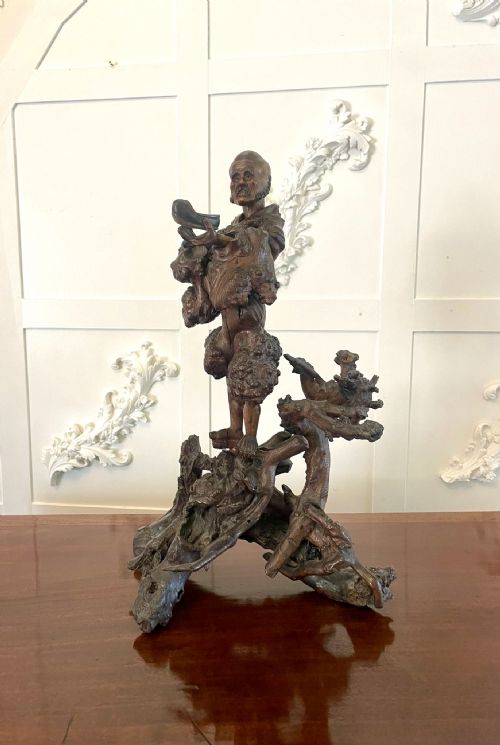


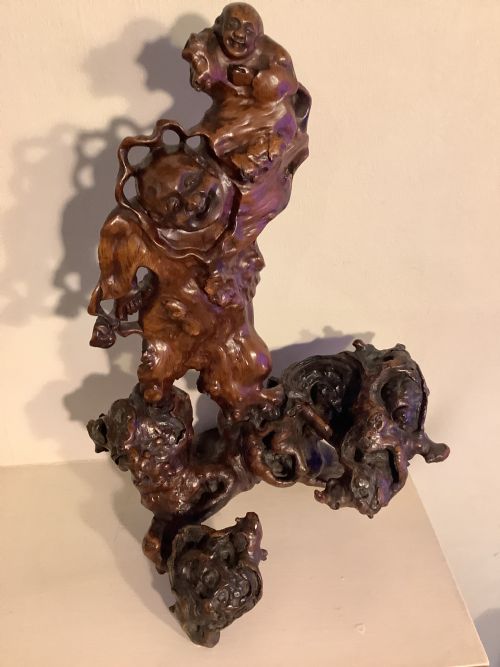


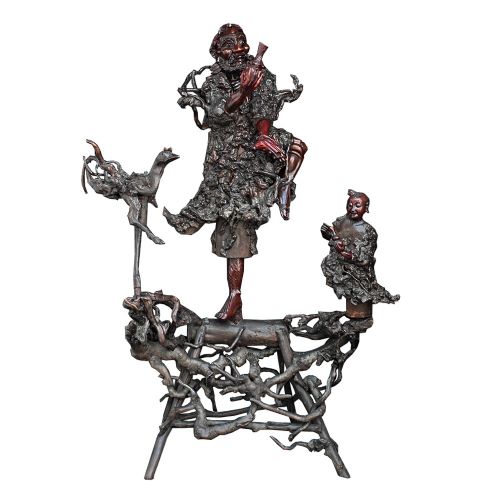


Root Wood Figure
A root wood figure is an organic sculpture shaped by nature and human hand, prized for its expressive twists and gnarled forms.
Root Wood Figure
A root wood figure represents a traditional sculptural form shaped from the natural contours of timber roots, often depicting scholars, deities, or mythical animals. These pieces draw upon Chinese Qing Dynasty and Japanese Meiji period traditions, where carvers worked closely with the eccentric grain and knot formations of the raw material.
The pieces appearing on this page span the nineteenth century, encompassing regional Chinese carvings alongside Japanese works mounted on similar natural bases. Forms range from standalone sculptures of scholars and lion dogs to functional items such as table lamps and headrests.
Makers followed the natural growth of the timber rather than imposing a rigid geometric form, turning knots and branches into robes, hair, or facial expressions. This approach creates distinct silhouettes where no two figures share the same posture or proportions.
What varies in quality
Quality rests upon how successfully the carver incorporated the natural anomaly of the root into the anatomy of the figure. The finest examples balance organic distortion with deliberate anatomical definition, avoiding excessive human intervention where the wood already suggests a form.
The depth of the surface finish and the retention of a warm, handled patina distinguish superior carvings from flat or overly sanded surfaces. Grain visibility and the structural integrity of complex protruding branches further separate the output of skilled workshops from simpler regional pieces.
Root Wood Figure Retail Price Guide 2026
Typical asking prices for root wood figure among the pieces listed under this phrase on Sellingantiques today, from the lower quarter to the upper quarter. They describe what is for sale here now, not the wider market.
Gyoko
The Root Wood Figure Glossary
- Root wood
- Timber taken from the underground or lower stump portion of a tree, valued for its dense, twisted grain patterns. Carvers utilised these irregular shapes to suggest organic forms.
- Burr wood
- A growth on a tree where the grain has grown in a deformed manner, resulting in swirling patterns when polished. It frequently appears in nineteenth-century scholarly carvings.
- Lion dog
- Also known as a Foo dog, this mythical guardian creature appears frequently in traditional Chinese sculpture. Figures take protective postures with stylized mannes and paws.
- Patina
- The glossy sheen developed on the surface of wood over long periods of handling and exposure to air. A good patina indicates age and regular contact.
- Meiji period
- The era of Japanese history lasting from eighteen sixty-eight to nineteen twelve, associated with refined craftsmanship in metalwork, bronze, and supporting root wood bases.
Root Wood Figure: Frequently Asked Questions
What is a root wood figure?
A root wood figure is an organic sculpture carved directly from the gnarled and twisted root systems of hardwood trees. Carvers followed the natural contours of the timber to reveal figures such as scholars, deities, or animals.
These pieces reflect traditional woodworking methods from nineteenth-century Asia, where the natural shape of the wood dictated the final composition.
How were these carvings used?
These pieces served primarily as desk ornaments, scholarly contemplation objects, or decorative displays within traditional interiors. Some examples from the period were later adapted into table lamps.
Their tactile forms made them suitable for handling, which contributed to the development of a smooth surface finish over time.
How do I care for a root wood carving?
Keep the wood away from direct heat sources and sudden humidity changes to prevent splitting in the dense grain. Dust the intricate crevices gently with a soft brush rather than using liquid polishes.
Allow the natural oils in the timber to maintain their own finish without heavy chemical intervention.
How can I tell the period of a root carving?
Dating relies on observing the tool marks, the depth of the surface patina, and the specific stylistic conventions of the carving. Nineteenth-century examples often exhibit hand-carving details and deep, organic wear.
Comparing the treatment of the wood grain against documented regional styles helps confirm the era of origin.