



Rococo Two Light Sconce
A rococo two light sconce brings asymmetric curves and twin arms to a wall, illuminating a room with the energetic spirit of the eighteenth-century revival.

Rococo Two Light Sconce
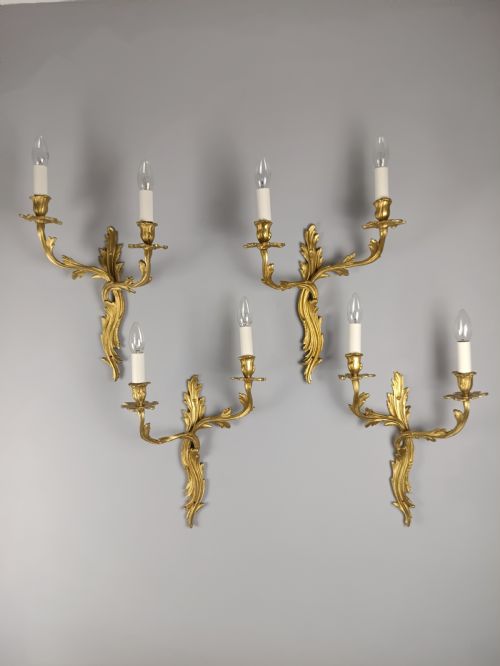
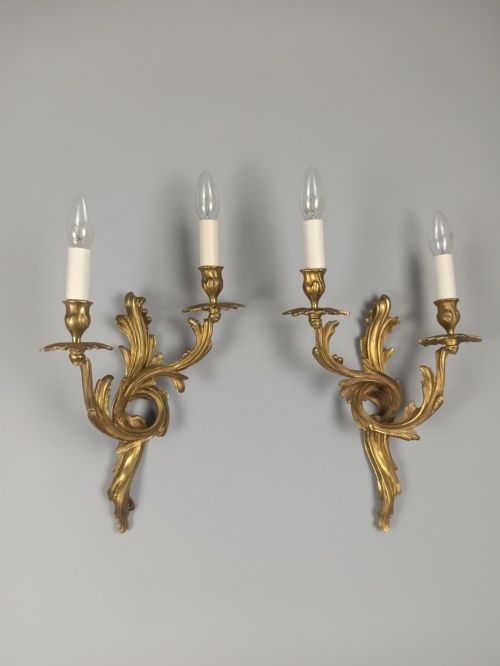
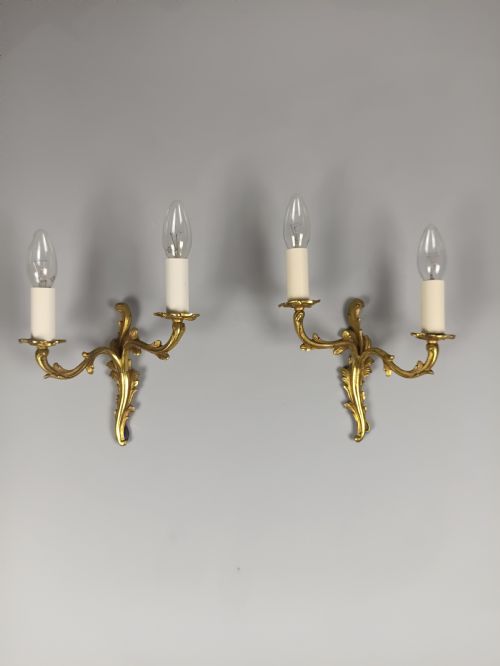
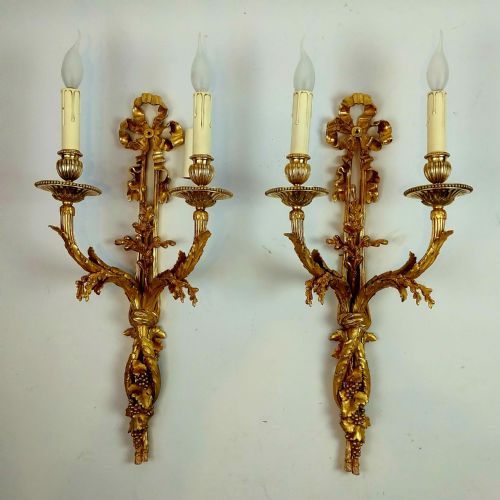
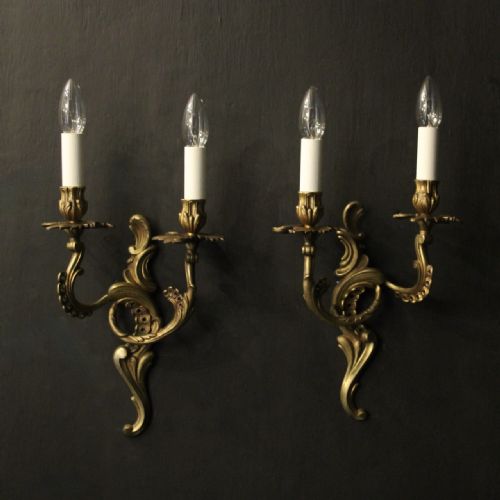
A rococo two light sconce is a decorative wall-mounted lighting fixture featuring two branching arms designed to hold candles or electric lamps. These fixtures take the form of wall lights, wall sconces, and candelabras originating mainly from French and Italian workshops across the nineteenth and early twentieth centuries.
Buyers will most frequently encounter pairs and sets of twin-arm fixtures cast in gilt brass or gilded bronze. The prevailing designs lean heavily into French Rococo, Louis XV Revival, and Florentine styles, often displaying characteristic scrolls and asymmetric foliage.
The selection ranges from nineteenth-century examples to pieces produced in the opening decades of the twentieth century. These fixtures serve to project warm illumination across a room while functioning as sculptural wall ornaments.
How they were made
Metal components such as brass and bronze were cast and chased to create intricate scrollwork and naturalistic motifs. Many pieces received an application of ormolu or gilding to impart a rich, reflective surface finish.
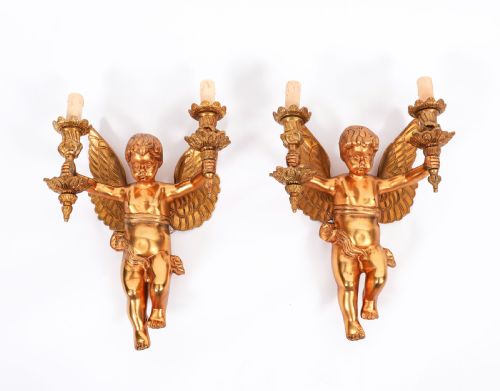
Wood-based alternatives utilise carved gesso and giltwood to achieve the same organic, flowing contours. Artisans shaped these materials by hand before applying layers of metallic leaf or polychrome paint.
Several Italian examples feature hand-painted cherubs peering out from beneath golden scrolls.
What varies in quality
The depth and clarity of the chasing separate standard production from superior work. Crisp detailing in the acanthus leaves and scrollwork indicates a more skilled hand during the manufacturing process.
The choice of base metal and the method of gilding influence the longevity and visual weight of the fixture. Heavier bronze castings with durable mercury gilding or gold leaf retain their lustre better than thinner brass alternatives.
The Rococo Two Light Sconce Glossary
- Ormolu
- Finely ground high-carat gold applied to a bronze base through a mercury amalgamation process. This technique creates a deep, warm metallic finish found on superior nineteenth-century pieces.
- Gesso
- A plaster-like mixture applied to wood surfaces as a base for gilding or painting. It allows carvers to achieve sharp, detailed relief work on wooden sconces.
- Louis XV Revival
- A nineteenth-century design movement inspired by the asymmetrical curves and natural forms of the French Rococo period. Pieces from this style emphasise C-scrolls and floral asymmetry.
- Candelabra
- A branched candlestick holder designed to support multiple light sources. In wall-mounted formats, these fixtures project outward from a backplate to illuminate surrounding space.
Rococo Two Light Sconce: Frequently Asked Questions
How are these sconces mounted?
Wall lights typically secure directly to a wall via a backplate containing screw holes. Wiring passes through the structural mount into the domestic electrical supply.
Heavier bronze models require secure fixings into masonry or timber studs to support the weight of the metal arms.
Can these lights take modern bulbs?
Many surviving fixtures are adapted during rewiring to accommodate standard lamp holders. Electricians fit modern internal wiring while preserving the external historic metalwork.
Buyers should check individual listings to see if a piece has been recently rewired for contemporary use.
Are these fixtures sold as pairs?
The selection includes many matched pairs and larger sets alongside occasional single pieces. Sconces were historically designed to flank mirrors, doorways, or fireplaces in symmetrical arrangements.
Finding matching pairs remains common across nineteenth and early twentieth-century French production.
What materials make up these sconces?
Construction relies primarily on cast metals including brass, bronze, and gilt-finished alloys. Gilded wood and gesso also appear frequently, particularly in Italian and Florentine examples.
Crystal elements sometimes supplement the metal framework to catch and refract the light.