
Rococo Lighting
Rococo lighting brings elaborate, organic curves and gilded finishes to interiors, offering dramatic illumination through chandeliers, wall sconces and girandoles.
Rococo Lighting
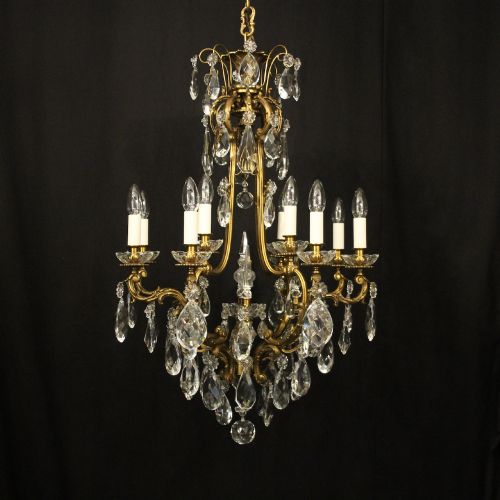
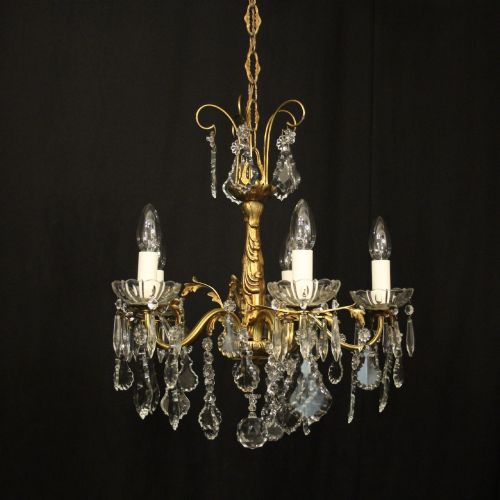
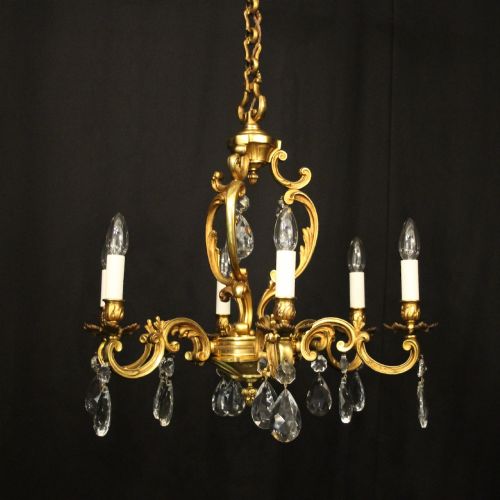
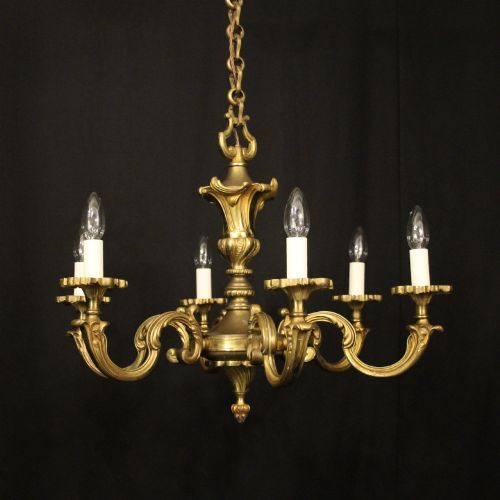
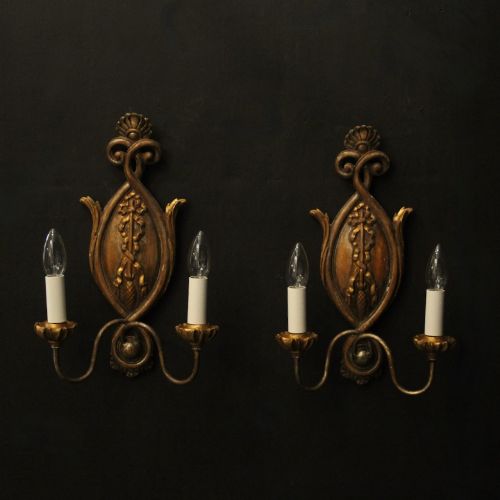
Rococo lighting encompasses ornate fixtures designed to illuminate interiors with dramatic flair, drawing heavily from historical French aesthetics. When exploring rococo lighting, buyers encounter pieces ranging from multi-light chandeliers to paired wall sconces and girandoles. The selection leans heavily towards French origins, with notable Italian and Dutch examples appearing across various periods.
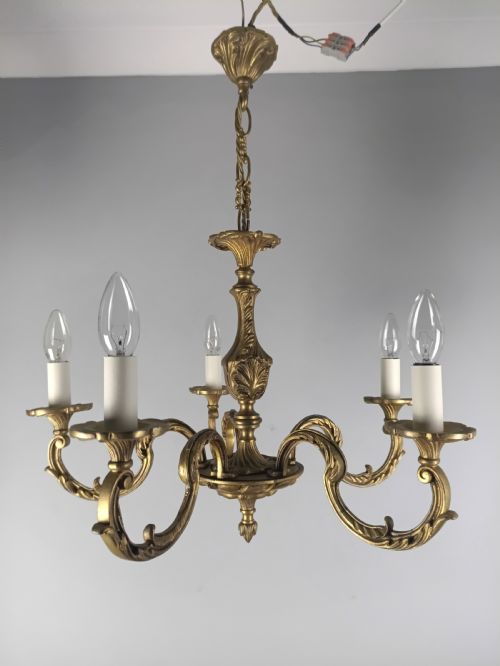
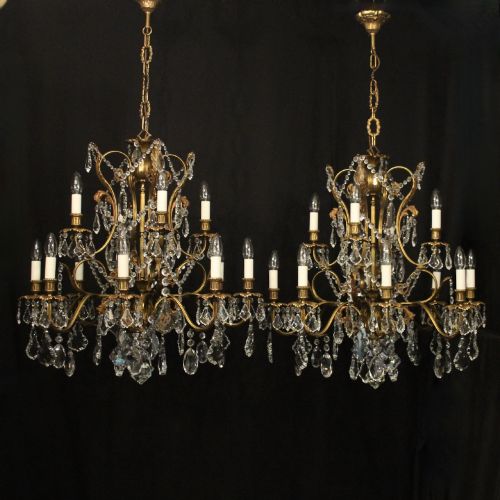
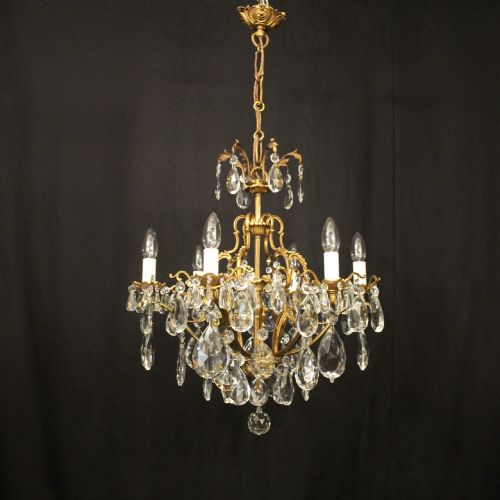
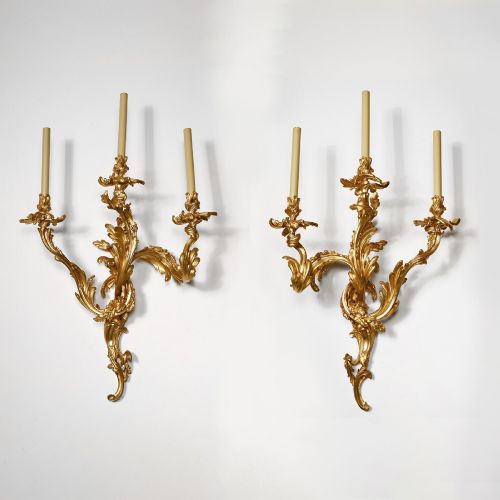
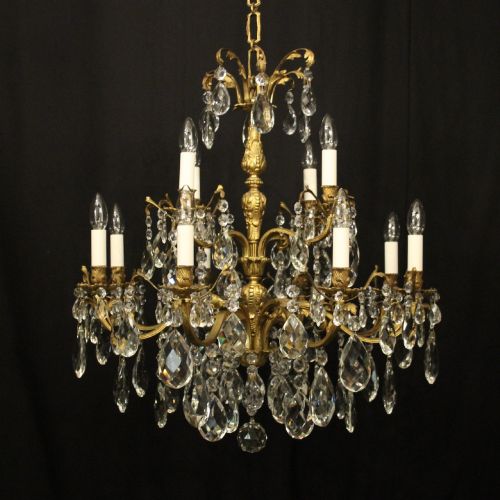
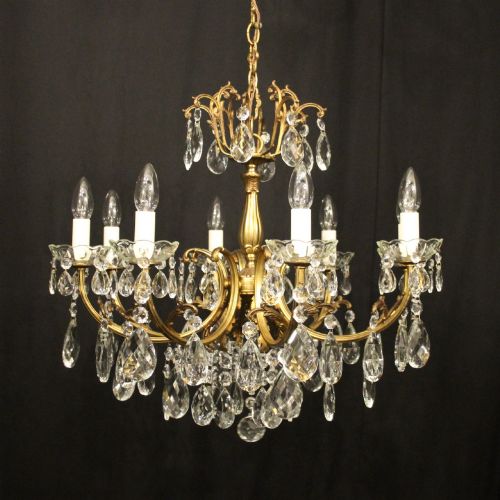
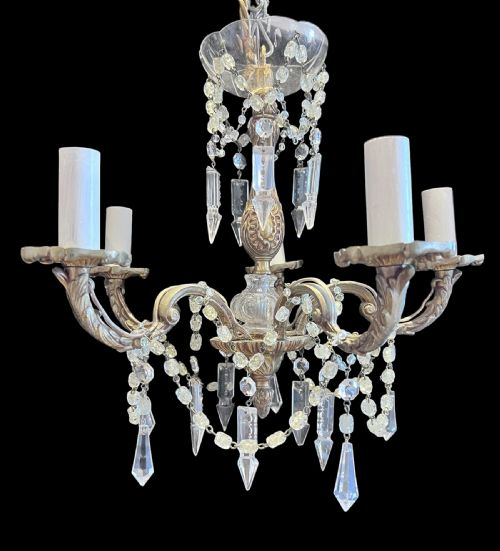
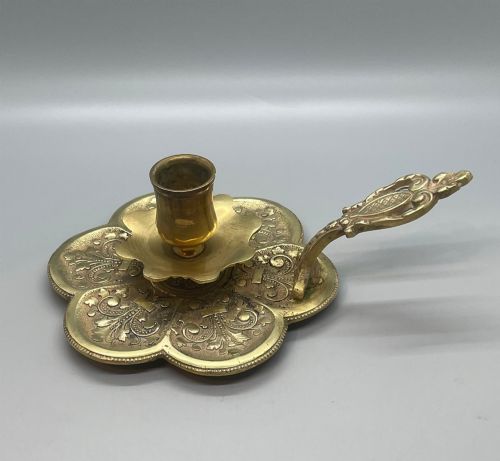
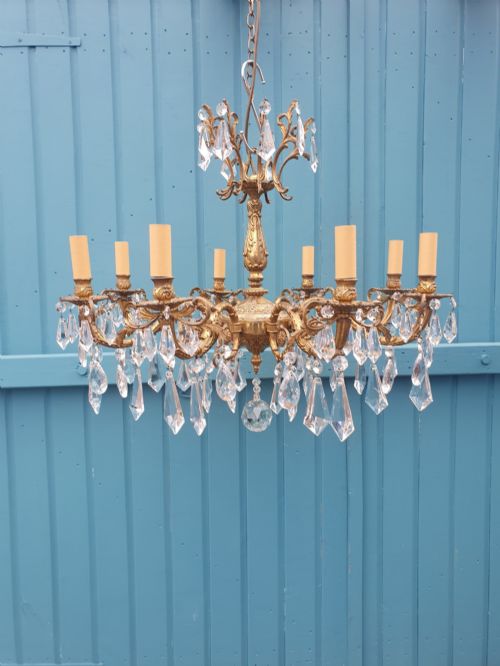
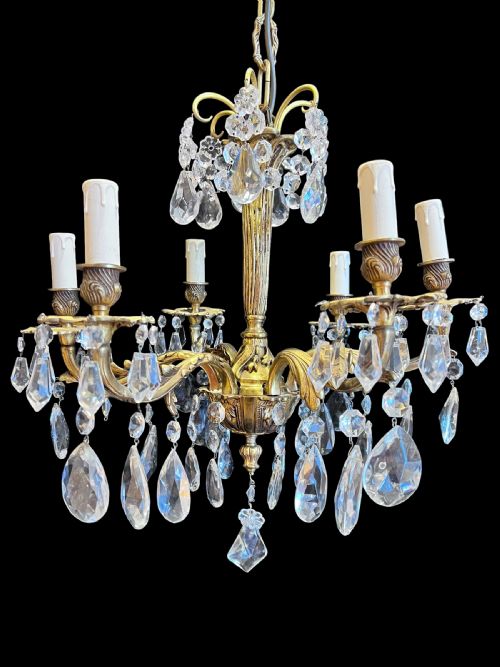
Chandeliers form the core of this category, often featuring numerous light branches adorned with crystal drops and intricate metalwork. Wall lights and appliques provide matching secondary illumination for panelled rooms. Table lamps and candlesticks translate the same vocabulary to smaller scales for side tables and mantels.
The objects span multiple eras, stretching from Georgian pieces and the eighteenth century through late nineteenth-century revivals up to twentieth-century interpretations. French rococo revival and Louis XV style pieces dominate the selection, bringing scrolling motifs and asymmetric forms into domestic spaces. Florentine giltwood variations also emerge alongside brass and bronze constructions.
Materials and construction
Metal forms the structural backbone of these pieces, utilising brass, gilt bronze, ormolu, and gilt metal to create durable armatures. Gilded finishes amplify the reflective qualities of the metalwork, catching and multiplying the light from candles or early electric bulbs. Spelter and giltwood also appear as alternative structural and decorative mediums.
Glass and crystal play a defining role through cut glass drops, spikes, and bobeches that scatter light across the room. Porcelain flowers occasionally accent smaller fittings, adding botanical detail to the metal framework. Carved oak and painted wooden elements support mirror frames and larger associated furnishings.
A flying cherub occasionally holds up crystal spike chandeliers, watching over the room with frozen botanical joy.
Assessing quality and execution
Quality reveals itself through the crispness of the chased detail on bronze and ormolu mounts and the weight of the metal components. Superior examples display fluent, hand-carved or cast asymmetry that avoids mechanical repetition. The integration of crystal elements, such as hand-cut drops rather than moulded glass, elevates the sophistication of a chandelier.
Proportion and balance dictate the success of multi-arm fixtures, where the distribution of light branches feels entirely natural. The depth and warmth of the original gilding separate fine castings from flat, modern applications. Masterful construction ensures that even large, twelve-light frames maintain structural harmony.
The Rococo Lighting Glossary
- Ormolu
- Gilded bronze, where a mercury and gold amalgam is applied to a bronze base and heated to leave a durable gold coating. This technique creates a rich, matte finish characteristic of fine eighteenth-century metalwork.
- Girandole
- An ornamental bracket wall light with a mirrored backplate that reflects and multiplies the flickering illumination. These fixtures combine carved wood or gilt metal with candle arms.
- Bobeche
- A small collar or drip pan placed beneath a candle socket to catch melting wax and hold hanging glass prisms. It protects the arms of chandeliers and wall sconces.
- Spelter
- A zinc alloy frequently used as a cheaper alternative to bronze for cast figures and decorative mounts. It takes plating and painting well to simulate heavier metals.
- Applique
- A wall-mounted lighting fixture designed to hold candles or electric bulbs against wood-panelled or plastered walls. They often match the stylistic vocabulary of the central chandelier.
Rococo Lighting: Frequently Asked Questions
How do I hang a heavy antique chandelier safely?
Heavy chandeliers require professional installation into the ceiling joists using a dedicated weight-bearing hook and box. The electrical wiring must also be inspected and updated to meet current safety standards before mounting.
Ensuring the structural support handles the combined weight of the metal armature and crystal elements prevents any risk of detachment. An electrician experienced with antique fixtures will manage both the mechanical hanging and the delicate rewiring.
Were these fixtures originally wired for electricity?
Most antique chandeliers, wall lights, and girandoles started as candleholders and were later converted to electricity during the twentieth century. This evolution means original fittings often show adaptations made to house internal wiring.
Buyers should expect modern internal components tucked discreetly within the historical metalwork. These conversions allow authentic antique illumination to function safely in contemporary homes.
How do I clean crystal drops on a chandelier?
Cleaning crystal elements involves wiping each drop individually with a lint-free cloth dampened in a mild solution of warm water and mild detergent. Leaving the drops hanging on the frame while cleaning prevents damage to the delicate wire pins.
Removing the crystal is rarely necessary unless a complete rewiring and restoration is underway. Regular dusting keeps the glass sparkling without risking the fragile metal armature.
What is the difference between a wall light and a sconce?
The terms are often used interchangeably to describe fixed wall-mounted lighting, though sconce historically referred specifically to candleholders with a backplate. Both types provide secondary illumination that complements the central chandelier in a room.
On this page, both categories feature scrolling arms and decorative backplates designed to match larger lighting schemes. Their placement at eye level adds warmth and balanced illumination to darker corners.