



Rococo Gilt Trinket Box
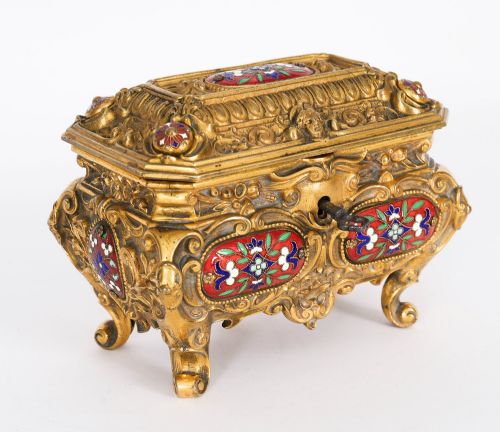
A rococo gilt trinket box brings scrolling curves and shining metalwork to a dressing table.
Rococo Gilt Trinket Box
A rococo gilt trinket box is a small container shaped by the sweeping asymmetry and ornamental flourish of the eighteenth century and its later revivals. When you search for a rococo gilt trinket box, you encounter pieces designed to hold rings, pins, and small personal valuables.
The selections span from eighteenth-century origins to nineteenth-century interpretations, taking the form of patch boxes, snuff boxes, and larger jewellery caskets. These items combine metal mountings with decorative surfaces intended for intimate domestic use.
How they were made
The construction relies on metals such as copper, brass, and ormolu, shaped to form the structural frames and hinges of each container. Gilding techniques apply gold leaf or fire-gilt finishes to the metal surfaces to create a bright, reflective sheen.
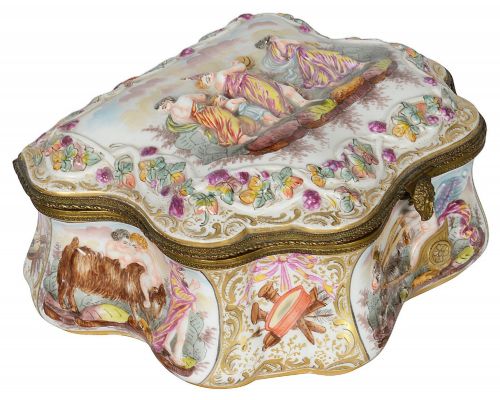
Many examples incorporate porcelain and enamel panels held within the metal framework. These panels often feature hand-painted scenes or solid cobalt blue glazing that contrast with the surrounding gilt mounts.
Rococo Gilt Trinket Box Retail Price Guide 2026
Typical asking prices for rococo gilt trinket box among the pieces listed under this phrase on Sellingantiques today, from the lower quarter to the upper quarter. They describe what is for sale here now, not the wider market.
What varies in quality
Quality rests in the crispness of the chased metalwork and the precision with which the hinges and lids align. Finer pieces display deeply rendered motifs and well-preserved gilding that retains its original warmth.
Surface decoration also dictates the distinction between standard and superior examples. Hand-painted enamel panels with fine brushwork and detailed coloration elevate the execution of the piece.
The Rococo Gilt Trinket Box Glossary
- Ormolu
- Gilded bronze used widely for decorative mounts and furniture hardware. The technique involves applying a mercury and gold amalgam to bronze before heating.
- Patch box
- A small container originally used to hold small silk or velvet patches worn on the face during the eighteenth century. These boxes often feature hinged lids with interior mirrors.
- Snuff box
- A small pocket-sized container designed to hold ground tobacco. They frequently feature hinged lids decorated with enamel paintings or repoussé metalwork.
- Bonbonniere
- A small ornamental box intended to hold sweets or confections. These decorative items are often fashioned from porcelain or enamel with gilt metal mounts.
Rococo Gilt Trinket Box: Frequently Asked Questions
What were these boxes used for?
These small containers served practical purposes for personal grooming and accessories in past centuries. Owners stored items such as snuff, small beauty patches, pills, and rings inside them.
Their compact sizes made them suitable for carrying in pockets or placing upon dressing tables and writing desks for easy access.
How do I date a box?
Dating relies on examining the materials, construction methods, and stylistic cues present in the metalwork and painted surfaces. Eighteenth-century pieces often display hand-beaten copper bases and distinct enamel compositions.
Nineteenth-century revival items frequently employ heavier cast ormolu mounts and machine-finished components that reflect the industrial techniques of the later period.
Are these boxes fragile?
The structural integrity depends upon the combination of metal frames and delicate enamel or porcelain panels. While the metal mounts provide relative sturdiness, ceramic and enamel elements remain susceptible to impact.
Careful handling protects the hinges, clasps, and painted surfaces from unnecessary wear or accidental chipping over time.
How should I clean them?
Maintenance requires gentle dusting with a soft, dry cloth to prevent the accumulation of dirt within the intricate metal crevices. Liquid cleaners and abrasive polishes risk damaging delicate gilding and historic surfaces.
Keeping the boxes away from direct moisture and handling them by the metal structure rather than fragile lids preserves their condition.