

Rococo Gilt Clock
A rococo gilt clock brings flamboyant asymmetric scrollwork and shimmering metallic surfaces into an interior.
Rococo Gilt Clock
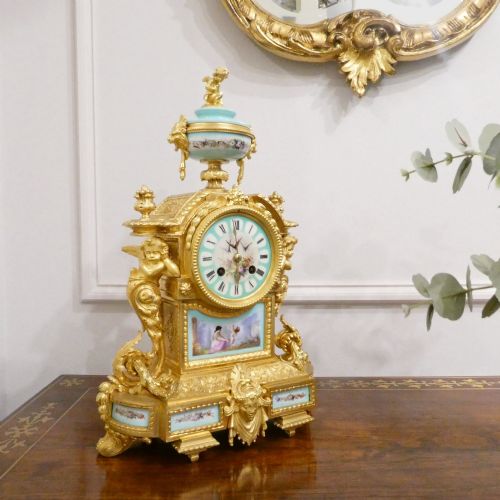
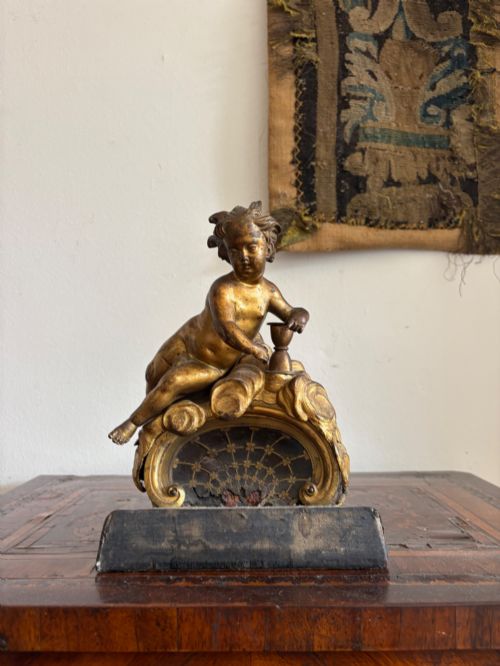
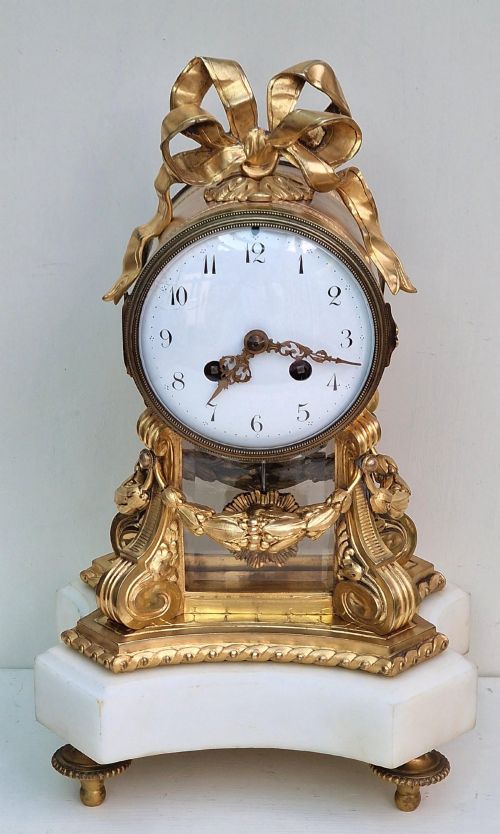
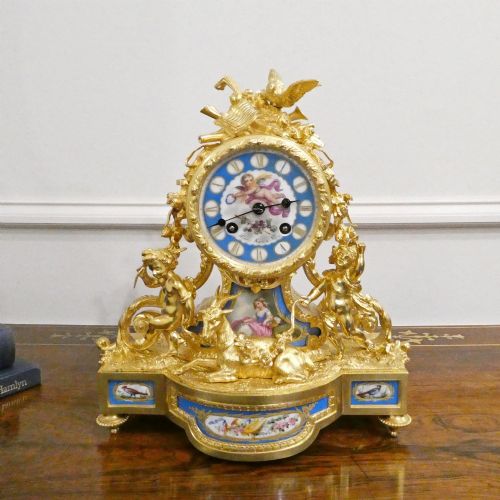
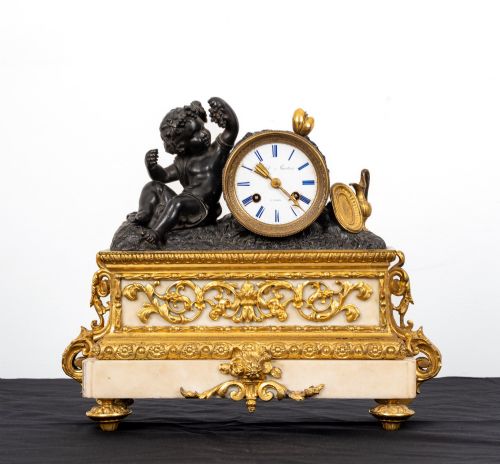
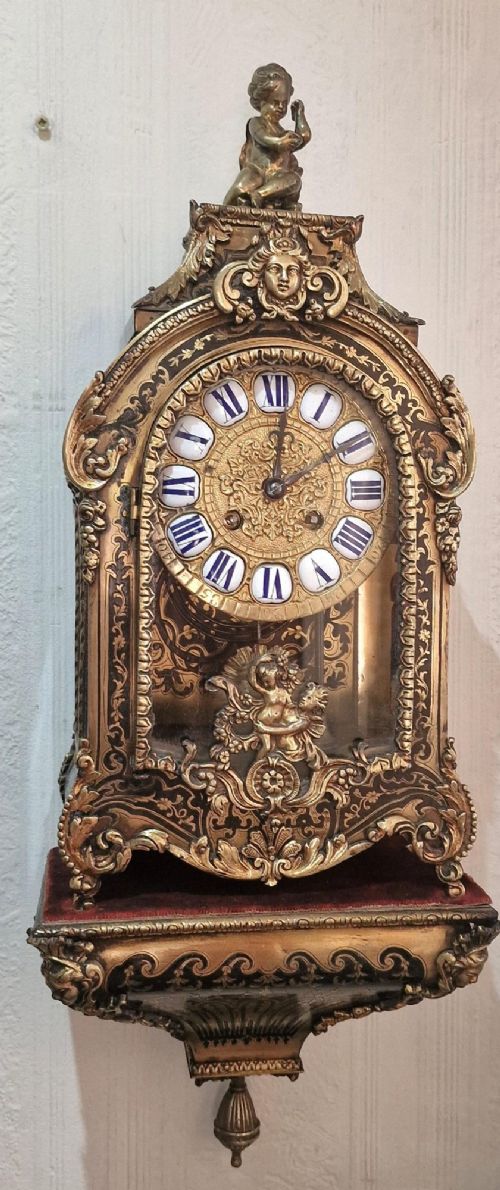
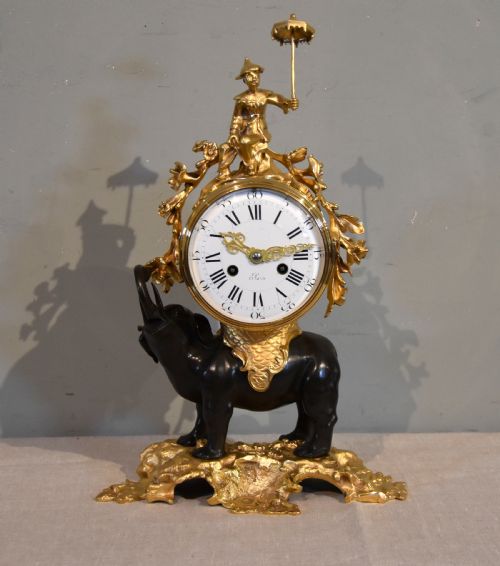
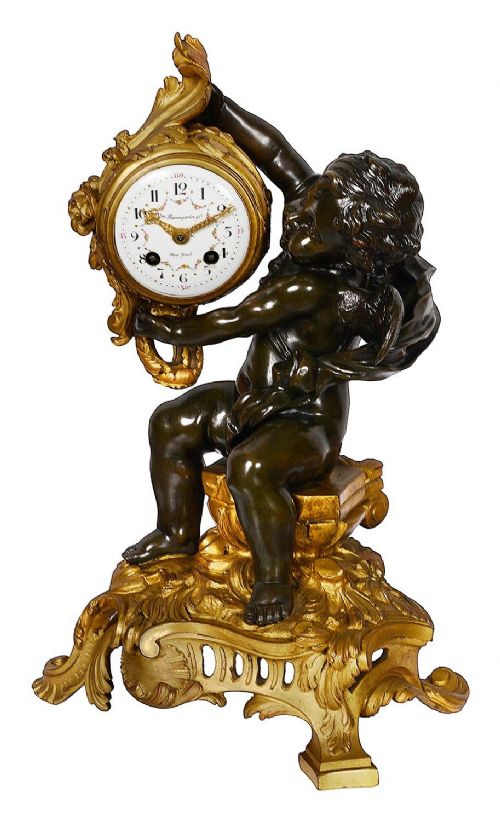
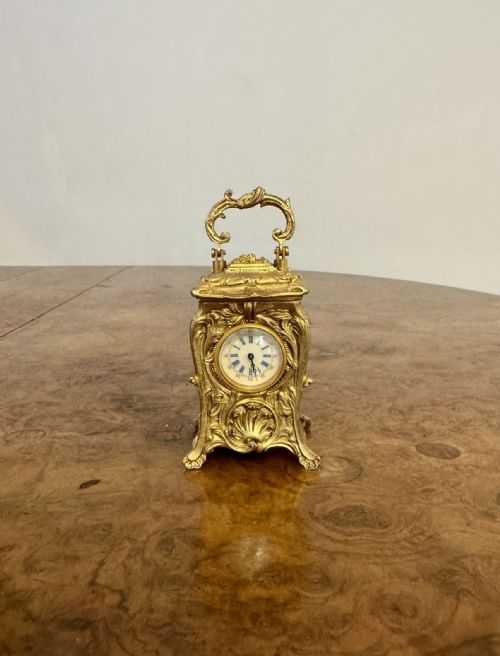
A rococo gilt clock combines ornate, asymmetric cast metal cases with functional timekeeping movements, predominantly originating from nineteenth-century France during the height of various revivalist movements. Buyers seek these pieces for their decorative sculptural presence, which often incorporates floral garlands, putti, and sweeping C-scrolls.
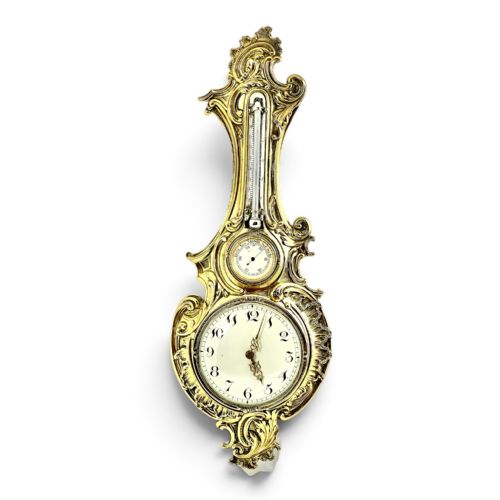
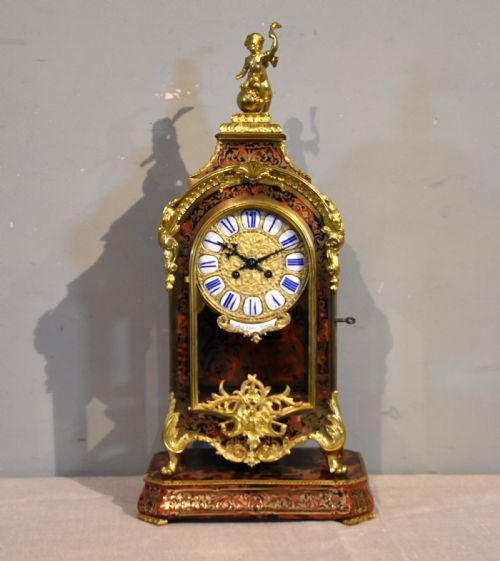
The most common examples encountered on this page are French mantel clocks and wall-hung cartel clocks executed in gilt bronze, ormolu, or brass. These items frequently display influences from the Louis XV and Second Empire styles, merging time-telling utility with lavish ornamentation.
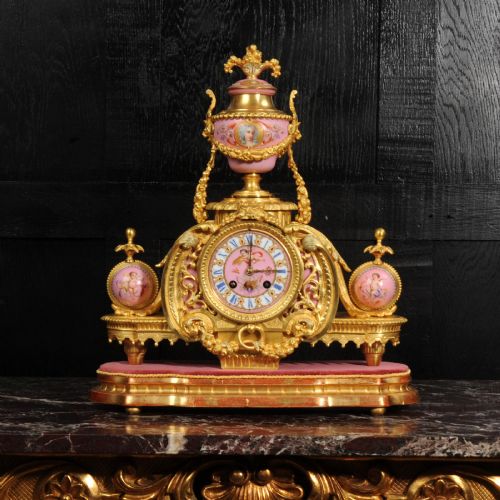
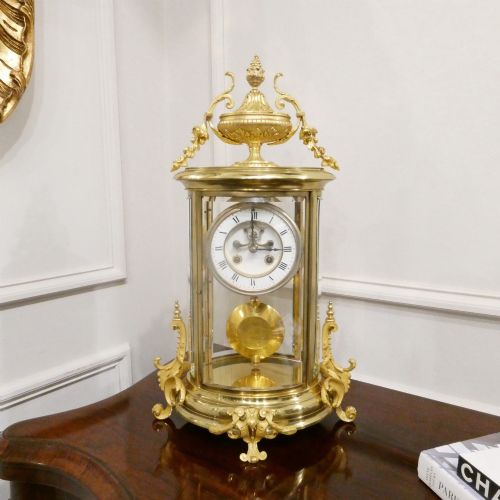
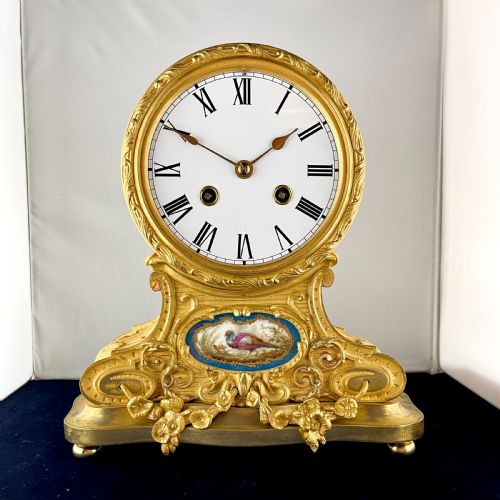
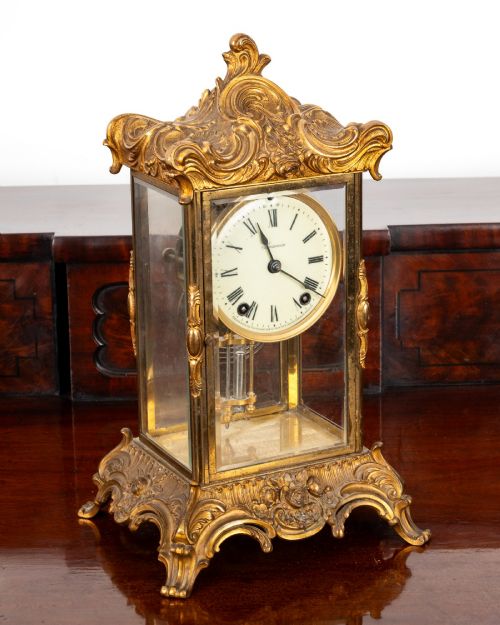
Beyond standard mantel pieces, the category extends to include porcelain-inset garnitures, four-glass displays, and occasional English fusee movements housed within gilt housings. Each variation demonstrates the period preference for exuberant surface decoration and intricate dial work.
How they were made
Cases were typically produced through the sand-casting of bronze or brass, which was subsequently chased by hand to sharpen the textural details of foliage and scrollwork before undergoing mercury gilding or electroplating. This created the distinctive warm, lustrous finish known as ormolu.
Many examples integrate delicate hand-painted porcelain plaques or dials sourced from major factories such as Sèvres and Meissen, often framed by marble bases or tortoiseshell veneer. Mechanical movements inside were constructed by specialist horologists, utilising brass gear trains and frequently incorporating escapements by notable makers.
Listings feature movements spanning the nineteenth century, including works by Parisian horologists and English makers using traditional chain fusee systems.
What varies in quality
The distinction between tiers rests upon the crispness of the bronze casting and the depth of the subsequent hand-chasing, where superior examples exhibit sharp, undercut foliage rather than soft, rounded contours. The quality of the gilding also plays a role, with thick mercury finishes retaining a deeper lustre than thin electroplated applications.
Finer pieces feature fully integrated decorative schemes where the movement, dial, porcelain inserts, and cast case are conceived as a unified whole by a recognised Parisian workshop. Supplementary artistic elements, such as hand-painted miniature scenes or sculptural mounts representing animals and figures, further elevate the standard of the piece.
Achille Brocot·Samuel Marti·Henry Marc·Siffel and Cartier·Delettrez·Japy Frères·Leroy Paris·Leon Message·Jollet et Cie·William Payne·Viner London·A.D. Mougin
The Rococo Gilt Clock Glossary
- Ormolu
- Gilt bronze produced by applying a mixture of gold and mercury to a bronze base and heating it to vaporise the mercury. This technique creates a durable, golden surface finish characteristic of fine antique metalwork.
- Cartel clock
- A wall-mounted clock housed in an ornate, asymmetric frame typically made of gilt bronze or carved wood. These pieces were designed to hang directly on drawing room walls.
- Fusee
- A conical pulley used in clock movements to maintain an even tension on the chain as the mainspring unwinds. This mechanical addition improves the timekeeping accuracy of the movement.
- Champlevé
- An enamelling technique where troughs are dug into a metal surface and filled with vitreous enamel powder before firing. The resulting panels display colourful patterns embedded directly into the metal frame.
- Four-glass clock
- A timepiece encased in bevelled glass panels on all four sides, allowing the brass movement to be viewed from multiple angles. These designs often feature mercury pendulums visible through the centre.
Rococo Gilt Clock: Frequently Asked Questions
How do I wind an antique clock?
Most mechanical clocks require a specialised key inserted into winding holes on the dial to tension the springs every week or eight days. Care must be taken not to overwind the movement, as this can strain the internal mechanisms.
Ensuring the clock is placed on a level surface helps the pendulum swing evenly and maintains accurate timekeeping after winding.
What is the difference between ormolu and gilt brass?
Ormolu specifically denotes mercury-gilded bronze, a historical technique involving a gold and mercury amalgam that produces a deep, rich metallic lustre. Gilt brass or gilt metal usually refers to a less costly base alloy finished with a standard plating method.
Clocks utilising true ormolu tend to display sharper cast details because bronze accepts the chasing tools more cleanly than softer brass variants.
How should I clean a gilt bronze case?
Dusting the surface gently with a soft, dry artist brush or microfiber cloth prevents the accumulation of grime within the recesses of the cast ornament. Liquid cleaners, abrasives, and chemical polishes must be avoided entirely, as they strip away the delicate historical gilding.
Professional conservation is recommended if deeper cleaning is required to remove stubborn residue from the metallic surfaces.
Why do some clocks have porcelain plaques?
Porcelain panels painted with floral motifs or pastoral scenes were incorporated by makers to add colour and elegance to the metallic chassis. These decorative additions reflect the influence of eighteenth-century French taste, particularly the styles associated with Sèvres.
Surrounding the dial or set into the base, these ceramic elements often carry factory marks that assist in dating the piece.