



Rococo Desk Accessory
These rococo desk accessory pieces bring exuberant scrollwork and flourish to the writing table, offering both decorative charm and practical organisation.
Rococo Desk Accessory
A rococo desk accessory comprises items designed for the writing table, spanning inkwells, letter racks, desk sets, tidies, table lighters, and cartonnuiers. These objects draw on French Rococo Revival, Louis XV, and Victorian design traditions, channelling an aesthetic defined by asymmetrical curves, natural motifs, and ornate cast metalwork.
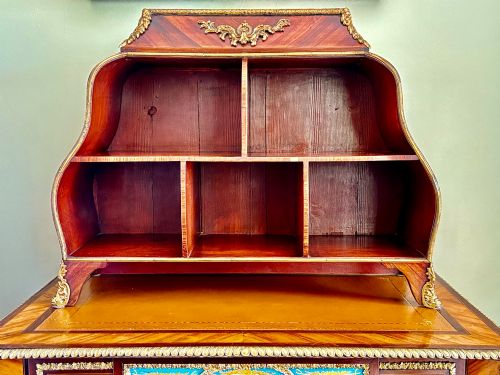
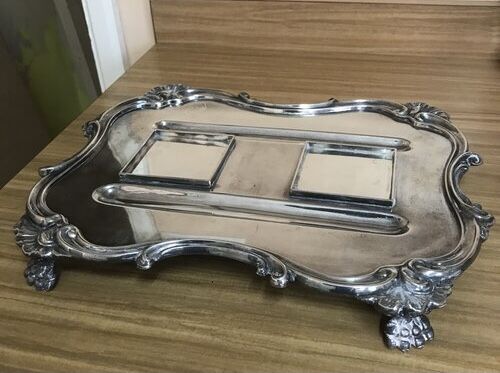
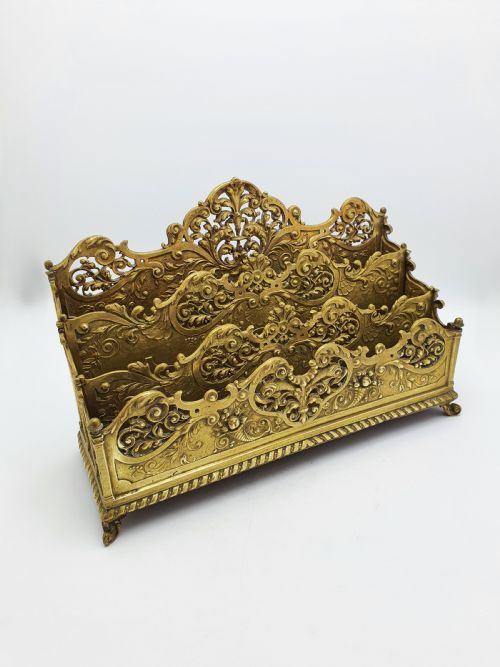
The pieces appearing on this page date from the nineteenth century into the early twentieth century, taking forms such as brass letter racks, rosewood cartonniers with ormolu mounts, and heavy silver-plated inkstands. Buyers most frequently encounter ornate brass desk sets and letter racks carrying the unmistakable shell and scroll motifs of the revival period.
Origins range from domestic production during the Victorian and Edwardian eras to continental workshops, including French manufacturers producing grand tour pieces. A smaller selection includes tabletop shelves, ebony carved vessels, and ceramic pieces associated with the Meissen factory.
Materials and construction
Construction relies heavily on cast brass, ormolu, and gilt bronze, manipulated to create the elaborate, flowing outlines characteristic of the style. Metal components are frequently chased, pierced, or mounted to wooden carcases fashioned from rosewood or ebony.
Silver plating and sterling silver provide a polished finish for desk tidies and table lighters, while specialised items incorporate hand-carved wooden details. The combination of tactile woods with heavy cast metal mounts demonstrates the dual cabinetmaking and foundry skills required for these functional objects.
Rococo Desk Accessory Retail Price Guide 2026
Typical asking prices for rococo desk accessory among the pieces listed under this phrase on Sellingantiques today, from the lower quarter to the upper quarter. They describe what is for sale here now, not the wider market.
Some nineteenth-century desk lighters were designed to sit discreetly among inkwells, ready to melt sealing wax for the day's post.
Distinguishing quality
Quality rests in the crispness of the casting and the depth of the chasing, where sharper relief work distinguishes superior metal items from softer, mass-produced alternatives. Heavier gauges of brass, bronze, and silver plate signal better substance and durability in daily use.
The integration of materials also defines the tier of a piece, such as the precision with which ormolu mounts fit a rosewood cartonnier or the intricacy found in carved ebony inkwells. Finer examples retain cohesive decorative schemes across every component of a desk set rather than relying on standard commercial casting.
Harrods·Meissen
The Rococo Desk Accessory Glossary
- Ormolu
- Gilded bronze, usually mercury-gilded, applied as decorative mounts to furniture and desk accessories. This technique produces a rich metallic lustre.
- Desk Tidy
- A compartmentalised tray or stand intended to hold writing implements, stationery, and small desk accessories in one place. These items range from simple wood to elaborate plated metal.
- Grand Tour
- Souvenirs and decorative items acquired by wealthy travellers on cultural excursions through Europe, particularly France and Italy, during the nineteenth century.
Rococo Desk Accessory: Frequently Asked Questions
What is a desk tidy used for?
A desk tidy serves to organise correspondence, pens, and small writing tools on a tabletop. It keeps frequently used stationery accessible while adding a decorative element to the workspace.
These pieces typically incorporate dedicated slots for letters alongside wells or rests for writing instruments.
How do I date a brass desk accessory?
Dating relies on examining the casting quality, the weight of the metal, and stylistic indicators such as Victorian or Edwardian design markers. Heavier cast brass and distinct patination often point to mid-nineteenth-century manufacture.
Later pieces from the early twentieth century may show different finishing techniques and assembly methods.
Are inkstands still functional today?
Many inkstands retain their glass or ceramic inserts and can hold modern fountain pen ink, though most buyers utilise them primarily as decorative objects. They serve as striking centrepieces for a traditional study or home office.
Care should be taken with vintage glass liners if used actively for writing.
What distinguishes Louis XV style items?
Louis XV style pieces feature asymmetrical C-scrolls, foliate patterns, and naturalistic shell motifs executed in gilt bronze, brass, or ormolu. This aesthetic avoids straight lines in favour of flowing, organic contours.
Revival pieces from the nineteenth century captured this same exuberance using contemporary foundry methods.