
Rococo Carved Console Table
A rococo carved console table brings dynamic asymmetry and elaborate naturalistic curves into a room, anchoring a hallway or salon with unmistakable presence.
Rococo Carved Console Table
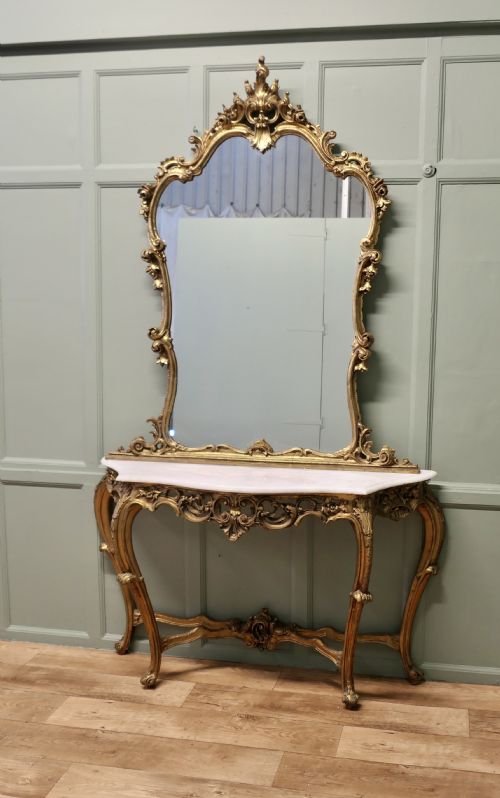
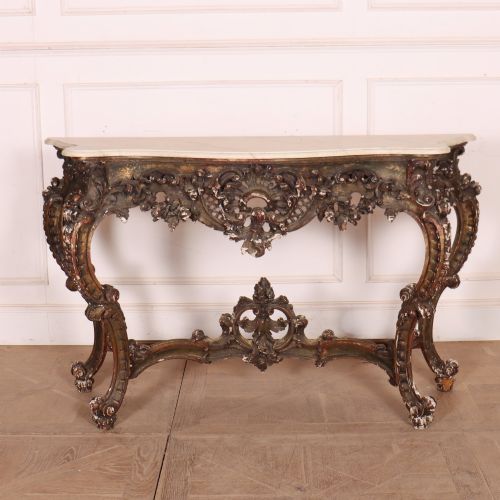
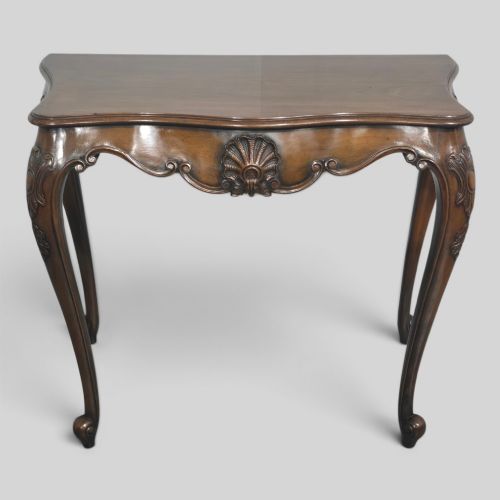
A rococo carved console table is typically designed to sit flush against a wall, frequently paired with a matching mirror or topped with heavy shaped marble. These pieces emerge in 18th-century workshops and recur through later revival periods including Victorian interpretations and 20th-century French chateau styles.
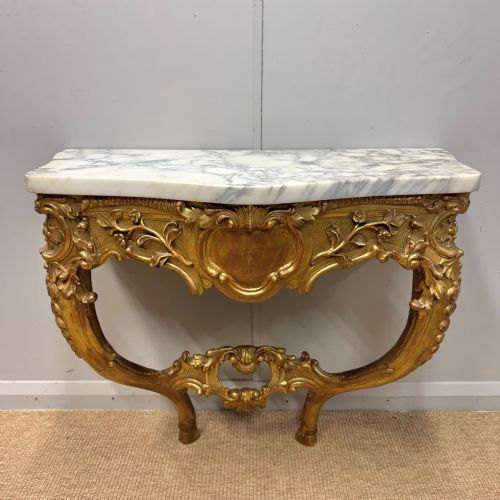
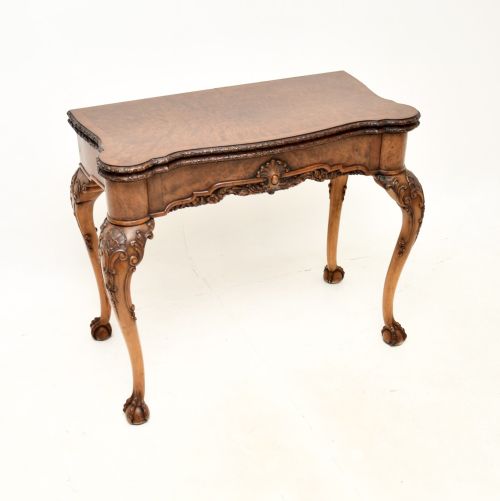
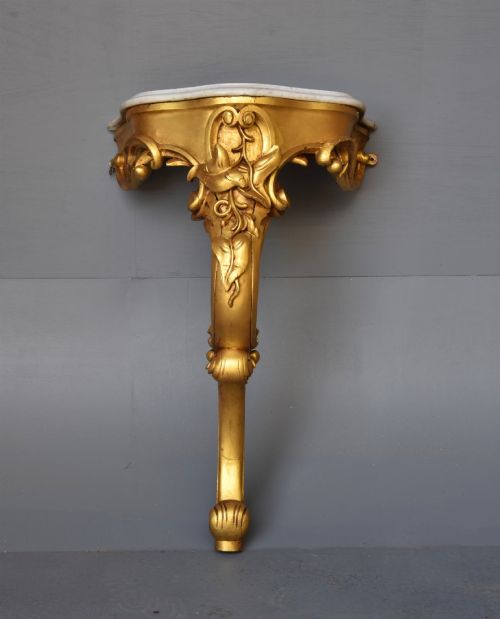
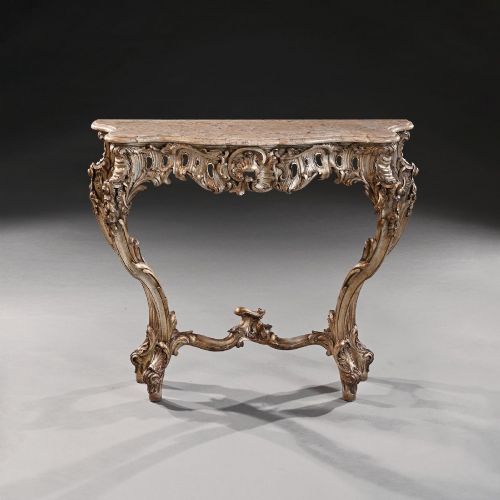
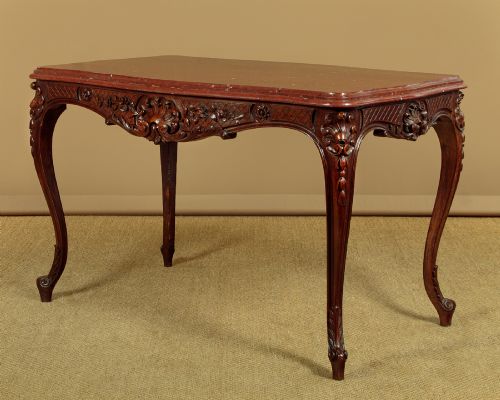
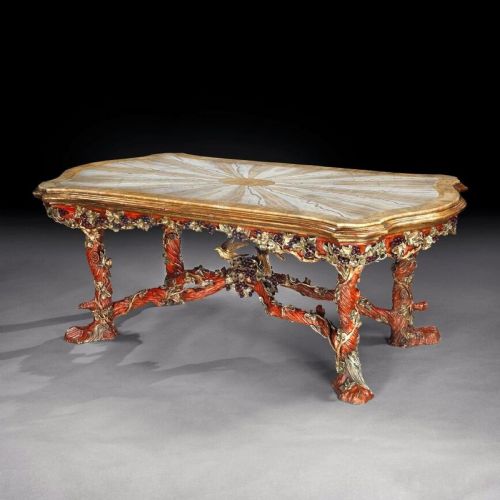
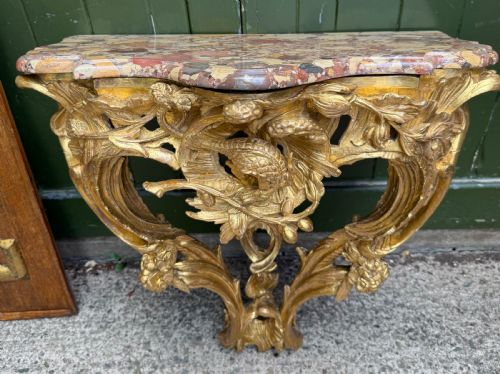
The forms seen here range from grand Italian and French giltwood examples featuring serpentine fronts to smaller wall-mounted consoles in antique white finishes. Alongside standard console tables, the selection includes related formats like centre tables, card tables, and occasional tables sharing the same sculptural language.
Materials and construction methods
Makers rely heavily on solid woods such as walnut, oak, and carved mahogany, often applying layers of gesso to build up deep, flowing relief ornamentation before gilding or painting the surface. Giltwood and silver gilt finishes dominate the formal Italian and French pieces, capturing light across intricate scrollwork and foliage.
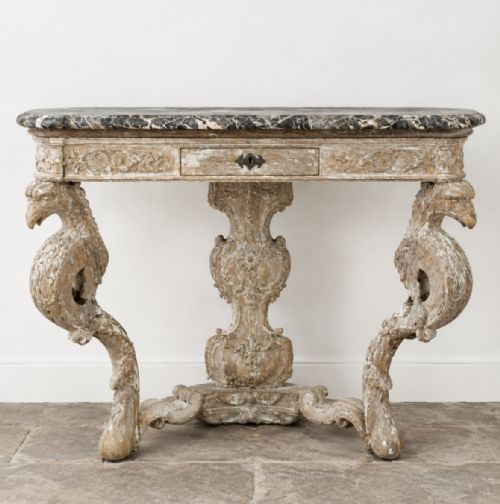
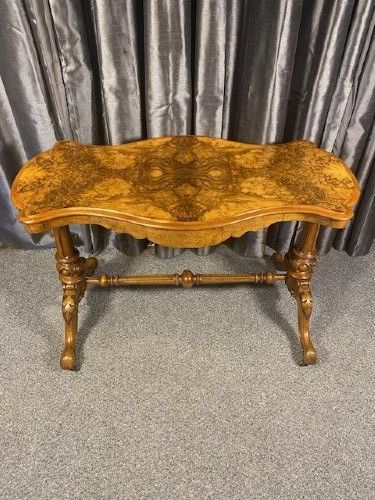
Tops are frequently fashioned from substantial stone, utilising marble varieties like rouge, sienna, and breche d'alep, or occasionally onyx. Burr walnut and burr oak veneers appear across timber-topped tables, providing dramatic grain patterns that contrast with the carved frames.
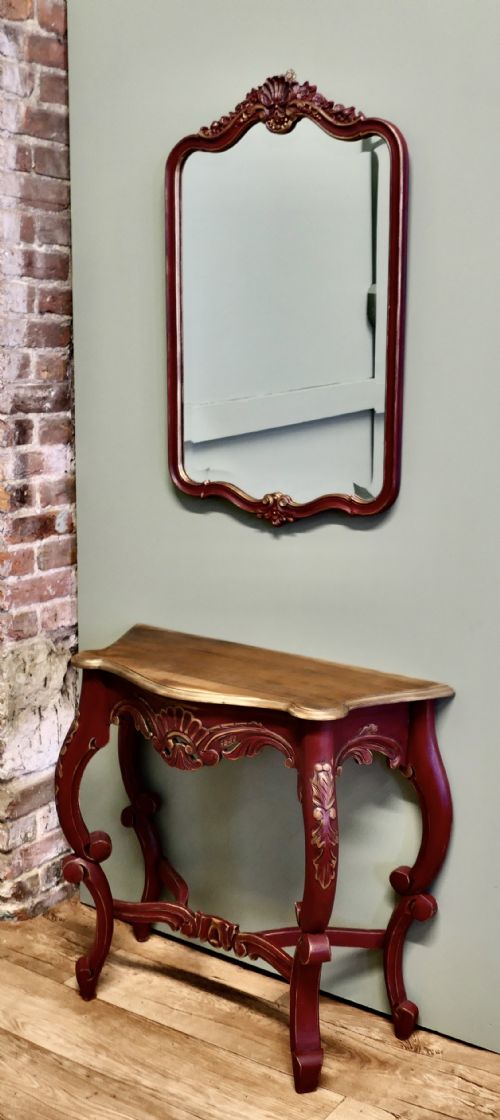
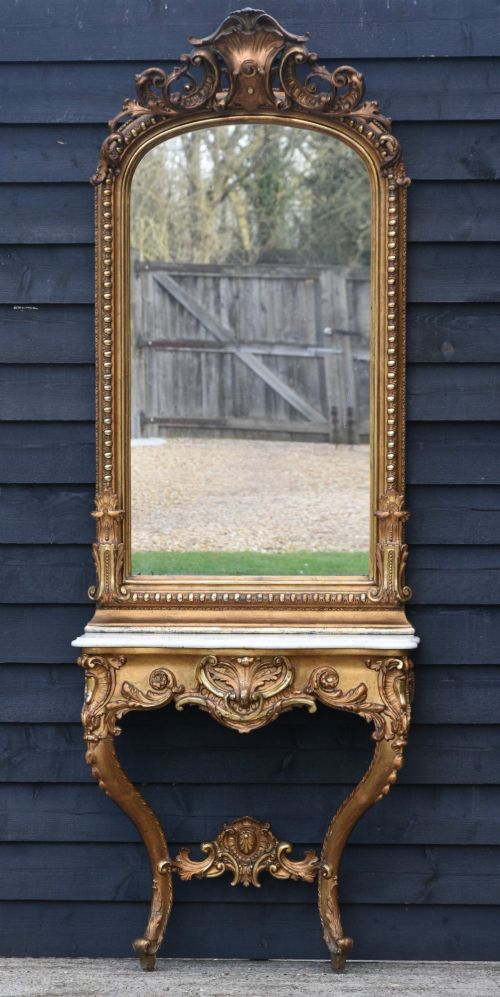
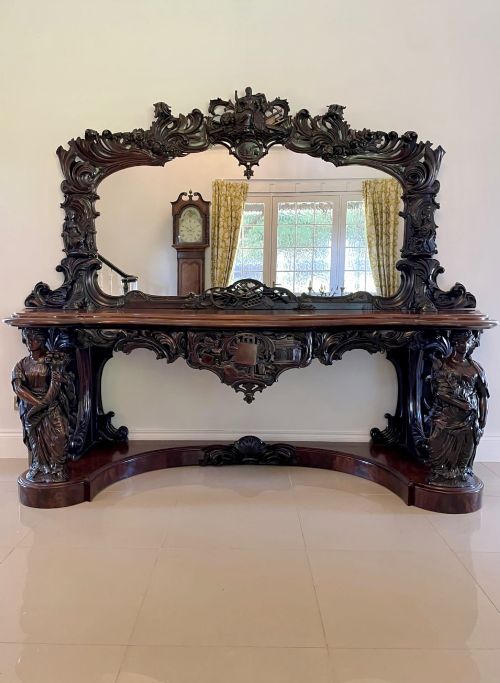
Several tables come with matching mirrors, ensuring your reflection is framed by the exact same swirls of carved wood.
Distinctions in craftsmanship and design
Quality rests in the depth and crispness of the carving, where master hands achieve fluid, undercut scrolls and naturalistic asymmetry without stiffness. Lesser examples rely on shallow, mechanical tool marks that flatten the vitality characteristic of the style.
The choice and treatment of materials also define the hierarchy, from heavy, finely figured marble slabs properly fitted to the frame to simpler painted or gilded wooden surfaces. Integration between the console and its matching mirror or wall fixing demonstrates the original ambition of the commission.
Amleto Bertoni
The Rococo Carved Console Table Glossary
- Giltwood
- Wood that has been coated with thin gold leaf over a prepared gesso base. This finish is standard on formal 18th-century and revival salon tables.
- Serpentine front
- A table edge or furniture facade that curves outward in the centre and inward at the sides in a continuous flowing wave. It adds movement to the silhouette.
- Gesso
- A plaster-like mixture applied to wood surfaces to create a smooth layer for carving or gilding. It allows for sharp, intricate relief details.
- Breche d'alep
- A specific multi-coloured figured marble with a brecciated appearance, prized for decorative table tops. It displays broken fragments held in a contrasting natural cement.
- Demilune
- Half-moon shaped furniture designed to stand flat against a wall. These semi-circular tables suit narrow hallways and smaller drawing rooms.
Rococo Carved Console Table: Frequently Asked Questions
How do I style a console table?
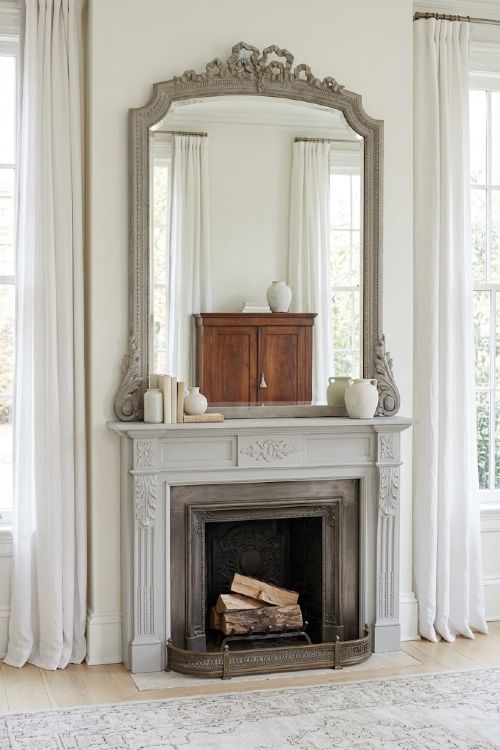
These tables are designed to stand against a wall, often beneath a matching pier mirror or a large painting. Their decorative frames and shaped marble tops create an immediate focal point in an entrance hall or reception room.
Keep items on the surface restrained to let the carved woodwork remain visible. A pair of tall lamps or a central floral arrangement works well without obscuring the intricate scrollwork.
Are these tables sturdy enough for daily use?
Many historical console tables are built to be wall-mounted for absolute stability, particularly those with heavy marble tops. They serve well for holding decorative objects rather than heavy loads.
Freestanding versions like card tables or centre tables have structural frames designed for independent weight. Checking the joinery beneath the top reveals how the piece distributes its weight.
How do I tell an 18th-century piece from a later revival?
Eighteenth-century originals display hand-cut joinery, aged patination on the gesso and gilt, and timber characteristics consistent with early seasoning. Tool marks and wear patterns on the underside offer clues to their age.
Revival pieces from the 19th and early 20th centuries often utilise machine-sawn elements alongside hand carving. Stylistic proportions and the specific chemical composition of the gesso or paint finishes also indicate later production.
What is the difference between a console and a centre table?
A console table is flat-backed and intended to stand directly against a wall, frequently secured to it for balance. They often feature finished decoration only on the front and sides.
Centre tables are finished on all four sides so they can stand in the middle of a room. Their bases and legs are designed to be viewed from any angle.