





Rococo Brass Fire Guard
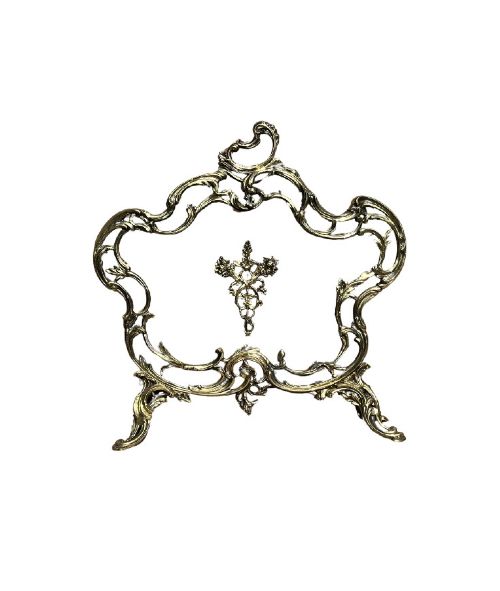
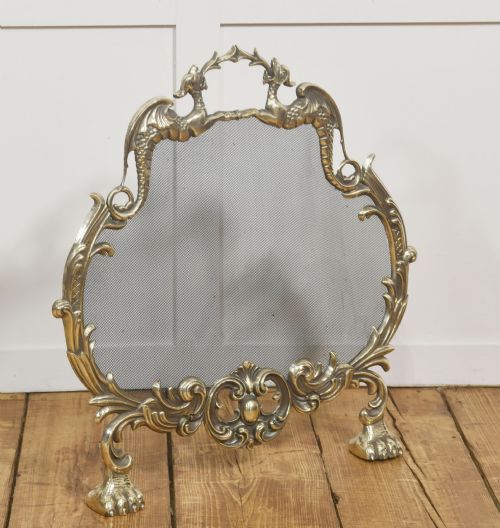
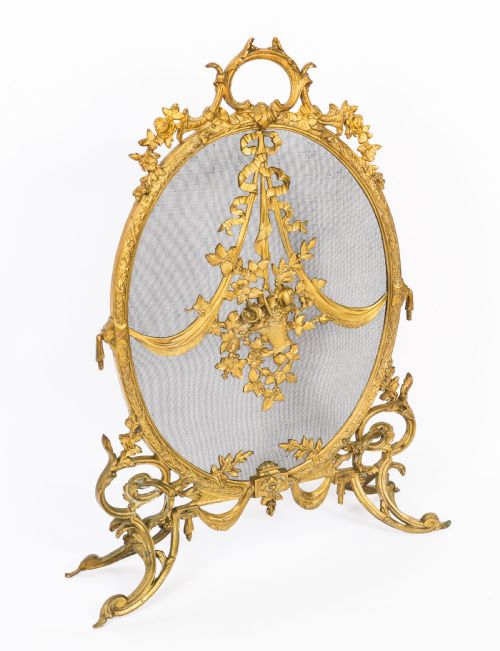
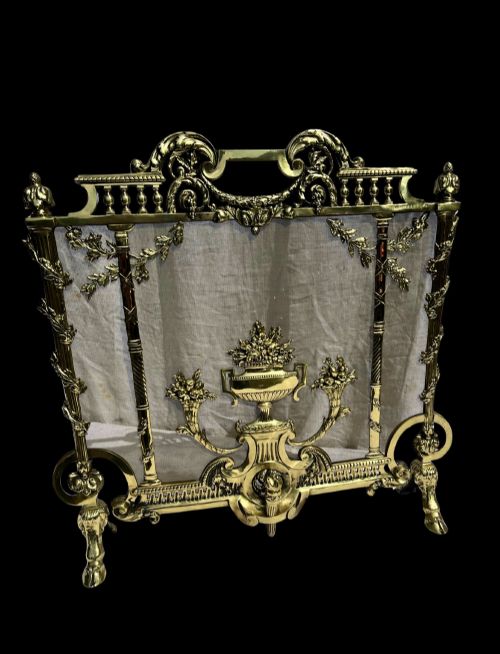
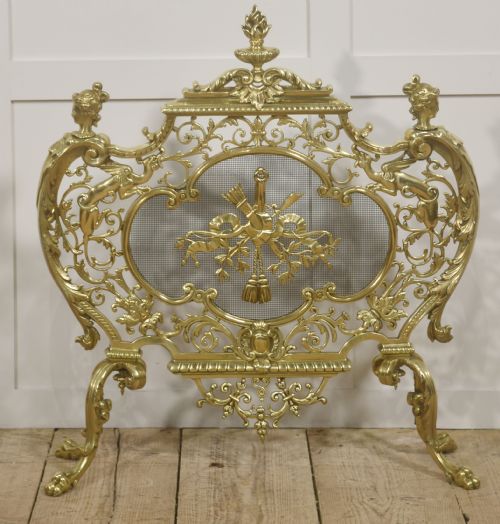
A rococo brass fire guard protects a hearth with curving brass and bronze frames that bring asymmetrical French style into a room.
Rococo Brass Fire Guard
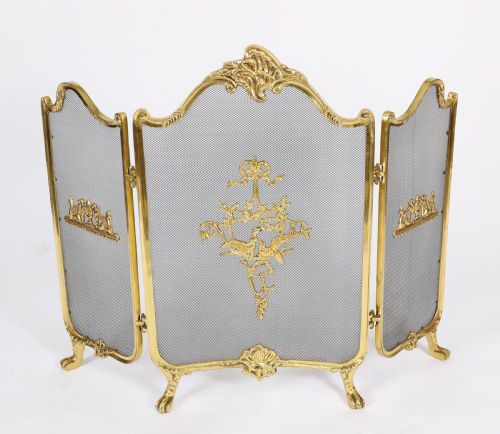
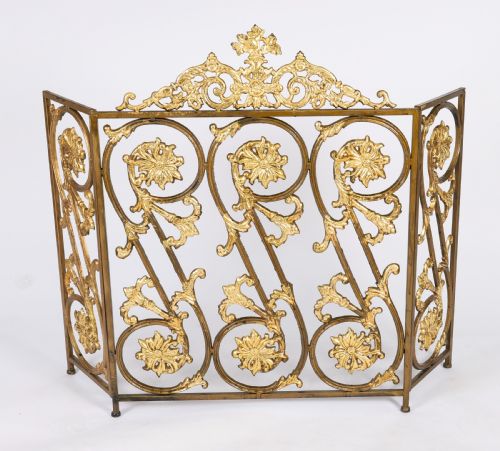
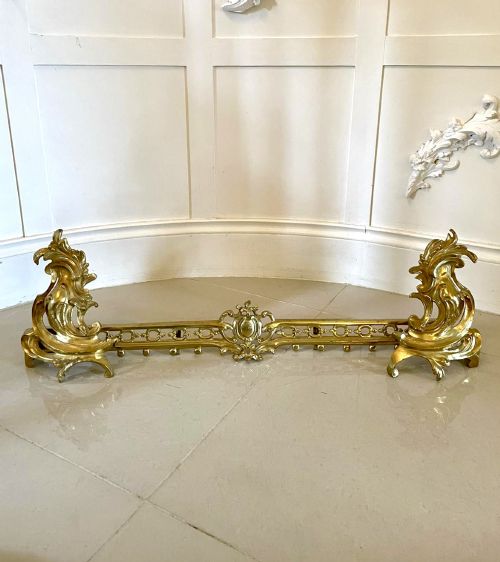
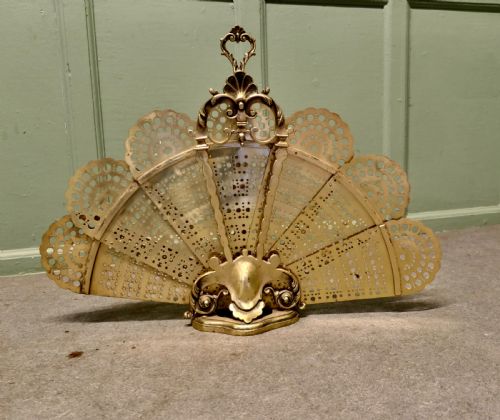
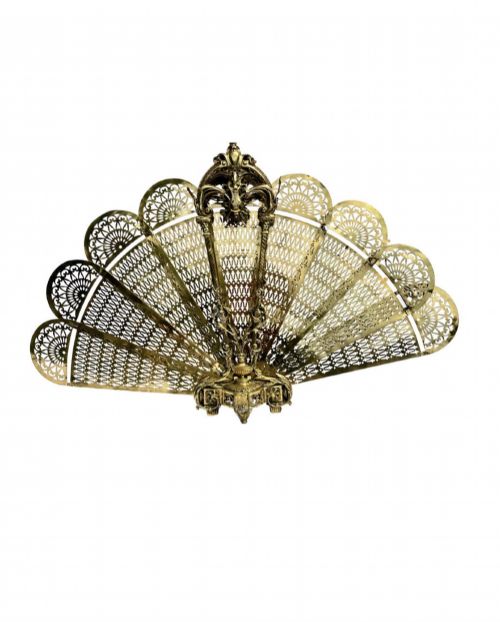
A rococo brass fire guard brings ornamental metalwork to a domestic hearth, most commonly taking the form of a folding fan, a mesh screen, or an adjustable fender. These pieces originate largely from nineteenth century French workshops and Victorian English settings, channelling earlier courtly designs into nineteenth century homes.
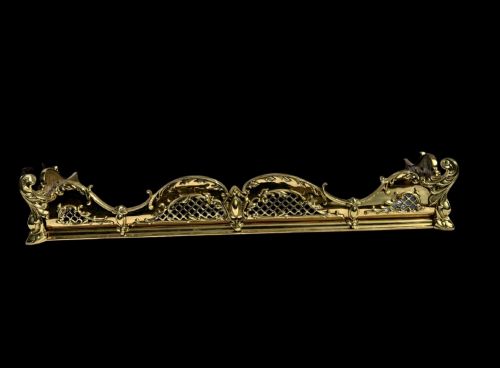
The objects listed here span fire screens, spark guards, and extendable fenders, often pairing pierced metal plates with wire mesh or pivoting leaves. Buyers encounter single screens alongside pairs of chenets and heavy fender surrounds.
Nineteenth century examples dominate the selection, stretching from mid Victorian pieces up to nineteen twenties interpretations of Louis styles. French makers provide the dominant decorative vocabulary, utilising revival motifs across both screens and hearth surrounds.
Materials and Construction
The primary metals recorded in the evidence are brass, cast brass, gilt brass, and ormolu or gilt bronze, which provide a bright or burnished surface for the ornate decoration. Workshops shaped these metals through casting, piercing, and mounting, creating dense scrollwork and asymmetrical frames.
Wire mesh and fine metal panels form the functional barriers within many screens to catch sparks while allowing heat through. Adjustable ratchets and hinges allow fenders and folding peacock screens to expand or contract to fit different hearth widths.
The listings show materials spanning plain brass, wire mesh, gilt bronze, and cast ormolu across the nineteenth century.
Craftsmanship and Weight
Quality rests on the depth of the casting and the crispness of the pierced brass or gilt bronze enrichment. Heavy gauge metal and securely articulated hinges separate substantial architectural pieces from lighter, purely decorative variants.
The refinement of the chasing upon gilt bronze and ormolu mounts distinguishes standard production from exceptional French workshop output. Integration of functional elements, such as smooth extending mechanisms in fenders and tight wire mesh in screens, defines the upper tier of surviving examples.
The Rococo Brass Fire Guard Glossary
- Ormolu
- Gilded bronze produced by applying a mercury amalgam to a bronze base and heating it. This technique creates a durable golden finish seen on nineteenth century French hardware.
- Chenet
- A pair of ornamental iron or bronze fire dogs placed on the hearth. They often coordinate with matching guards and fenders.
- Fender
- A low metal frame placed around the hearth opening to contain ash and embers. Many nineteenth century examples feature adjustable widths.
- Spark screen
- A protective barrier of wire mesh or pierced metal designed to prevent hot embers from escaping the fireplace. These appear in folding and flat panel formats.
- Rococo revival
- A nineteenth century decorative style reviving the curves and asymmetrical ornamentation of the mid eighteenth century French court. It relies heavily on C scrolls and naturalistic motifs.
Rococo Brass Fire Guard: Frequently Asked Questions
How do I clean a brass fire guard?
Dust the metal gently with a soft cloth to prevent surface buildup.
Avoid harsh chemical dips that strip historical gilding or patination from gilt brass and bronze surfaces.
What is the difference between a screen and a fender?
A screen stands upright to block radiant heat and sparks from the room.
A fender sits low on the hearth floor to form a protective perimeter around the fire opening.
Are peacock fan screens adjustable?
Many folding fan screens feature pivoting brass blades that fan out to cover the hearth opening.
They collapse inward into a compact unit when the fireplace is in use.
Do these guards fit modern fireplaces?
Many nineteenth century fenders incorporate adjustable sliding mechanisms to fit various hearth widths.
Buyers should measure both opening width and hearth depth before selecting a rigid screen.