







River Fishing Oil Painting
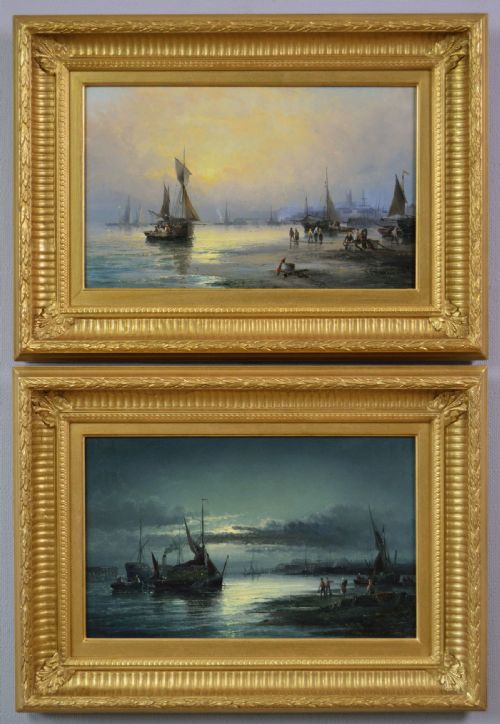
A river fishing oil painting captures the quiet patience of an angler by the water, offering a slice of pastoral or maritime calm for your wall.
River Fishing Oil Painting
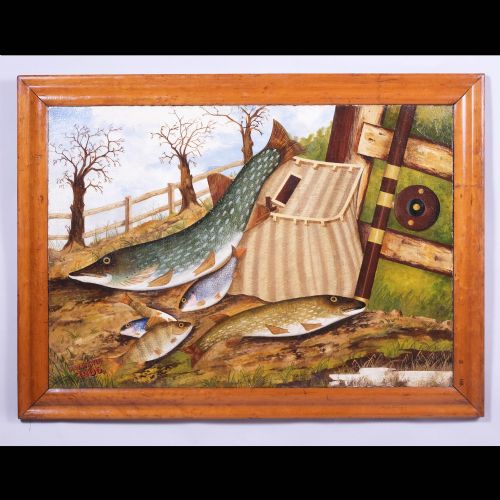
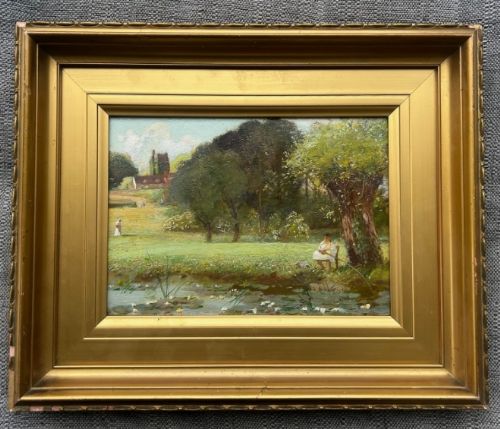
A river fishing oil painting depicts figures angling by streams, rivers, and locks, capturing quiet rural scenes from various historical periods. These works range from intimate studies on panel to larger canvases set in the British countryside.
Most examples encountered here date from the nineteenth and twentieth centuries, spanning Victorian, Edwardian, and post-war styles. The compositions frequently feature solitary anglers, figures in boats, or pastoral landscapes framed by trees and water.
How they were made
Artists applied oil paint using traditional brushes and palette knives to build texture and depth on prepared supports. Canvas and wood panel serve as the primary foundations for these works.
Many of the surviving works retain their original wood frames, occasionally embellished with gold leaf or decorative mouldings that complement the period of the painting.
Paintings recorded here range from Victorian narrative scenes to mid-twentieth-century British impressionist water views.
What varies in quality
The strength of a river fishing oil painting rests in the handling of light on water and the integration of figures into the landscape. Superior works demonstrate confident brushwork and a balanced composition that guides the eye naturally through the scene.
Lesser examples can feel formulaic or stiff in the rendering of foliage and water. The distinction lies in the artist's ability to evoke atmospheric moisture and natural movement rather than mere botanical recording.
Kenneth Cozens·George Graham·Florence Adelina Hess·Sir David Murray·Owen Bowen·Paul H Ellis·W E Barrington Browne·Hubert Thornley·Benjamin Callow·Robert John Hammond·Sonia Mervyn·George Harris·Vilhelm Groth·David Motley·John Shirley Fox·S Bentley·James Burras
The River Fishing Oil Painting Glossary
- Canvas
- A heavy woven fabric stretched across a wooden frame to serve as a painting surface. It provides a slightly flexible texture that holds oil paint well over generations.
- Wood Panel
- A rigid board of timber used as a stable support for pigments. Panels were particularly favoured for smaller, detailed outdoor sketches.
- British Impressionism
- A painting style focusing on light and everyday subjects with loose brushwork. Artists working in this manner sought to capture fleeting visual impressions rather than rigid academic detail.
- Pastoral
- A genre of art depicting rural life and idealized country landscapes. These scenes emphasise peace, simplicity, and a harmonious relationship between humans and nature.
River Fishing Oil Painting: Frequently Asked Questions
How do I date a river fishing oil painting?
Examine the materials of the support, such as canvas or wood panel, alongside the framing and any signatures or inscriptions on the reverse. Costume details on the figures fishing also offer reliable clues to the decade of creation.
Stylistic shifts between nineteenth-century academic realism and later impressionist approaches help narrow the period further. Comparing the handling of paint with documented works by known artists from the era provides additional confirmation.
Where should I hang an oil painting?
Select an interior wall away from direct sunlight and sudden temperature fluctuations, such as those near radiators or open fires. Stable environmental conditions prevent the oil paint and canvas or wood support from cracking over time.
Ensure the centre of the canvas sits at roughly eye level for optimal viewing. Adequate wall space allows the frame and composition to breathe without feeling cramped by surrounding furniture.
What is the difference between canvas and panel?
Canvas consists of woven fabric stretched tightly over a wooden strainer frame, offering a slight give beneath the brush. Panel uses a solid piece of wood, providing a completely rigid and smooth surface for the paint.
Panels were frequently used for smaller outdoor studies because they required less preparation and travelled easily. Canvas became the standard choice for larger exhibition works throughout the nineteenth century.