
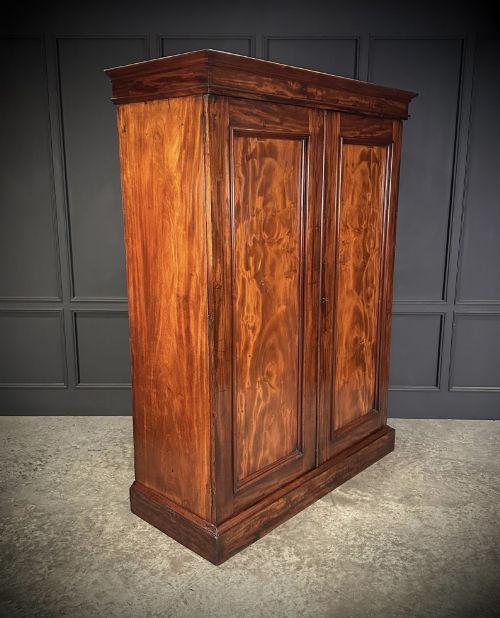
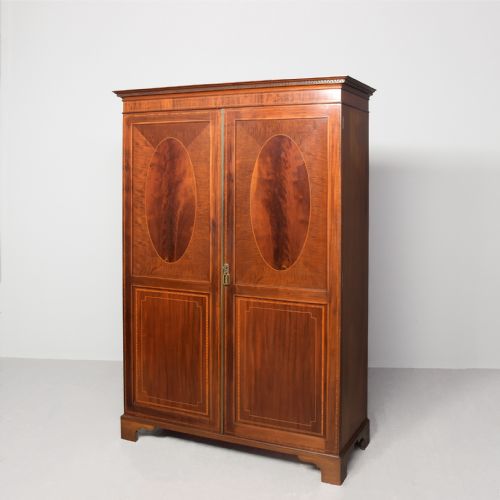
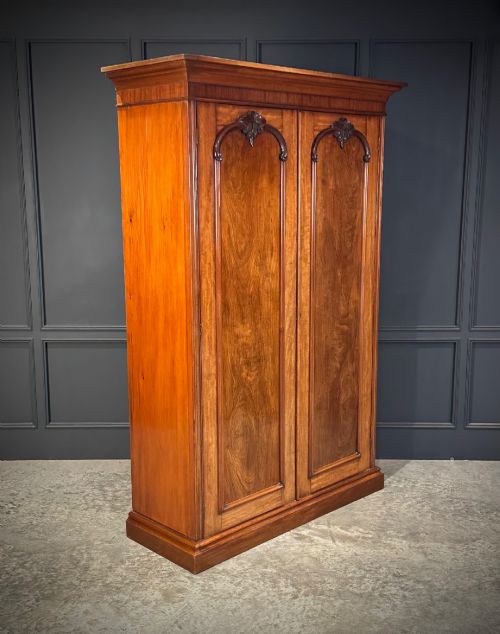


Rich Mahogany Clothes Press
A rich mahogany clothes press offers deep storage and grand presence, built from dense timber to last centuries.
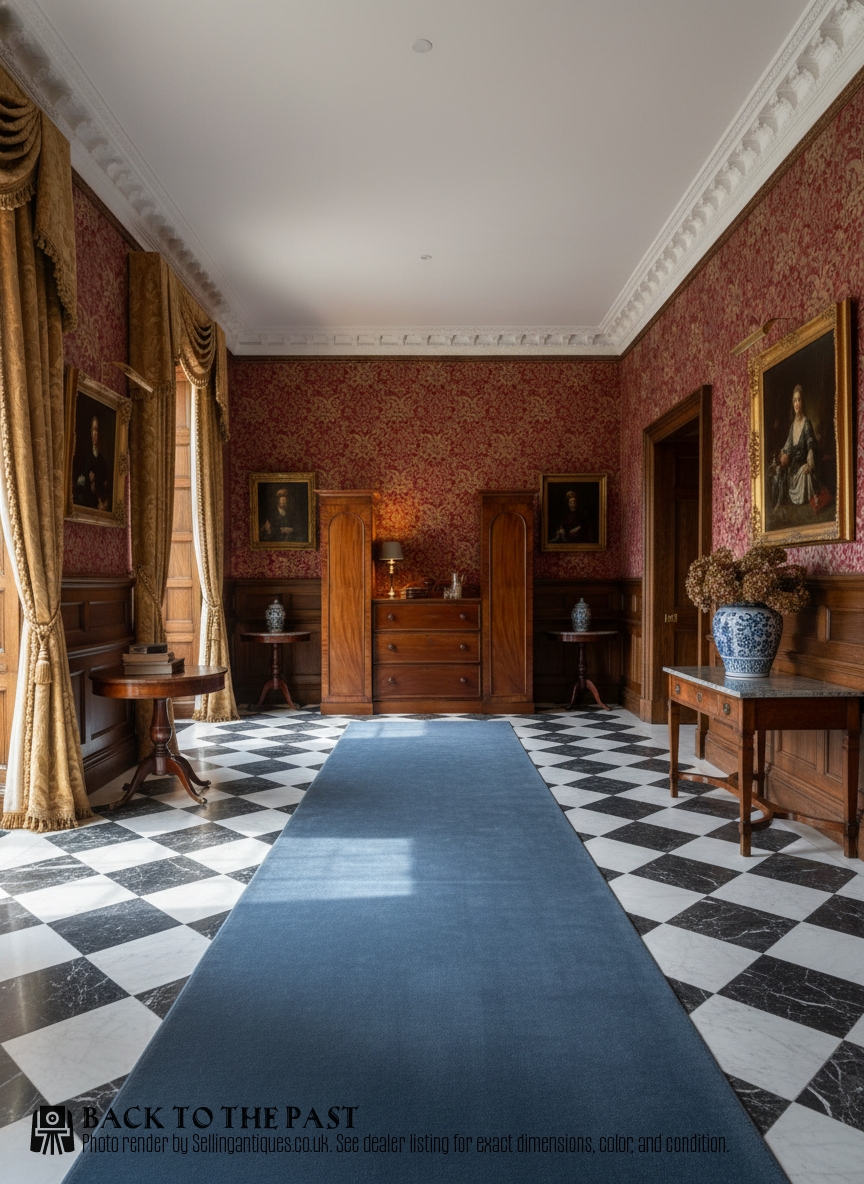
Rich Mahogany Clothes Press
When you search for a rich mahogany clothes press, you are looking at substantial wardrobe furniture designed to store garments and linen securely. These pieces belong primarily to the Georgian, Regency, and Victorian periods, showcasing the traditional craftsmanship of those eras.
You will encounter various structural forms on this page, including double wardrobes, compactum wardrobes, and linen presses. They reflect distinct historical styles such as Chippendale, William IV, and Biedermeier.
Origins span standard British cabinetmaking to Channel Islands workshops. Each surviving example provides a practical storage solution that doubles as a focal point for a bedroom.
How they were made
Cabinetmakers utilised solid mahogany and flame mahogany veneer over robust carcases, often selecting timber with deep natural figuring. They applied intricate boxwood inlay and wood inlay to accent the exterior surfaces.
Functional metalwork played a crucial role in construction, with brass hardware securing doors and internal fittings. Glass elements and traditional panel joinery completed the build of these heavy storage pieces.
Several examples hail from the Channel Islands, proving that even wardrobes enjoy an occasional island holiday.
What varies in quality
Quality separates standard utility pieces from exceptional ones through the selection of timber veneers and decorative inlay work. Pieces featuring striking flame mahogany and crisp boxwood detailing sit at the upper end of the scale.
The sophistication of the period style dictates distinction, ranging from restrained Georgian forms to elaborate Chippendale or William IV interpretations. The precision of the original cabinetmaking and the integrity of the brass hardware define the overall standard.
The Rich Mahogany Clothes Press Glossary
- Mahogany
- A durable tropical hardwood prized for its reddish-brown colour and stability in furniture making. It forms the primary structural material for these presses.
- Flame mahogany veneer
- A thin slice of wood cut from the fork of the mahogany tree to create a flamy, highly figured pattern. It decorates the main doors and panels.
- Compactum
- A multi-functional wardrobe combining hanging space, drawers, and sometimes sliding shelves within a single footprint. It maximises internal storage efficiency.
- Boxwood inlay
- Light-coloured wood embedded into darker mahogany surfaces to form geometric borders and decorative motifs. This technique demands high precision from the maker.
Rich Mahogany Clothes Press: Frequently Asked Questions
What is a clothes press?
A clothes press is a large storage cabinet traditionally designed to keep garments and household linens flat and protected. These pieces often combine internal sliding trays with hanging sections or drawer storage below.
Built to stand securely in large bedrooms, they utilise deep timber construction to house substantial quantities of textiles. Their enclosed design keeps dust away from valuable fabrics.
How do I date a mahogany press?
Dating relies on examining the construction methods, timber choice, and stylistic details present in the piece. Georgian and Regency examples show different decorative carving and inlay techniques compared to later Victorian iterations.
Hardware such as brass handles and hinges also offers clues to the era of manufacture. Secondary woods used inside drawers help confirm the period of origin.
Where should I place a wardrobe?
These large furniture pieces require a wall with sufficient depth and structural support to bear their substantial weight. Placing them away from direct sunlight and heat sources protects the mahogany finish from fading and the veneer from drying out.
Ensure the room has stable humidity levels to keep the heavy wooden doors hanging true on their hinges. Ample clearance in front of the press allows drawers and doors to open fully.
How do I care for mahogany?
Regular dusting with a soft, dry cloth keeps the surface free from particles that can scratch the finish. Avoid silicone-based polishes and instead use traditional beeswax sparingly to nourish the timber.
Maintaining a stable indoor climate prevents the solid mahogany and veneer from warping or cracking. Gentle cleaning preserves the natural patina developed over the centuries.