




Rich Brown Tripod Table
A rich brown tripod table brings warm timber tones and practical portability to any room, offering a stable three-legged stance developed centuries ago.
Rich Brown Tripod Table
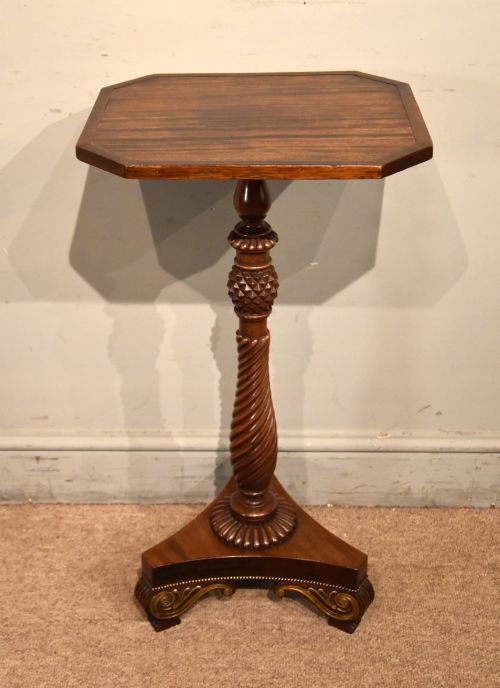
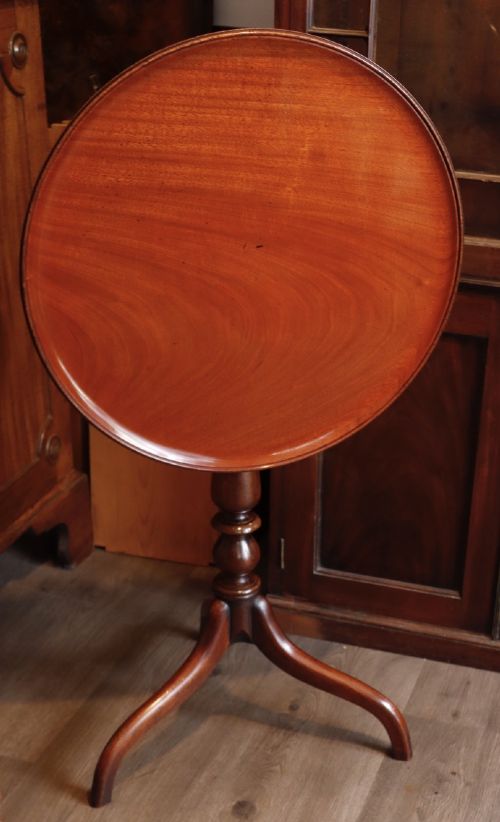
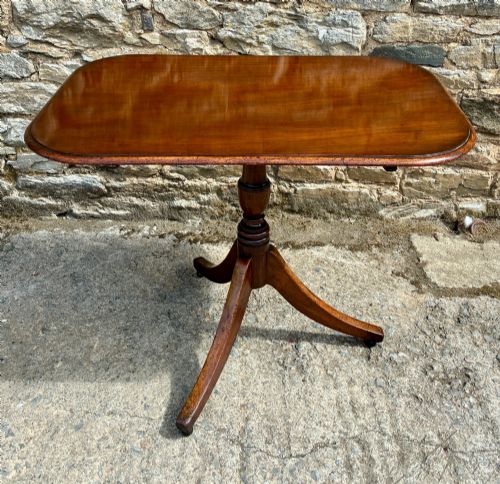
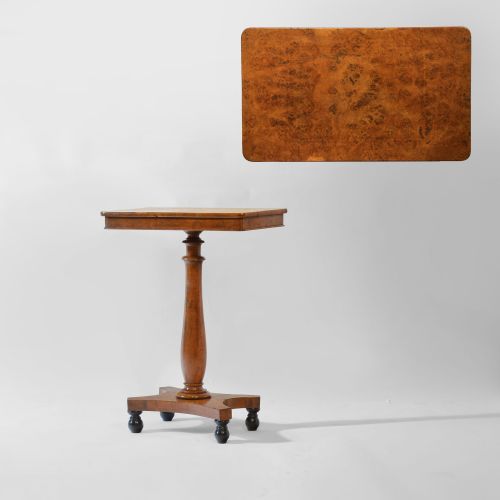
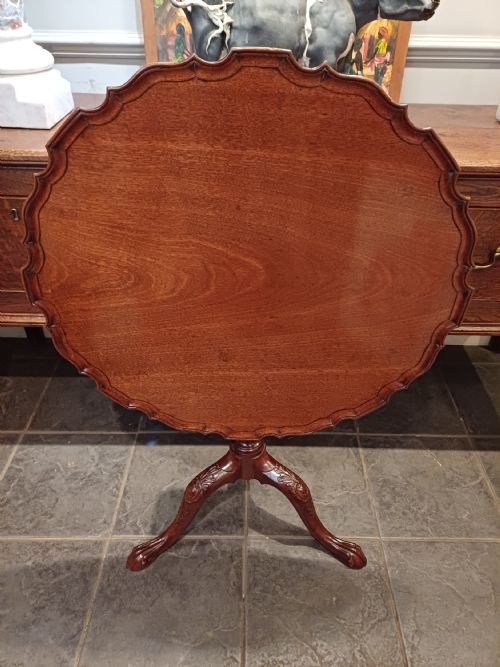
A rich brown tripod table gathers various forms from the Georgian, Regency, and Victorian eras, alongside Edwardian and later twentieth-century examples. You will frequently encounter mahogany and pollard oak pieces raised on three-legged pedestals, serving as wine tables, occasional tables, or tilt-top breakfast tables.
Many of these tables feature tilting tops supported by birdcage mechanisms, allowing the surface to fold away flat when not in use. This clever engineering originated to save space in historic drawing rooms and libraries, making them as useful today for a bedside or corner placement as they were originally.
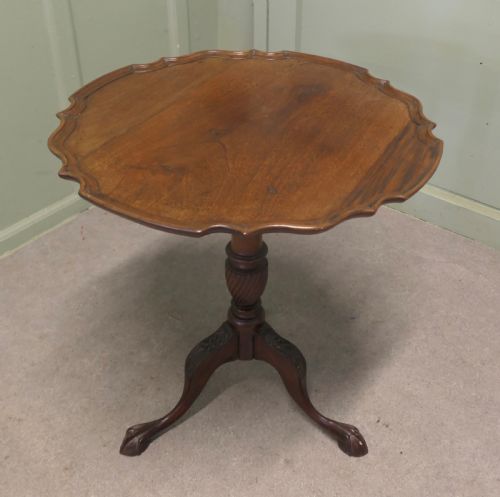
The selection ranges from simple circular lamp tables to elaborate piecrust edges and miniature breakfast tables. Regional variations such as Irish yew wood work tables and Anglo-Indian designs also appear, providing diverse options for collectors seeking distinctive timber grain and character.
Materials and Construction
Cabinetmakers relied heavily on rich timbers such as mahogany, rosewood, pollard oak, and yew wood, often selecting boards with deep natural figures and warm brown tones. These woods were turned, carved, and polished by hand to highlight the grain.
The characteristic three-legged base is joined to a central pillar, frequently utilising dovetail or tenon joints for stability. Tilt-top variants incorporated sophisticated brass catches and wooden birdcage frames that allowed the tabletop to pivot and rotate smoothly.
Listings feature mahogany predominantly, alongside alternative timbers like pollard oak, yew wood, rosewood, and brass hardware.
Assessing Quality and Craftsmanship
Quality reveals itself in the choice of timber figure, the crispness of the pedestal turning, and the integrity of the tilt mechanism. Superior examples display carefully matched wood grains across the single-board or well-joined tabletops rather than hastily assembled veneers.
The proportions of the three legs relative to the central pillar determine the visual balance and stability of the piece. Finer workshops ensured the legs met the floor firmly without rocking, while lesser examples often show clumsy repairs or mismatched replacement parts around the pivot block.
Gillows
The Rich Brown Tripod Table Glossary
- Tilt top
- A tabletop hinged to its central pillar so it can pivot vertically for storage. This clever mechanism became standard on many eighteenth and nineteenth-century occasional tables.
- Birdcage
- A rotating wooden frame situated beneath the tabletop that allows the surface to turn as well as tilt. It is typically found on higher-status Georgian and Victorian tables.
- Piecrust edge
- A decorative raised rim carved into a circular tabletop with alternating curves and indentations resembling pastry work. It requires considerable skill from the woodcarver.
- Snap top
- An alternative term for a tilt top, held securely in the horizontal position by a brass spring catch or wooden wedge beneath the leaf.
- Tripod base
- A pedestal support featuring three radiating legs mounted to a central turned column. This design prevents rocking on uneven historic floors.
Rich Brown Tripod Table: Frequently Asked Questions
What is a birdcage tripod table?
A birdcage mechanism is a rotating wooden frame located directly beneath the tabletop. It allows the surface to both pivot upright and spin horizontally.
Cabinetmakers incorporated this feature on better-quality tables during the Georgian period to improve versatility and storage in smaller spaces.
How do I use a tilt top table?
Tilt top tables were designed to stand flat against a wall when not in use, displaying the polished timber grain like a panel of art. When needed for afternoon tea or holding a lamp, simply release the brass catch beneath and lower the leaf.
Ensure the safety catch or wedge is properly engaged before placing heavy items on the surface.
Are these tables sturdy?
The three-legged design naturally accommodates uneven historical floorboards without wobbling. Each leg distributes weight evenly outward from the central turned column.
When placed correctly, a well-balanced tripod table provides reliable support for lamps, books, and decorative objects.
How do I identify the wood?
Mahogany displays a deep reddish-brown tone with straight or ribbon-like grain patterns that darken gracefully over time. Pollard oak and yew wood exhibit much wilder, swirling figures with distinct knots and lighter honey highlights.
Close inspection under good natural light helps reveal the natural pores and finishing oils unique to each species.