
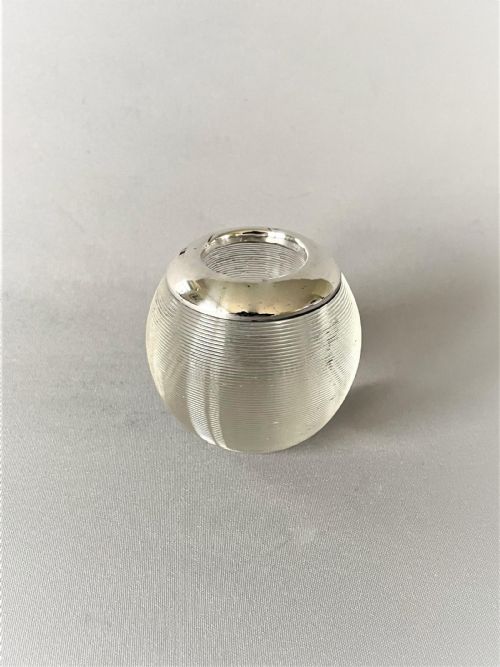
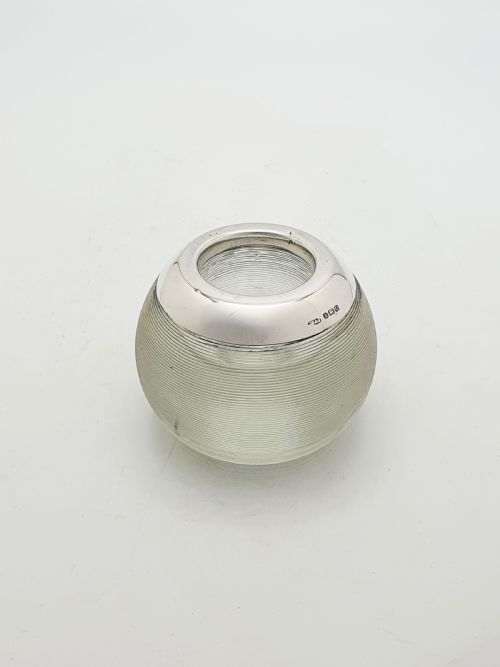


Ribbed Glass Match Striker
A ribbed glass match striker brings tactile, sparkling utility to a desk or smoking room, combining heavy moulded vessels with precious metal mounts.
What these match strikers are
A ribbed glass match striker is a functional smoking accessory designed to ignite safety matches through a textured striking surface. These pieces combine heavy glass bodies with sterling silver rims or mounts, appearing most frequently from the Edwardian era.
The inventory includes globe and ball forms, often described as match holders or strikers. Surviving examples demonstrate a consistent British origin, spanning dates from the early twentieth century into the mid-twentieth century.
How they were made
Makers utilised thick glass, formed with threaded or ribbed exterior patterns that double as the abrasive surface for striking matches. These robust vessels were then fitted with hallmarked sterling silver rims, often leaving a central well for holding matches.
Techniques combined heavy glass moulding with traditional silversmithing. The resulting objects possess substantial weight, with several historical pieces noted for their heavy metal content.
Listings for this phrase feature pieces in both clear and green glass, paired exclusively with sterling silver mounts.
What varies in quality
Quality rests in the weight of the glass and the substance of the silver mount. Heavier pieces with distinct ribbing and substantial silver rims represent the upper tier of production.
Maker marks add distinction, particularly pieces bearing the stamp of established retailers like Asprey. The clarity and colour of the glass, whether standard clear or threaded green glass, further differentiate individual examples.
Asprey
The Ribbed Glass Match Striker Glossary
- Sterling silver
- A silver alloy containing 92.5 percent pure silver and 7.5 percent other metals, typically copper. This standard metal forms the rims and mounts on these strikers.
- Hallmark
- An official stamp applied by an assay office confirming the purity of the precious metal. These marks often include date letters and maker's marks.
- Vesta
- A small box or container used for holding matches, frequently associated with the pocket but related to larger desk strikers.
- Threaded glass
- Glass featuring fine, continuous raised lines wrapping around the body. This texture provides the necessary friction for striking matches.
Frequently Asked Questions
How do you use a ribbed glass match striker?
The textured or ribbed exterior of the glass provides the abrasive surface needed to ignite a match. You simply strike the match head directly against the glass body.
Most pieces also feature an open well or central holder to keep a supply of matches ready for use on a desk or table.
What period do most of these match strikers come from?
The majority of these pieces originate from the Edwardian period and the early twentieth century. Dates frequently cluster around the first decade of the nineteen hundreds.
Later mid-century examples also appear, often bearing hallmarks from the nineteen sixties by makers such as Asprey.
Are these match strikers made of real silver?
The metal mounts and rims on these pieces are made of sterling silver. British examples typically feature proper hallmarks stamped into the metal to verify its standard.
These hallmarks can help date the piece precisely and identify the silversmith or retailer involved in its production.
What colours do the glass bodies come in?
While many examples utilise clear cut glass, surviving pieces also appear in coloured glass variations. Rich green glass is a notable feature among spherical and globe-shaped strikers.
The combination of coloured glass and polished sterling silver creates a striking decorative object for interior display.