


Revolving Bookshelf Table
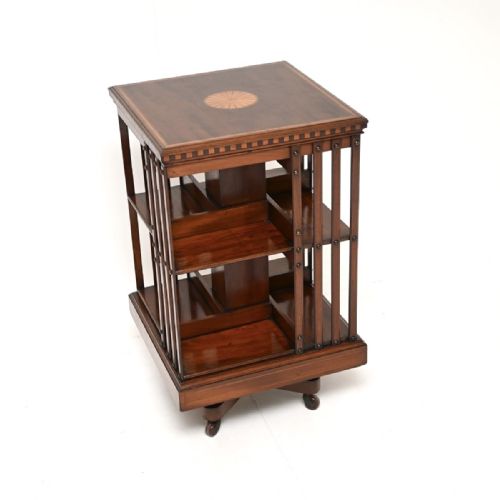
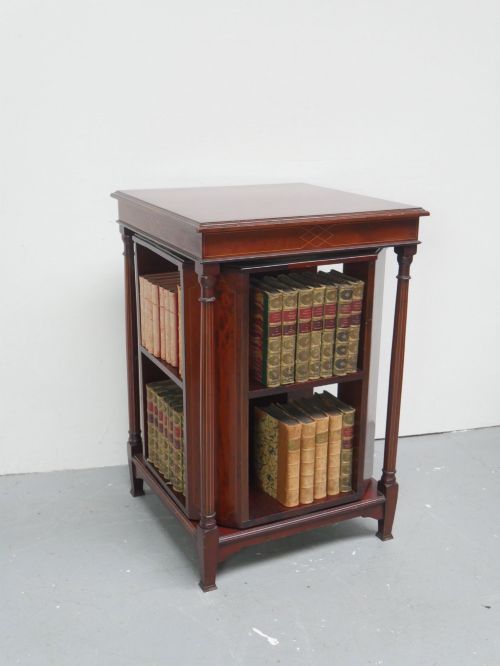
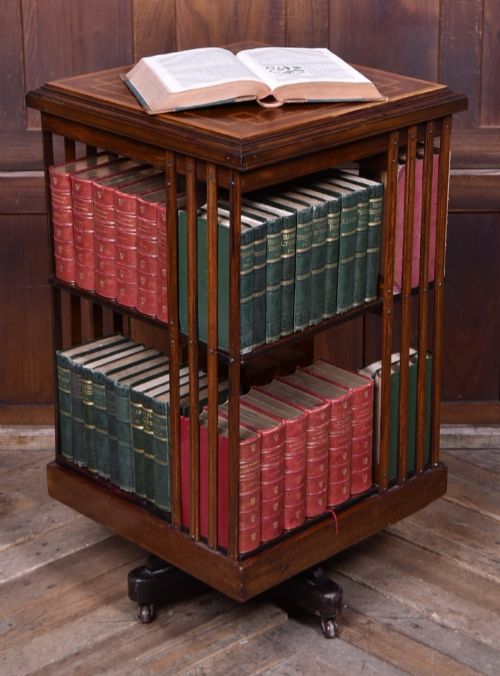
A revolving bookshelf table is a clever multi-tiered volume holder designed to spin smoothly on a central pivot, letting you access a whole library from an armchair.
Revolving Bookshelf Table
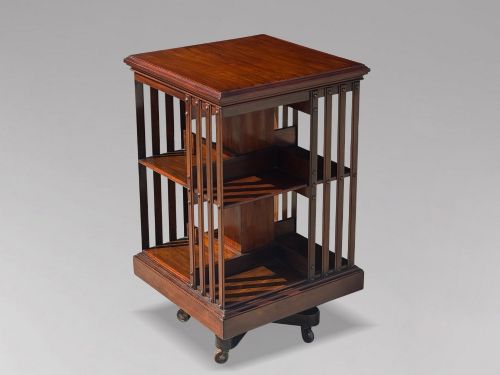
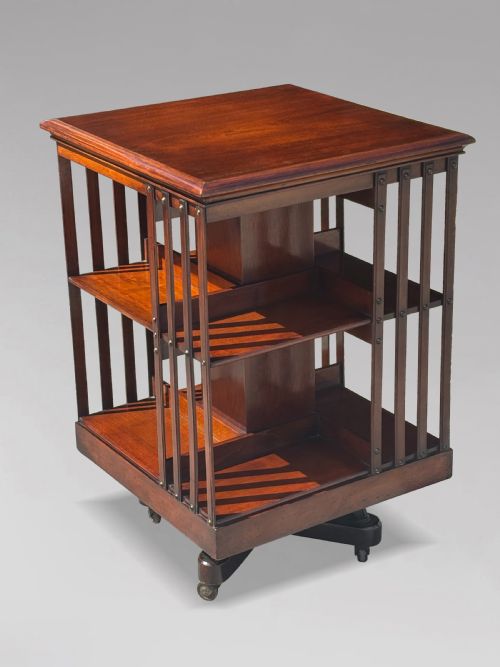
A revolving bookshelf table provides accessible book storage in a compact footprint, allowing readers to keep volumes within arm's reach while sitting at a desk or by a fireside. When you search for a revolving bookshelf table, you encounter practical furniture forms designed for heavy daily use in studies, libraries and drawing rooms.
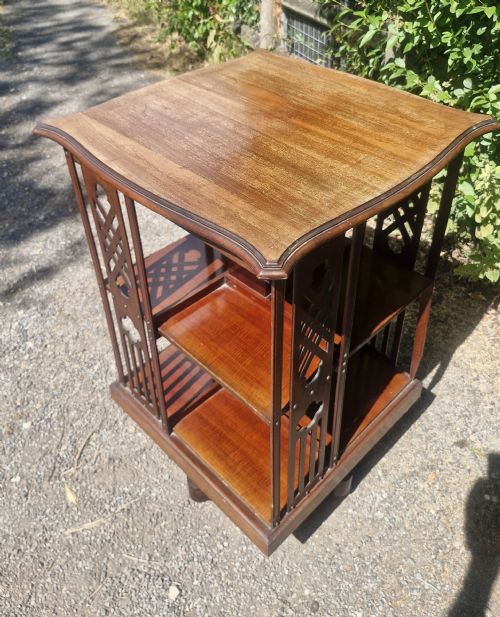
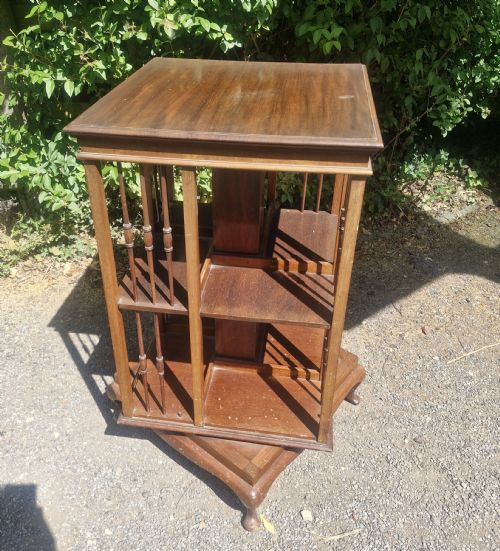
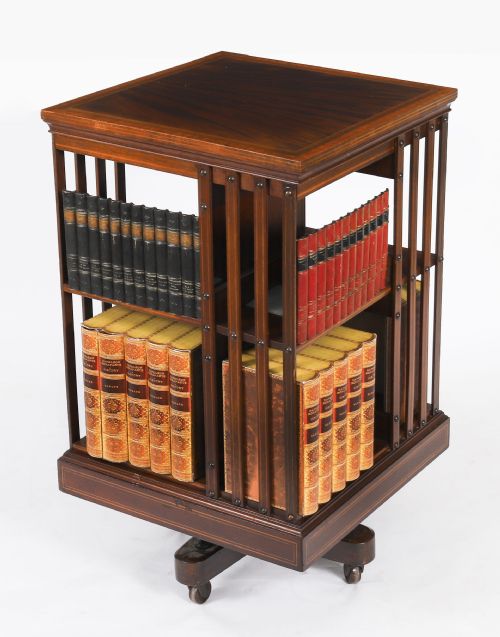
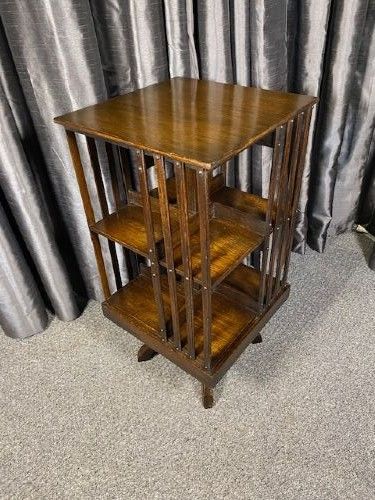
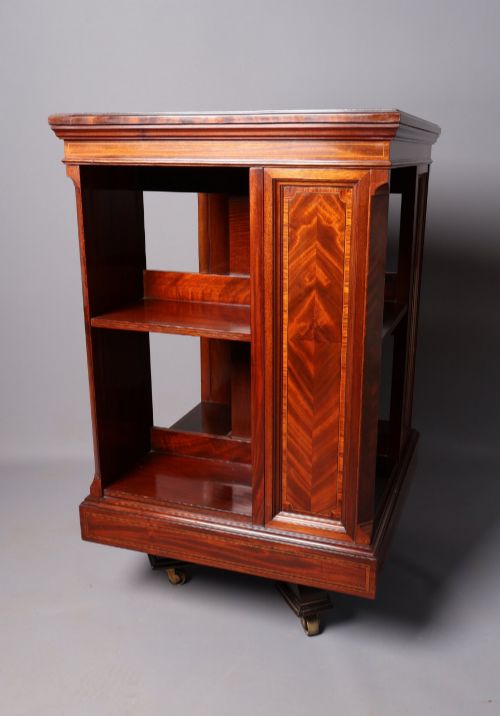
The most common examples on this page date from the Edwardian period and the late nineteenth century, predominantly taking the form of square freestanding or table-top units. Mahogany is the most frequent timber, often complemented by satinwood inlay, while oak examples also appear in smaller proportions.
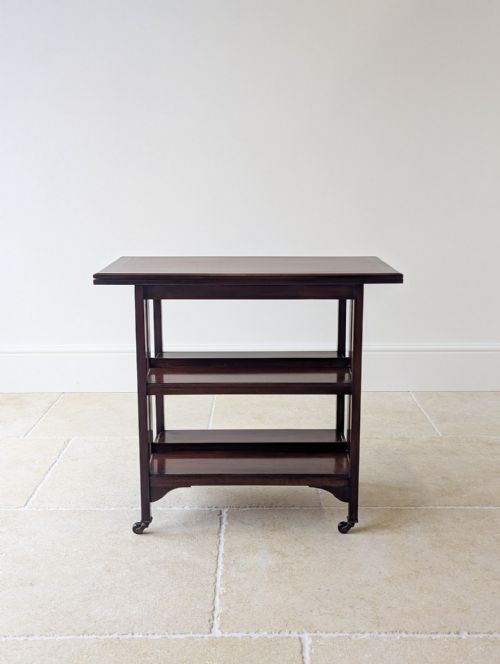
Beyond standard bookcases, variants include desktop versions and hybrid designs such as card tables with integrated bookshelf bases. These pieces balance sturdy load-bearing capability with a smooth turning action that lets users browse titles with a gentle nudge.
How they were made
Cabinet makers constructed these rotating units using solid timbers and handsome veneers, selecting mahogany and oak for their structural strength and visual grain. Artisans frequently added satinwood inlay and fine stringing to accentuate the panels and top surfaces of Edwardian and Victorian examples.
The turning mechanism relies on robust internal hardware, typically incorporating metal, iron, or cast iron bearings and spindles concealed beneath the base. This engineered pivot allows heavy loads of books to spin freely without listing or scraping against the floor or table.
Early readers relied on these spinning towers so heavily that many retain distinct circular wear marks on the top surface from tea cups left during long afternoon reading sessions.
What varies in quality
The distinction between standard production and finer execution lies in the choice of timber and the precision of the joinery. Selected flame mahogany and crisp, detailed satinwood inlay elevate a piece beyond simple utilitarian storage.
Quality also resides in the smoothness of the concealed rotating mechanism and the stability of the tier dividers. A superior revolving bookshelf table turns silently and maintains level shelves even when fully loaded with heavy volumes.
The Revolving Bookshelf Table Glossary
- Revolving bookcase
- A tiered wooden unit built on a hidden pivot mechanism that allows the entire structure to spin around a vertical axis. This design maximises storage capacity while occupying minimal floor or table space.
- Satinwood inlay
- A decorative technique where contrasting light-coloured satinwood is set into recesses within a darker primary timber like mahogany. It creates delicate geometric borders and floral motifs popular in Edwardian joinery.
- Flame mahogany
- A highly figured cut of mahogany displaying a distinctive rippled, flame-like grain pattern. Cabinet makers reserved this premium veneer for the prominent top surfaces of better-quality furniture.
- Arts and Crafts
- A design movement prioritising simple forms, visible construction methods and honest materials over fussy factory ornamentation. In these listings, it appears on modest oak table-top revolving models.
Revolving Bookshelf Table: Frequently Asked Questions
How do I care for the rotating mechanism?
The internal pivot generally requires very little attention beyond occasional light cleaning to prevent dust accumulation in the bearings. Avoid using heavy lubricants unless the rotation becomes stiff.
Keep the piece away from direct heat sources and damp environments to ensure the wooden tiers and hidden iron components continue to move freely.
Were these made for desks or floors?
Makers produced both large floor-standing models and smaller table-top versions designed to sit on desks or side tables. Floor models typically offer three or four tiers of storage.
Table-top variants provide a compact solution for smaller collections and workspaces without taking up valuable floor area in a room.
How do I distinguish Edwardian from Victorian models?
Victorian examples often feature heavier timber proportions, deeper red mahogany tones, and restrained ornamentation. They reflect the substantial furnishing tastes of the nineteenth century.
Edwardian pieces tend to look lighter and brighter, frequently incorporating satinwood inlay, lighter mahogany shades, and sometimes Arts and Crafts influences in oak.
Can these hold heavy hardback books?
The sturdy solid wood construction and internal metal or cast iron pivots are engineered to bear the substantial weight of dense book collections. Each tier distributes the load evenly around the central axis.
Spreading heavy volumes across different levels ensures the unit remains balanced and spins smoothly during everyday use.