



Revolving Bookshelf Stand
A revolving bookshelf stand keeps your daily reading within arm's reach while turning smoothly on a compact footprint.
Revolving Bookshelf Stand
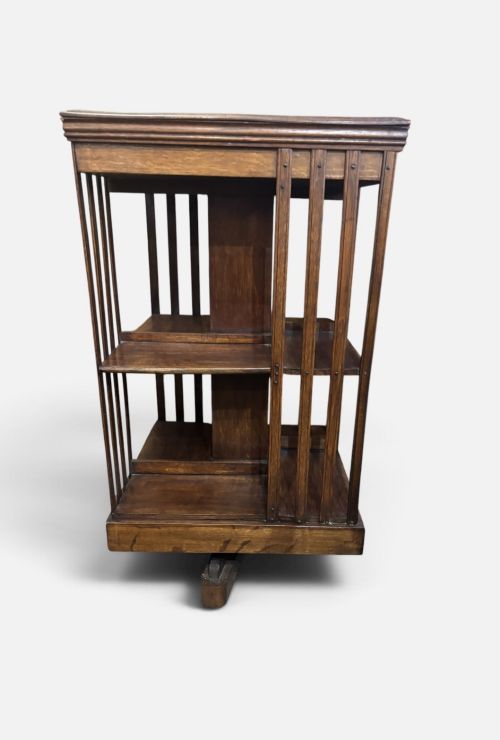
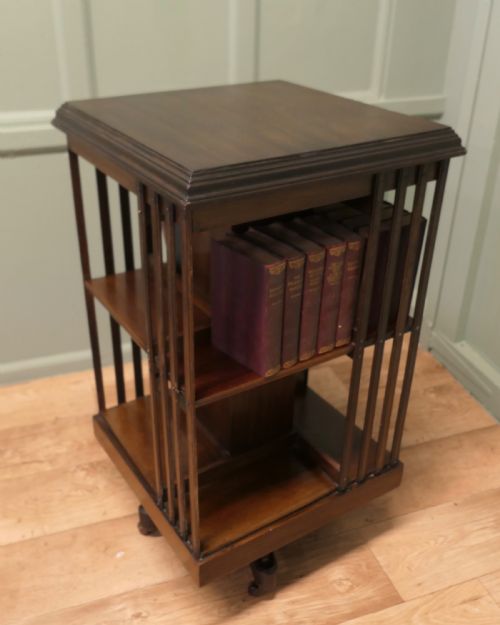
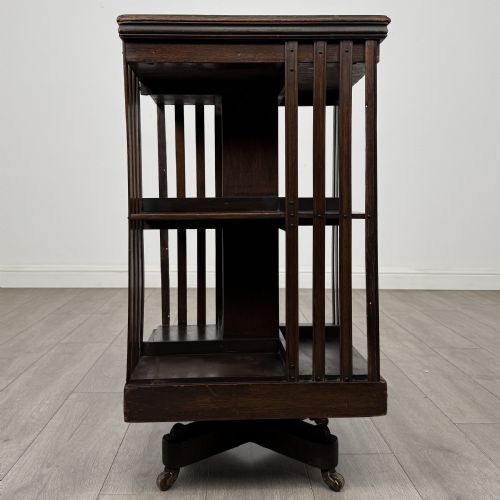
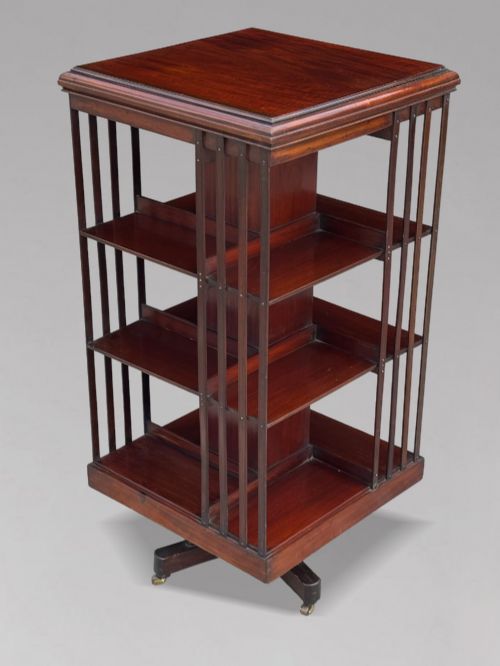
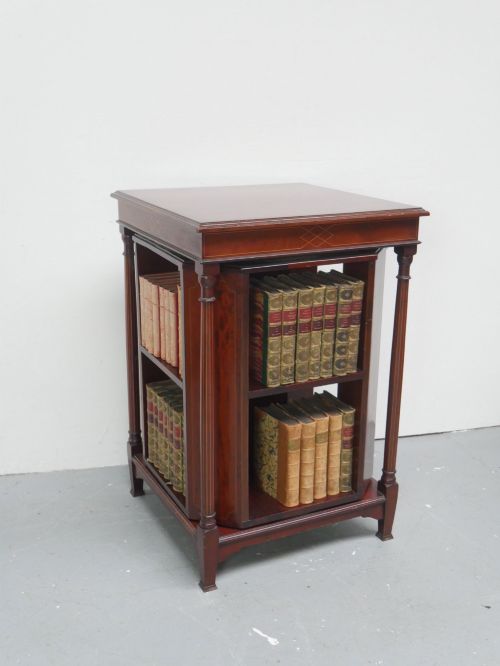
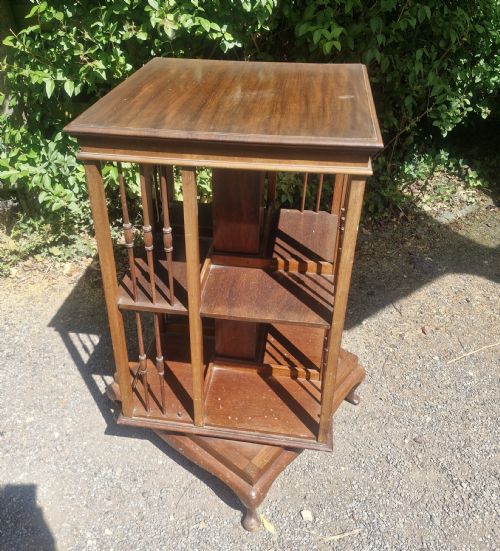
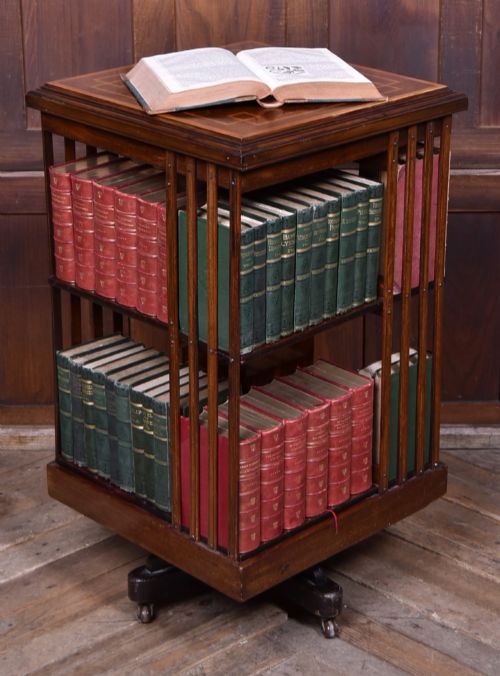
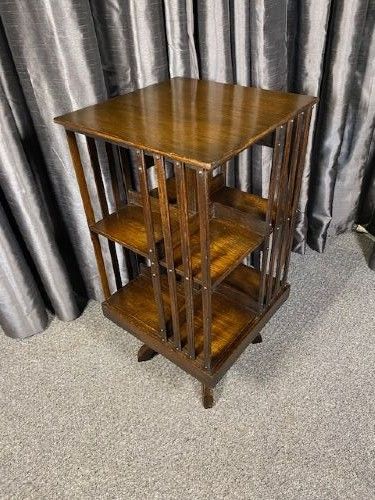
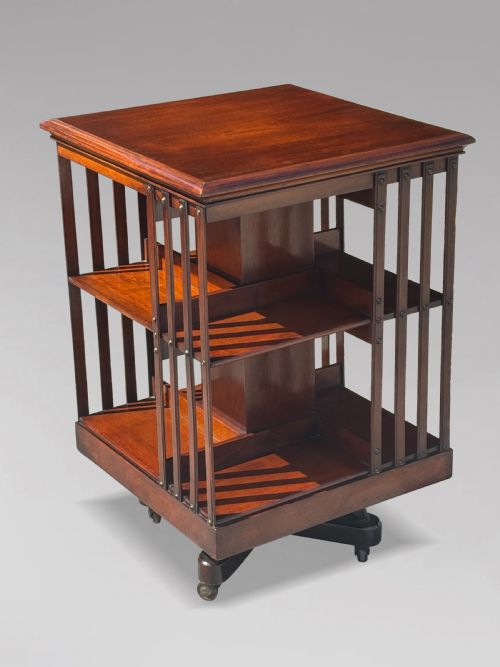
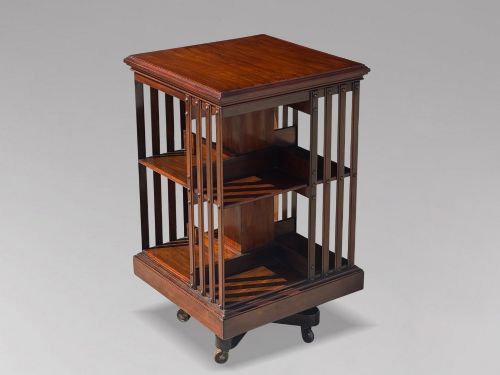
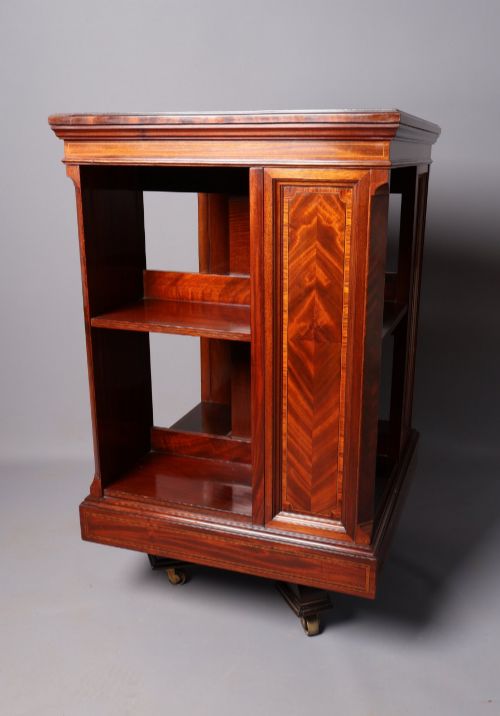
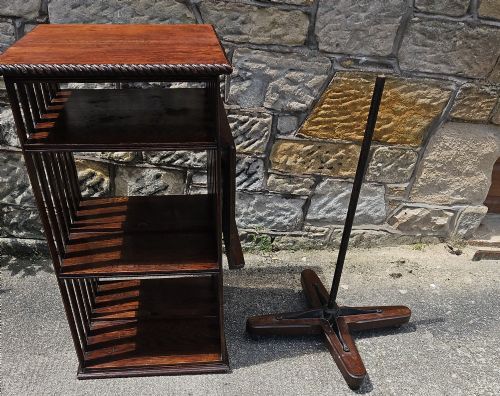
A revolving bookshelf stand offers accessible tiered storage for books and volumes, rotating effortlessly on a central spindle. When you search for a revolving bookshelf stand, you encounter pieces designed to sit on the floor or rest directly upon a desk or table top.
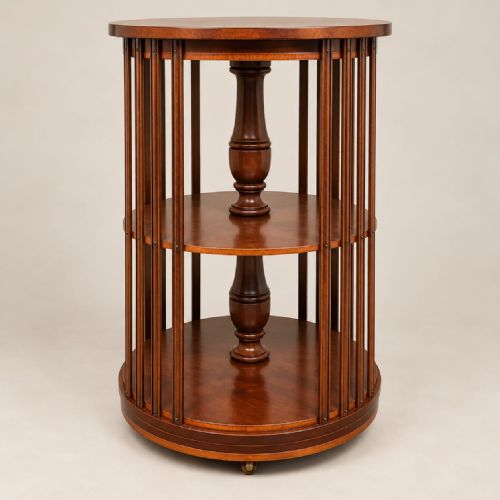
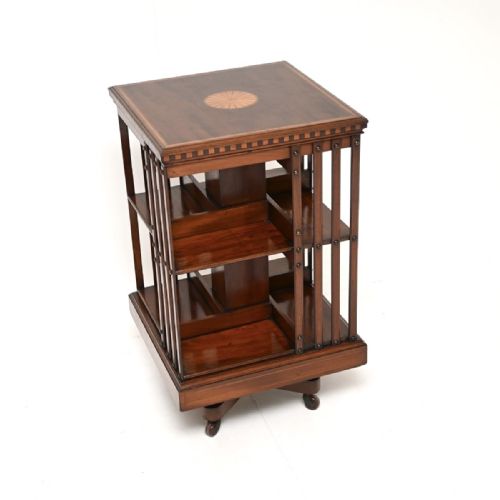
The selections span from the late nineteenth century through the Edwardian era, taking the form of floor-standing models and smaller desktop variants. Mahogany and oak dominate the offerings, occasionally featuring satinwood inlay or brass and cast iron internal mechanisms.
Materials and construction methods
Cabinetmakers built these revolving bookshelf stand pieces primarily using solid timbers like mahogany and oak, applying flame mahogany veneers and delicate satinwood inlay to finer examples. The internal turning mechanism relies on sturdy metal, brass, and cast iron components that permit smooth rotation under weight.
Joinery techniques from the Victorian and Edwardian periods ensured structural rigidity for stacking heavy volumes across multiple tiers. Wood surfaces were finished to highlight natural grain patterns, whilst inlay work added ornamental contrast to the upright slats.
Revolving Bookshelf Stand Retail Price Guide 2026
Typical asking prices for revolving bookshelf stand among the pieces listed under this phrase on Sellingantiques today, from the lower quarter to the upper quarter. They describe what is for sale here now, not the wider market.
Formats range from large floor-standing bookcases to petite French four-shelf variants and table top desk models.
Distinctions in quality and finish
The smoothness of the rotation separates standard examples from superior models, depending on the engineering of the concealed spindle and bearings. Heavier timber selection and crispness in the satinwood inlay mark out the more ambitious pieces.
Proportion and scale also dictate quality, ranging from small desktop items to large floor-standing editions. Refined detailing in the woodwork and timber selection elevate certain examples above utility items.
Heals
The Revolving Bookshelf Stand Glossary
- Edwardian
- Pertaining to the reign of King Edward VII, noted for lighter furniture designs and revived classical styles. This period produced many of the revolving bookcases found today.
- Satinwood
- A durable, yellow-toned exotic wood used extensively for decorative stringing and inlay work. It provides striking contrast against darker mahogany panels.
- Flame mahogany
- A veneer cut from the fork of the mahogany tree where the branch meets the trunk. It creates a distinctive rippled flame pattern across the timber surface.
- Arts and Crafts
- A design movement valuing traditional craftsmanship and simple forms over mass production. Pieces from this style often utilise plain oak with minimal ornament.
- Chippendale style
- A revival style drawing on eighteenth-century furniture designs associated with Thomas Chippendale. It brings classical carved details to later revolving stands.
Revolving Bookshelf Stand: Frequently Asked Questions
How do I choose the right size?
Consider whether you need a floor-standing unit to hold a large collection or a small desktop version for daily reference. Measure your available floor or table space before selecting a model.
Larger pieces provide multiple tiers of storage while remaining compact enough to sit beside a desk or armchair.
Where were these pieces made?
The examples available stem primarily from British workshops dating from the Victorian and Edwardian periods. Cabinetmakers constructed them to serve both domestic studies and libraries.
Continental workshop pieces, such as French provincial variants, also appear occasionally within the selection.
How do I maintain the turning mechanism?
Keep the internal spindle clean and free from dust to ensure the stand continues to revolve smoothly. Periodically check any accessible metal or brass fittings to see that they remain secure.
Avoid overloading individual tiers beyond their intended capacity to protect the central bearing from undue wear.
How do I care for the wood finish?
Dust the mahogany and oak surfaces regularly with a soft cloth to preserve the polished timber. Protect the finish from direct sunlight and excessive moisture to prevent fading or warping.
Apply a quality furniture wax occasionally to nourish the wood and maintain its natural lustre.