



Revolved Piano Stool
A revolved piano stool offers the right seat height at the keyboard through a turning mechanism.
Revolved Piano Stool
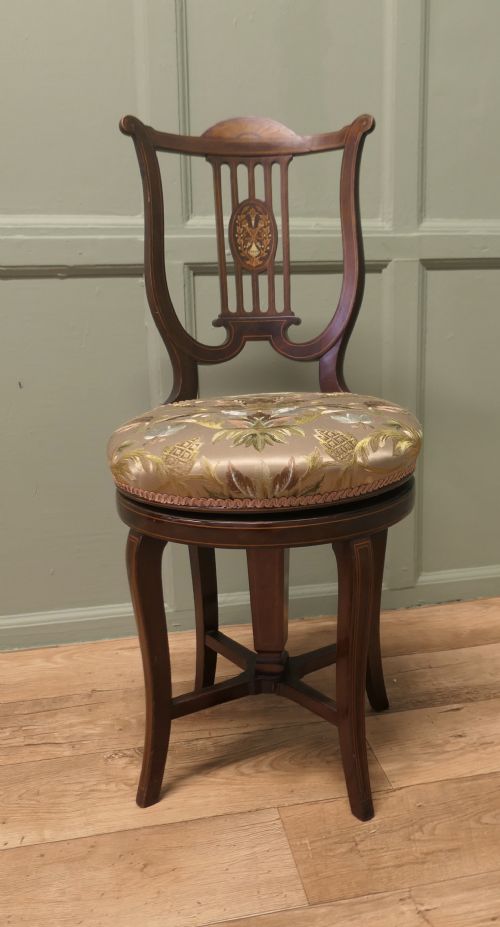
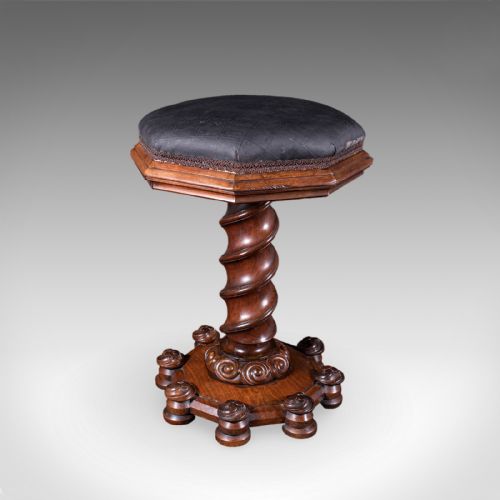
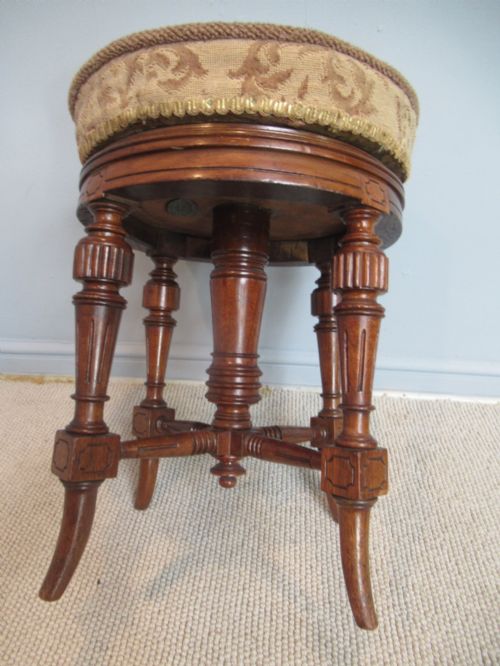
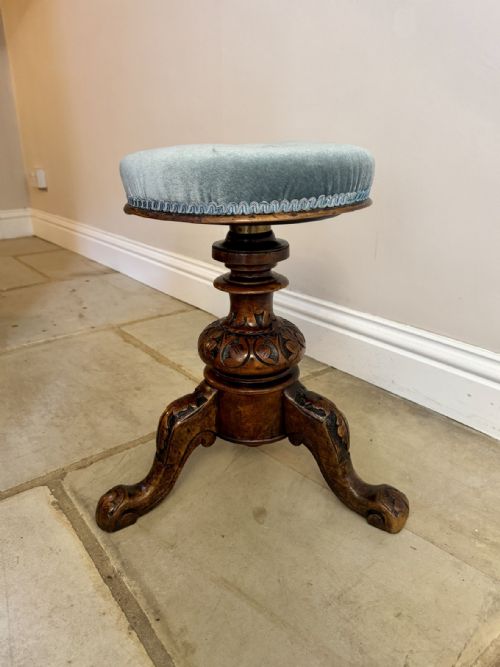
A revolved piano stool provides a stable seat for musicians at the keyboard, utilising a screw mechanism or swivel action to alter height. Buyers searching for a revolved piano stool encounter various forms, including traditional round-topped seats, lyre-back music chairs, and revolving harpist stools designed for comfort during long practice sessions.
The selections span multiple eras, with Victorian and William IV examples appearing frequently alongside Regency, Georgian, and Edwardian pieces. Formats range from formal parlor music seats in rich woods to industrial cast iron and wood designs, reflecting the varied domestic settings where home music-making took place.
Makers and workshops utilised specific timber types to match contemporary drawing-room furniture, producing revolving stools that doubled as dressing table chairs. These seating options bridge utility and ornamental design, serving both domestic piano practice and salon performances.
How they were made
Cabinetmakers constructed these revolving seats primarily using dense hardwoods such as mahogany, walnut, and rosewood, often enhancing surfaces with brass inlay or carved details. The central rise-and-fall mechanism relied on threaded wooden screws or metal box screws concealed beneath the upholstery to allow smooth height adjustment.
Seats were traditionally padded and covered in materials including velvet, leather, fabric, or original upholstery to provide firm support. Structural joinery involved sturdy turning and framing to withstand the daily torque of users twisting to alter their seating position.
Revolved Piano Stool Retail Price Guide 2026
Typical asking prices for revolved piano stool among the pieces listed under this phrase on Sellingantiques today, from the lower quarter to the upper quarter. They describe what is for sale here now, not the wider market.
Listings feature mahogany, walnut, and rosewood alongside brass and various upholstered fabrics across the nineteenth century.
What varies in quality
The standard of carving and the selection of timber dictate the distinction between basic utility pieces and high-end salon seating. Cabinetmakers who incorporated figured rosewood veneers, intricate lyre splats, or fine brass inlay produced pieces intended for formal reception rooms rather than standard practice spaces.
The engineering of the swivel mechanism determines mechanical longevity. Smooth operation of the revolving screw without excessive wobble separates superior workshop production from simpler domestic carpentry.
Gillows·James Shoolbred
The Revolved Piano Stool Glossary
- Rise and fall
- A mechanical arrangement allowing the seat height to be adjusted by turning the top clockwise or anti-clockwise. This mechanism uses a central screw thread hidden within the column.
- Swivel base
- A pivoting pivot that allows the seat top to rotate freely without altering height. This differs from a screw-adjusted rise-and-fall stool.
- Lyre back
- A chair back shaped in the outline of a classical musical lyre. This motif appears frequently on nineteenth-century music chairs and harpist stools.
- Simulated rosewood
- A painted or stained finish applied to a secondary timber to imitate the rich grain of genuine rosewood. Cabinetmakers utilised this technique during the Regency period.
- Papier mache
- A composite material formed from paper pulp mixed with glue and resin, pressed into moulds and lacquered. It provided a lightweight yet durable base for decorative music stool trays and frames.
Revolved Piano Stool: Frequently Asked Questions
How do I adjust the height on a revolved piano stool?
Most models feature a central screw mechanism hidden beneath the upholstery. Turning the seat top clockwise or anti-clockwise raises or lowers the seating surface.
Once the desired height is reached, the internal thread holds the seat firm during performance. Certain industrial or swivel variants operate on different pivots without vertical adjustment.
Were these stools only used for pianos?
Musicians used these adaptable seats for various instruments, including harps, cellos, and chapel organs. The specialised harpist chairs often featured open backs or specific arm designs to accommodate the player's posture.
Households also utilised them as dressing table chairs in bedrooms and boudoirs. Their compact footprint and adjustable height made them versatile furniture pieces.
How do I care for the revolving mechanism?
Keep the internal screw thread clean and free from dust accumulation. Applying a suitable lubricant to metal threads ensures smooth turning without binding.
Avoid forcing the seat past its upper or lower limits to prevent stripping the wooden or metal screw channels. Gentle handling preserves the internal alignment.
How can I distinguish a Regency stool from a Victorian one?
Regency and William IV pieces often display classical motifs such as brass inlay, simulated rosewood finishes, and formal mahogany or rosewood frames. Their lines lean toward strict classical revival aesthetics.
Victorian examples frequently introduce heavier walnut framing, more elaborate carving, and Arts and Crafts influences by the end of the century. Upholstery styles and woodwork details shift accordingly across these decades.