

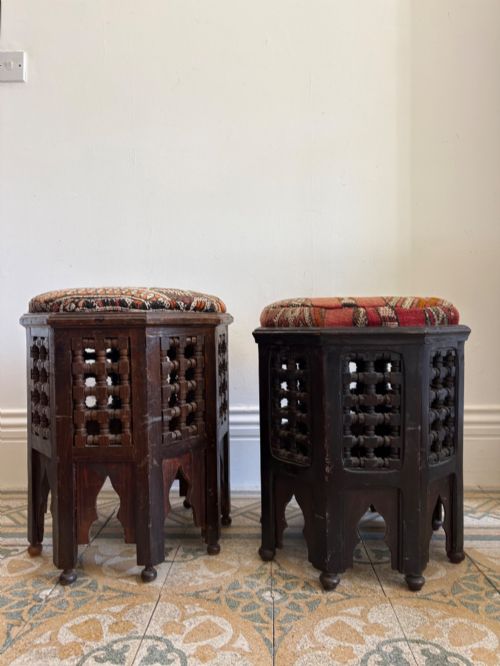
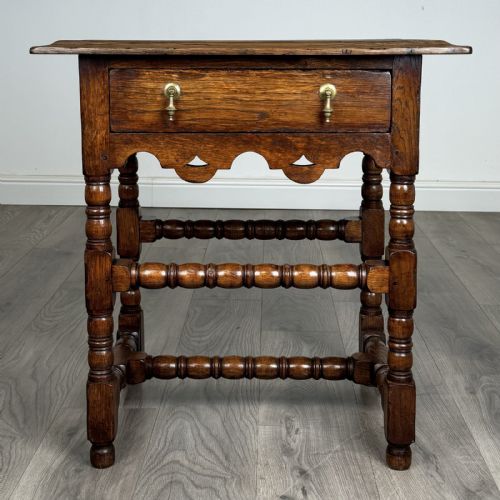
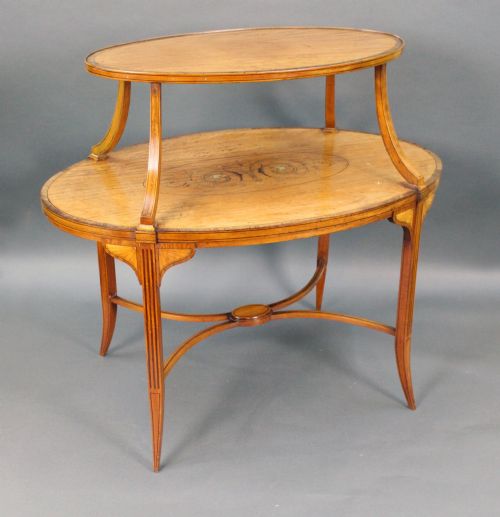
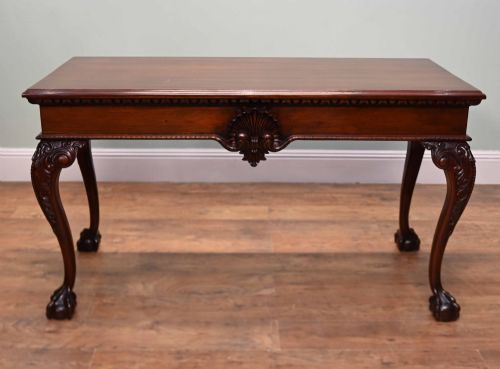
Revival Side Table
A revival side table brings historic form and decorative detail into a modern interior, offering a practical surface drawn from earlier periods.
Revival Side Table
A revival side table takes inspiration from historical design periods, including the Victorian era, Edwardian period, and earlier centuries. These pieces function as occasional tables, lamp tables, or small centre tables within a room.
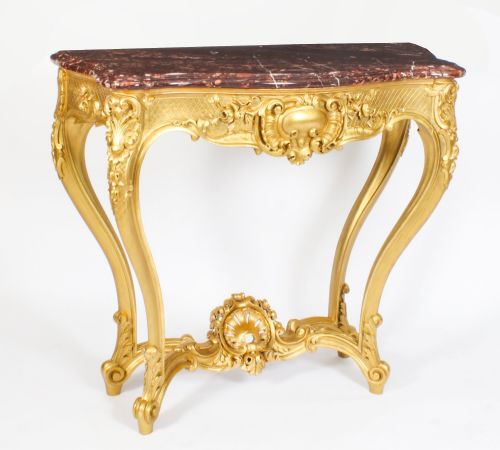
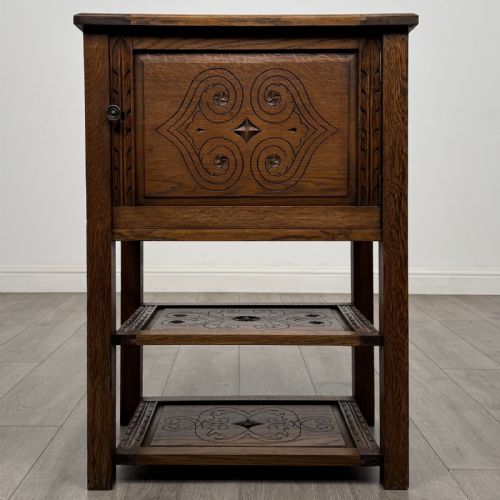
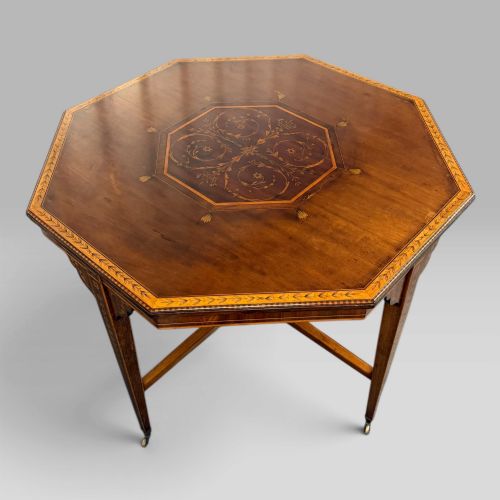
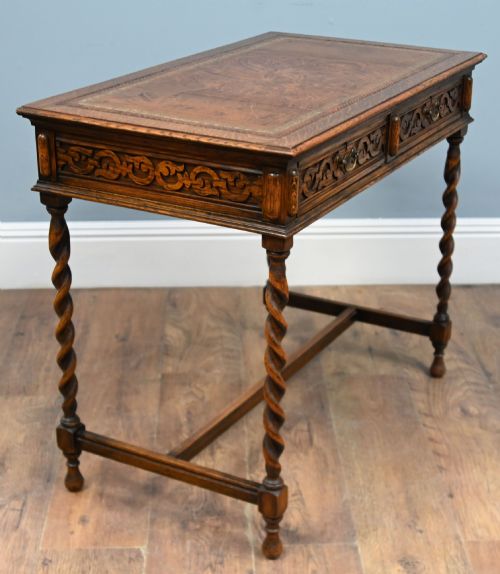
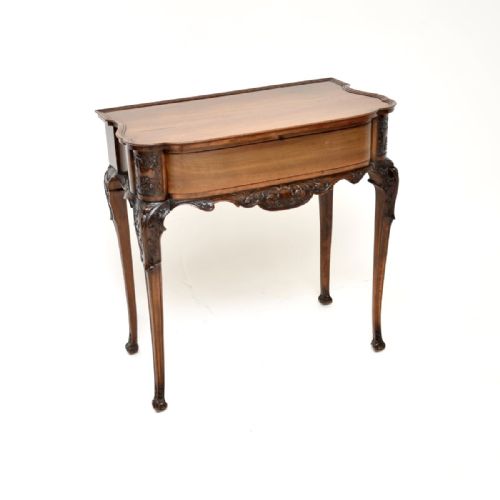
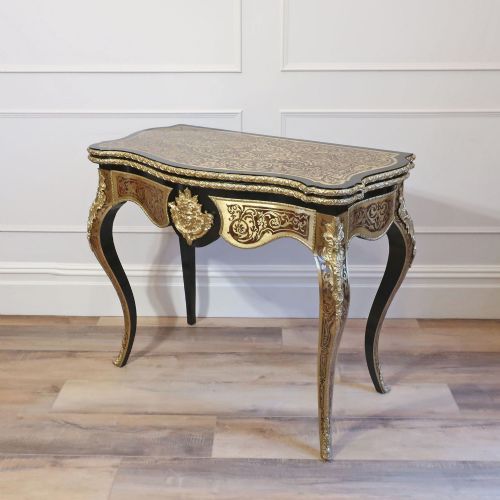
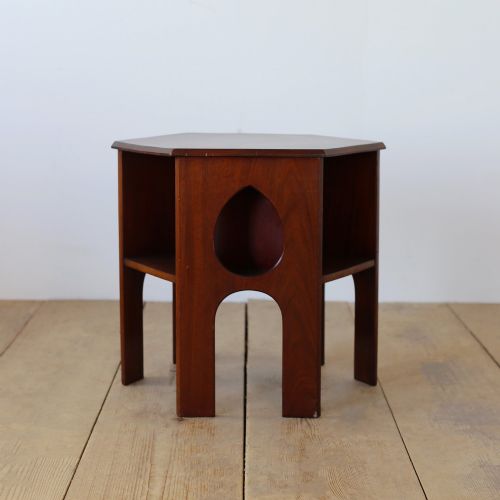
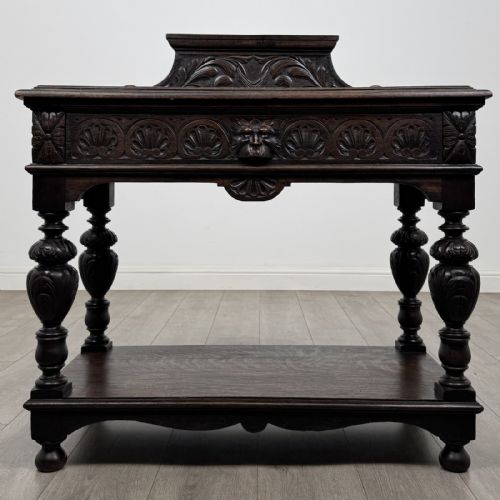
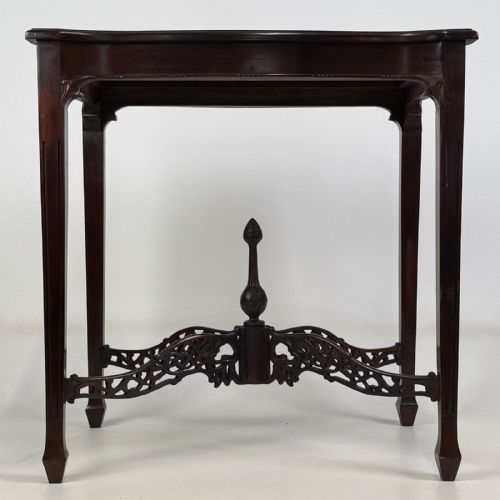
The selection here includes Sheraton revival, Jacobean revival, and Chippendale revival pieces, alongside styles reflecting French influence and Gothic design. Common forms range from nests of tables to fold-over card tables and occasional stands.
Makers often drew upon Georgian and seventeenth-century proportions while constructing furniture suited to nineteenth and early twentieth-century homes. Mahogany, oak, and satinwood dominate the construction of these functional surfaces.
Materials and technique
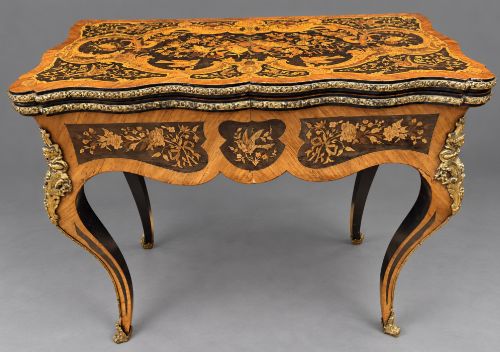
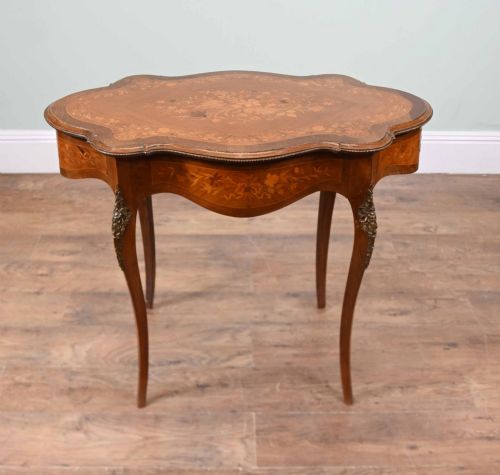
Cabinet makers utilised dense hardwoods such as mahogany, walnut, oak, and rosewood, frequently applying contrasting veneers like satinwood, kingswood, and marquetry or parquetry patterns. Ormolu mounts and cast brass details added metallic enrichment to French and Victorian examples.
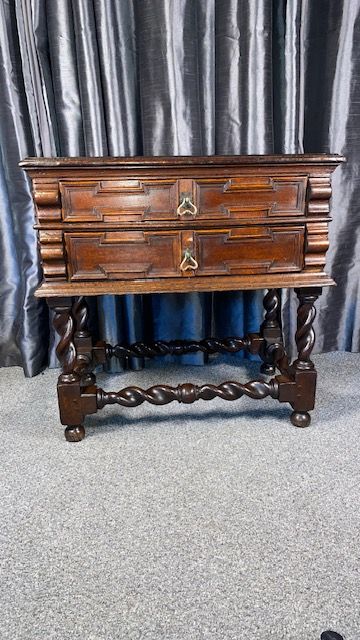
Construction techniques include hand-carved stretchers, turned legs such as bobbin or tripod forms, and inlaid stringing. Tables often incorporate fold-over tops, drawers, or tiered designs requiring precise joinery.
Revival Side Table Retail Price Guide 2026
Typical asking prices for revival side table among the pieces listed under this phrase on Sellingantiques today, from the lower quarter to the upper quarter. They describe what is for sale here now, not the wider market.
A tiny glass back on a walnut lamp table ensures nobody misses a stray crumb.
Distinctions in quality
Quality rests in the precision of the timber selection, such as burr walnut or figured mahogany, and the crispness of hand-carved elements like Celtic motifs or classical friezes. Fine examples display meticulous attention to inlaid parquetry and marquetry details.
Structural integrity depends on the joinery of the legs, stretchers, and tiered shelves. Pieces produced by established workshops demonstrate superior finishing on secondary timbers and stability in folding or freestanding mechanisms.
JAS Shoolbred
The Revival Side Table Glossary
- Marquetry
- Decorative veneer work forming pictorial or geometric patterns using various coloured woods. This technique frequently appears on Victorian and Edwardian tabletops.
- Parquetry
- Geometric mosaic woodwork used for flooring and tabletops. It consists of small pieces of wood arranged in repeating patterns.
- Ormolu
- Gilt bronze mounted onto furniture. This finish was commonly applied to French revival tables during the nineteenth and early twentieth centuries.
- Quartetto
- A set of four nested tables. These graduated pieces slide neatly beneath one another.
- Stretcher
- A horizontal support connecting the legs of a table for added stability. They are often carved or turned in revival furniture.
Revival Side Table: Frequently Asked Questions
What is a revival side table?
A revival side table is a piece of furniture made in a later period that copies the style of an earlier historic era. These tables served various practical functions in the home while displaying classic decorative motifs.
They reflect tastes from the nineteenth and early twentieth centuries when cabinet makers looked back to Georgian, Jacobean, or French designs for inspiration.
How do I identify the style?
Identifying the style involves looking at the specific decorative vocabulary and timber choices used on the piece. Sheraton revival items often feature satinwood inlay, whereas Jacobean revival pieces display dark oak and turned supports.
Comparing the legs, edge moulding, and surface patterns to documented historical periods helps confirm the particular revival movement.
Where should I place one?
These tables suit placement beside sofas, armchairs, or against walls where a compact surface is required. Their decorative inlaid tops and carved details allow them to function as focal points in hallways or living rooms.
Freestanding models work well away from walls, while nests of tables offer flexible surface space that can be expanded when needed.
How do I care for the wood?
Caring for these surfaces requires keeping them away from direct sunlight and excessive heat sources to prevent the timber and veneer from splitting. Regular dusting with a soft, dry cloth maintains the polish without damaging the finish.
Application of appropriate furniture wax helps preserve exposed grain on hardwoods like mahogany and oak over time.