


Revival Open Bookshelf
A revival open bookshelf brings classical proportion and accessible display to a room, offering adaptable tiering for volumes while honouring historic cabinet-making traditions.
Revival Open Bookshelf
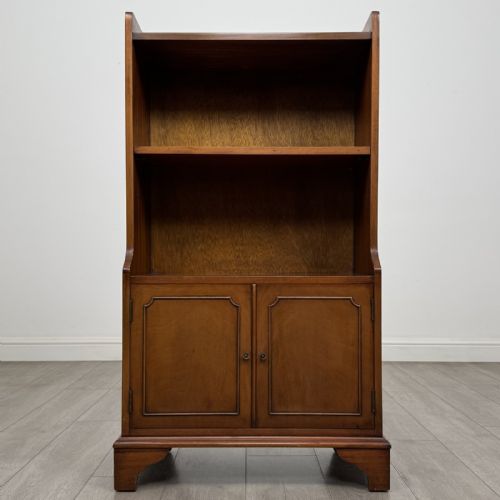
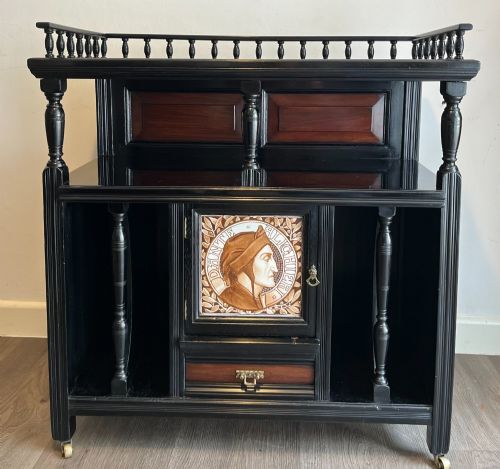
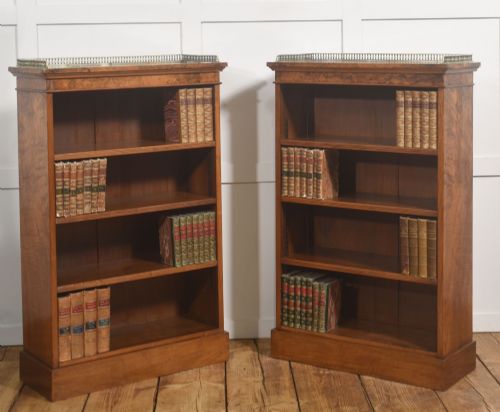
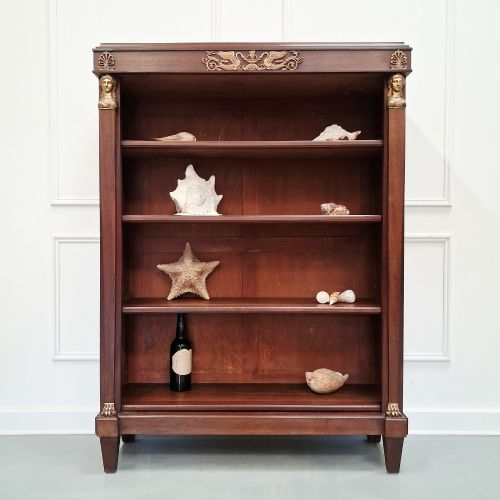
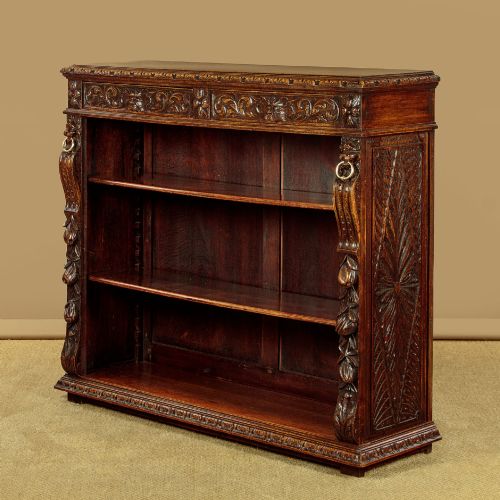
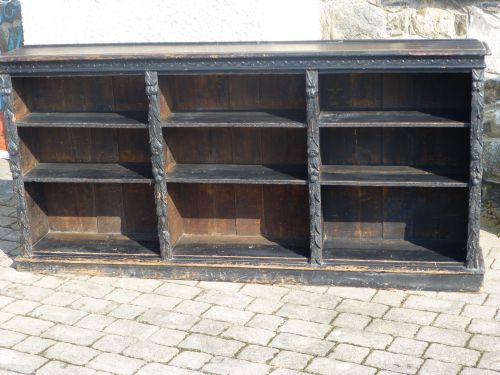
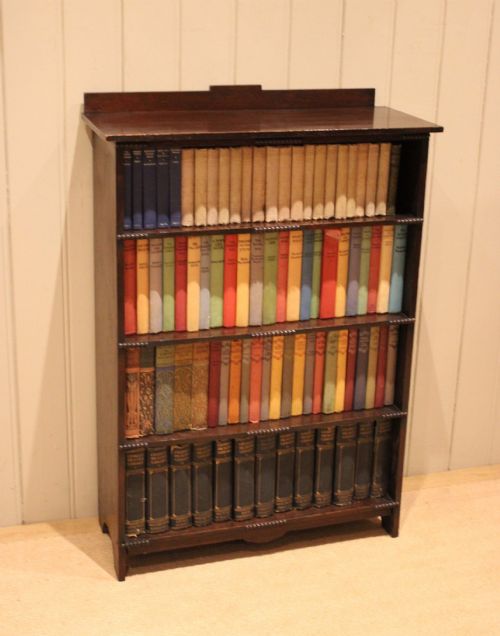
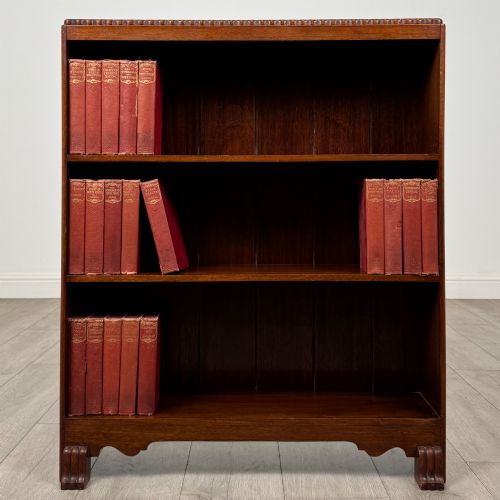
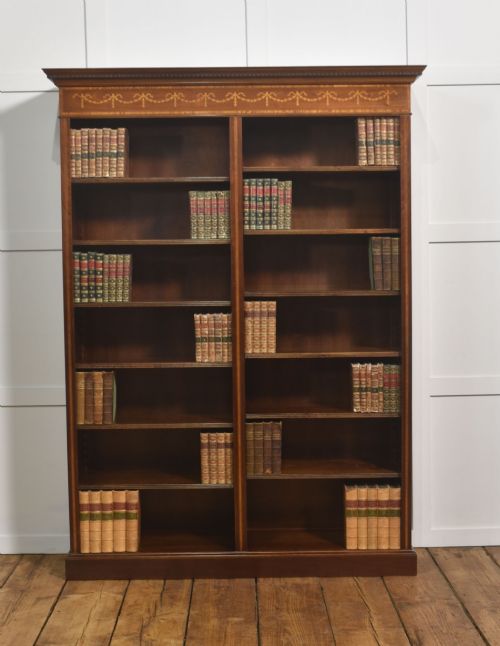
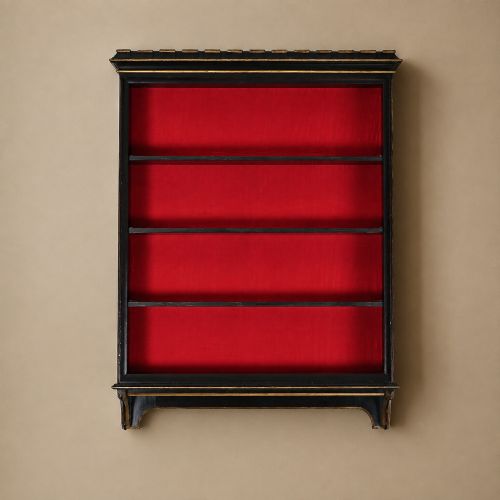
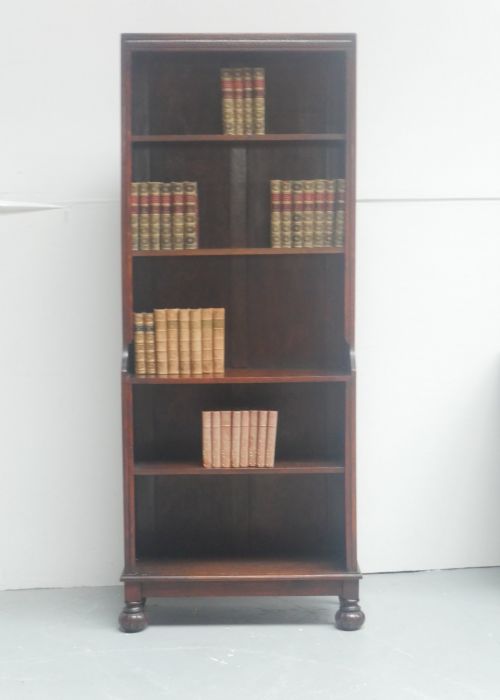
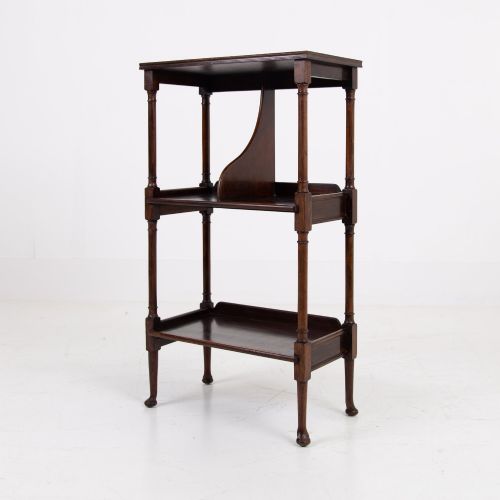
A revival open bookshelf takes many structural forms across this selection, spanning tall standing units, low dwarf cabinets, narrow wall shelves, corner units, and multi-tiered whatnot variations designed for domestic libraries and studies.
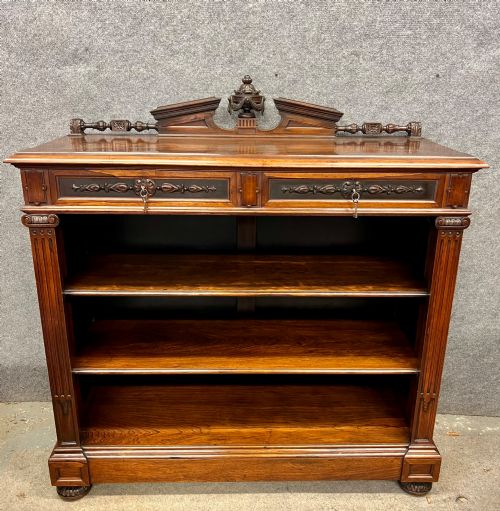
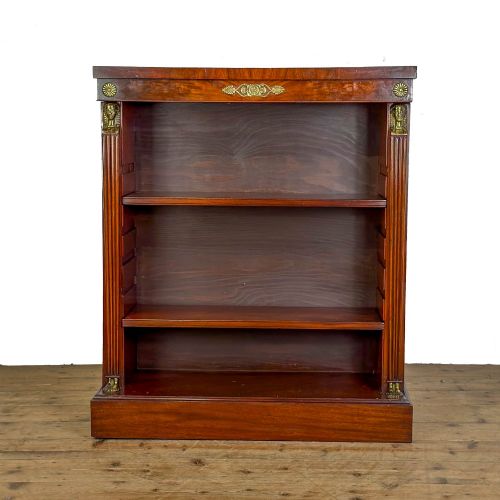
The material record shows predominant use of oak and mahogany alongside walnut, burr walnut, and satinwood, supplemented by decorative brass galleries and carved wooden details.
Dating primarily from the nineteenth and early twentieth centuries, these pieces draw stylistic inspiration from Victorian, Edwardian, Gothic, Jacobean, Sheraton, and Regency eras.
Materials and construction
Timbers such as solid oak and mahogany provide robust structural carcasses, while finer woods like burr walnut and satinwood receive careful inlay and veneering for decorative effect.
Construction techniques incorporate adjustable shelving mechanisms, carved friezes, raised galleries, beaded edges, and applied architectural mouldings executed by period cabinet-makers.
Revival Open Bookshelf Retail Price Guide 2026
Typical asking prices for revival open bookshelf among the pieces listed under this phrase on Sellingantiques today, from the lower quarter to the upper quarter. They describe what is for sale here now, not the wider market.
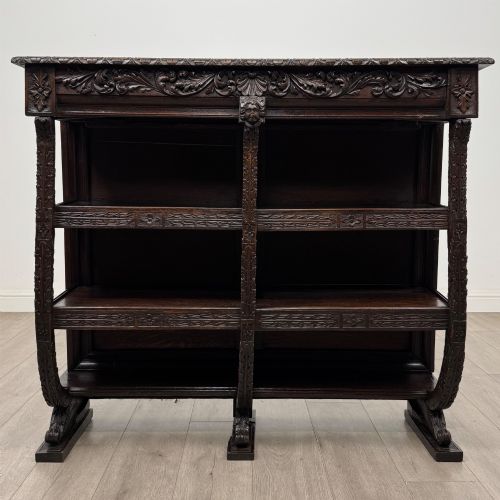
Watch closely for fierce green man carvings hiding among the bookstacks, silently guarding your collection against overdue fines.
Judging execution
Quality rests in the precision of the timber selection and the crispness of hand-carved elements, such as green man motifs, barley twist columns, or inlaid banding, which distinguish standard utility furniture from finer commissions.
The integration of functional elements, including smooth shelf adjustment systems, stable galleries, and balanced proportions, dictates the overall architectural success of each piece.
George Edmund Street
The Revival Open Bookshelf Glossary
- Gallery
- A raised ornamental border around the top shelf of a bookcase, often pierced in brass or carved in wood to secure items from sliding off.
- Frieze
- The wide horizontal section situated immediately beneath the top surface, frequently ornamented with carved woodwork or decorative inlay.
- Dwarf bookcase
- A low-standing open bookshelf designed to sit beneath dado height, allowing books to remain within easy reach.
- Whatnot
- A multi-tiered piece of furniture with open shelves used for displaying books and decorative objects.
- Barley twist
- A turned column or spindle resembling a spiralling rope, popular in revival furniture woodwork.
Revival Open Bookshelf: Frequently Asked Questions
What is a revival open bookshelf?
A revival open bookshelf is a piece of furniture produced in a historic style, such as Gothic or Regency, designed to hold books without enclosing glass or wooden doors.
These pieces combine historical decorative motifs with practical storage for home libraries and living spaces.
How were open bookshelves used historically?
Historically, open bookcases provided immediate access to frequently read volumes in studies, libraries, and drawing rooms.
Their open front design allowed scholars and family members to select books quickly without operating cabinet doors.
How do I care for antique wood?
Antique wood requires stable indoor humidity and protection from direct sunlight to prevent timber shrinkage and veneer lifting.
Applying appropriate wax polish occasionally helps nourish the grain and maintain the protective surface sheen.
How can I date a revival bookshelf?
Dating relies on examining construction methods, timber choice, and the specific revival style influences present in the carving and hardware.
Nineteenth and early twentieth-century pieces often display machine-sawn backing boards combined with hand-finished decorative details.