
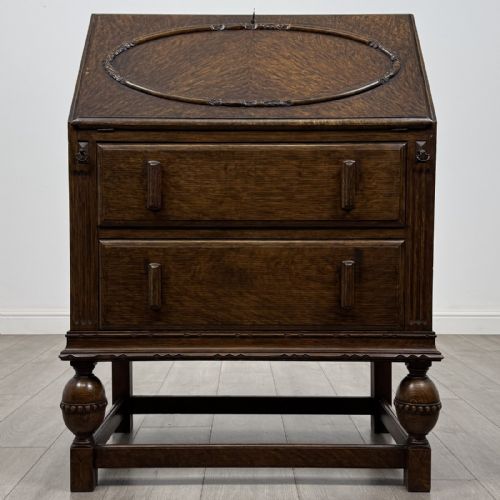
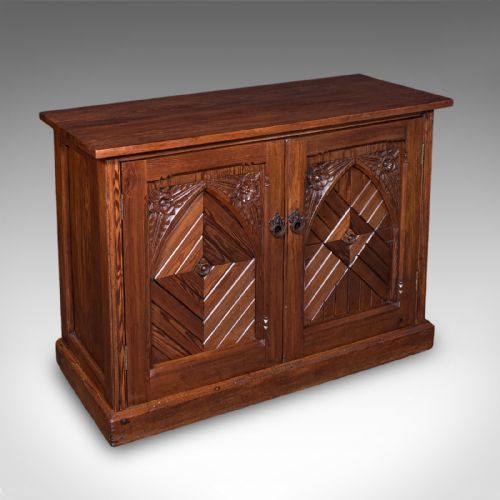
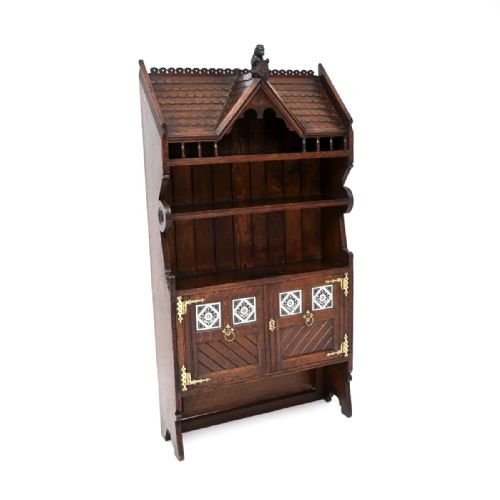
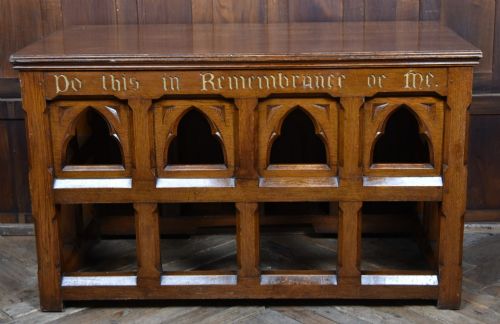
Revival Oak Furniture
Revival oak furniture brings solid timber and historic architectural motifs into domestic rooms, offering robust storage and seating built to last.
Revival Oak Furniture
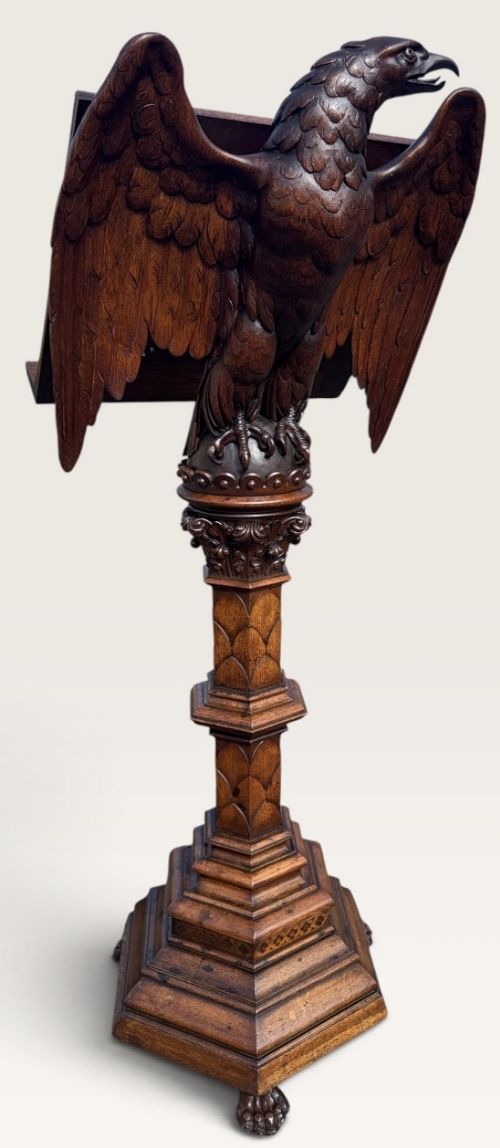
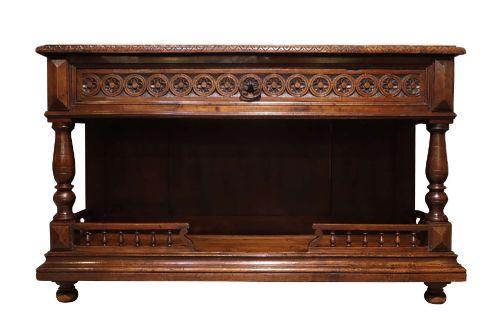
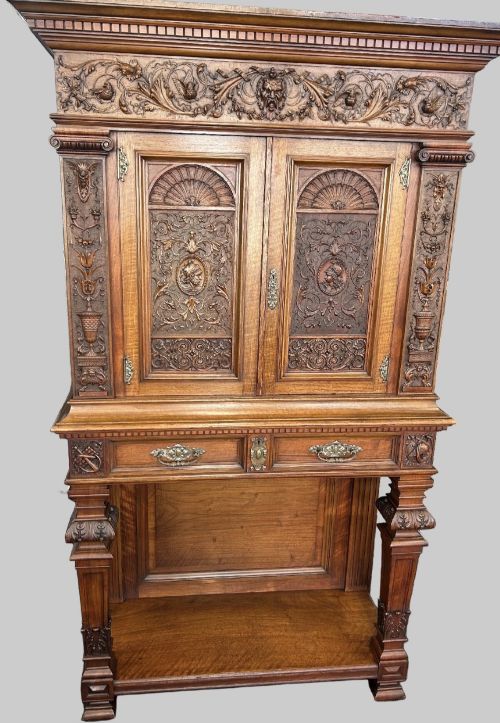
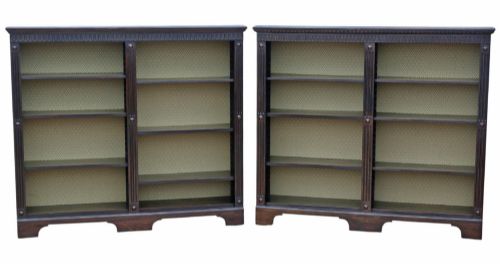
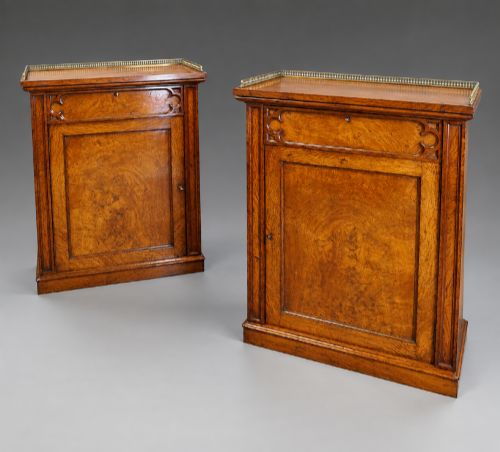
Revival oak furniture draws on earlier historic repertoires, spanning Gothic, Jacobean, and Renaissance styles produced during the nineteenth and early twentieth centuries. Pieces range from large architectural sideboards and bookcases to practical side tables, benches, and cupboards designed for everyday domestic utility.
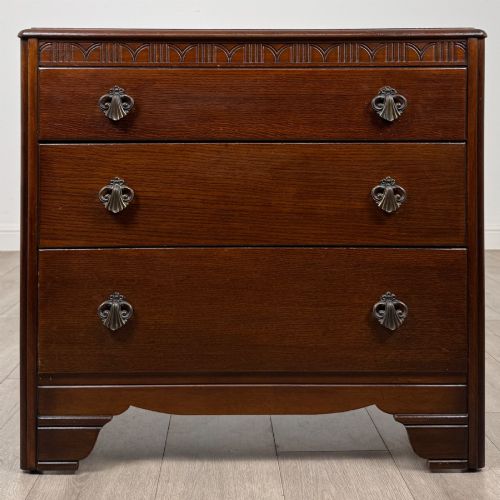
The versions most commonly met on this page date from the Victorian and Edwardian eras, alongside pieces from the nineteen-twenties that adapt older forms for modern homes. These items frequently incorporate traditional joinery and heavy timber construction derived from seventeenth-century prototypes.
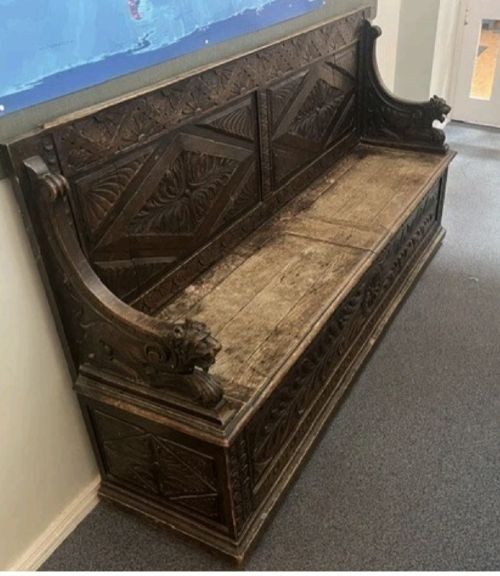
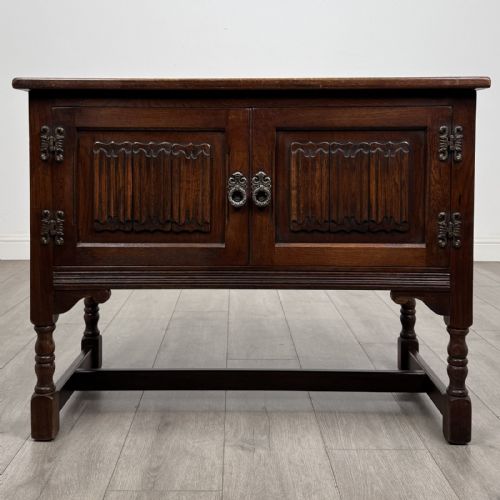
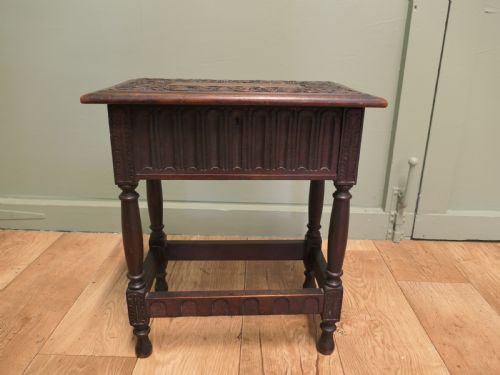
Makers often looked to ecclesiastical and vernacular sources, resulting in items like carved hall benches, linenfold cupboards, and geometric panelled sideboards. The resulting forms combine sturdy practicality with ornamental carving, linenfold panels, and turned supports.
How they were made
Makers relied primarily on solid oak, chosen for its strength and grain, occasionally paired with secondary timbers like pine or walnut in concealed areas. Structural integrity depended on traditional mortise and tenon joints, panelled construction, and substantial framework.
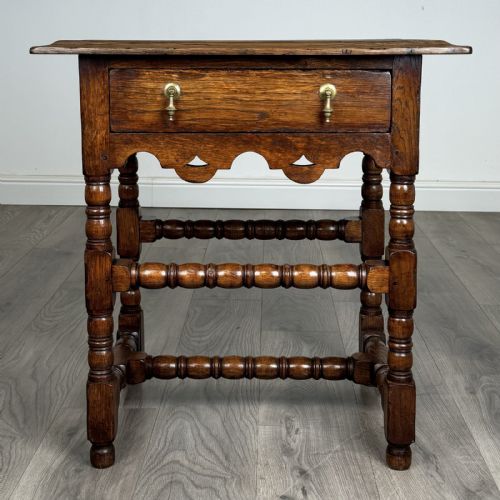
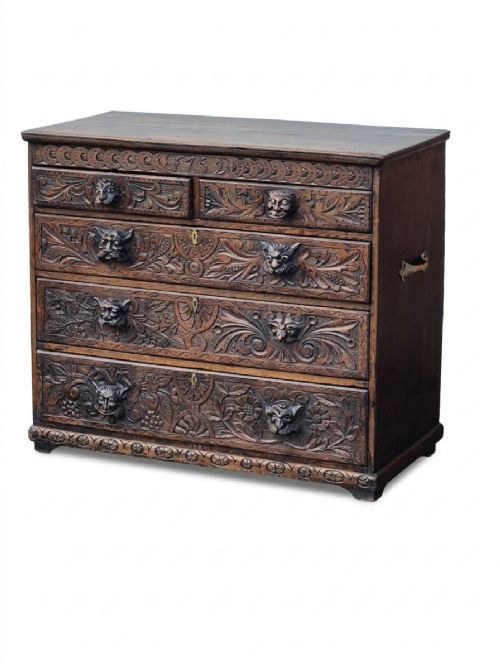
Surface decoration involved deep hand-carving, geometric moulding, and applied details such as bobbin or barley twist legs, alongside metalwork fittings in brass and iron. Finishes were typically waxed or polished to highlight the natural figuring of the timber and protect the surface from daily wear.
Listings feature oak alongside iron, brass, and walnut across Victorian and Edwardian periods.
What varies in quality
Quality rests heavily on the depth and crispness of the hand-carved ornament, the selection of figured timber, and the integrity of the joinery. Workshop attribution also plays a role, as pieces bearing stamps or signatures from known makers exhibit superior execution in proportion and detail.
Construction methods distinguish standard commercial production from finer bespoke items, particularly in the thickness of the timber, the symmetry of geometric panels, and the stability of architectural elements like canopies and barley twist supports.
John Moyr Smith·Gillows·Bowman Brothers·Heals
The Revival Oak Furniture Glossary
- Gothic Revival
- An aesthetic movement drawing inspiration from medieval ecclesiastical architecture, identifiable by pointed arches, trefoil motifs, and heavy carved tracery. Pieces in this style often echo church furnishings.
- Linenfold
- A style of wood carving used on panels to imitate vertical folds of fabric. It is commonly found on the doors of cupboards and cabinets from revival periods.
- Barley Twist
- A turned wooden furniture leg or support shaped in a spiral twist resembling a column of barley sugar. This decorative turning became widespread during revival periods.
- Enfilade
- A suite of rooms or a long cabinet featuring a sequence of identical doors or compartments. In revival furniture, this refers to substantial sideboard units with multiple cabinet doors.
Revival Oak Furniture: Frequently Asked Questions
What is revival oak furniture?
Revival oak furniture comprises nineteenth and early twentieth-century pieces designed in historical styles like Gothic and Jacobean. These items utilise solid oak timber to recreate seventeenth-century and medieval forms.
Craftsmen built these pieces for Victorian and Edwardian homes, blending historic motifs such as linenfold panels and geometric mouldings with practical modern storage requirements.
Where should I place a heavy oak sideboard?
A substantial oak sideboard or cabinet requires a location with adequate floor space and strong structural support to bear its considerable weight. Placing it against a main wall allows the architectural carving and panel details to anchor the room.
Keep these items away from direct heat sources and strong sunlight to protect the solid timber and wax finishes from drying out or cracking.
How do I tell an original 1880 piece from a later copy?
Dating revival oak involves examining the construction methods, tool marks, and hardware used inside drawers and behind panels. Nineteenth-century pieces typically show hand-cut joinery and period-appropriate brass or iron fittings.
Checking for consistent timber ageing, wear patterns on contact points, and maker stamps helps confirm the production era of the piece.