
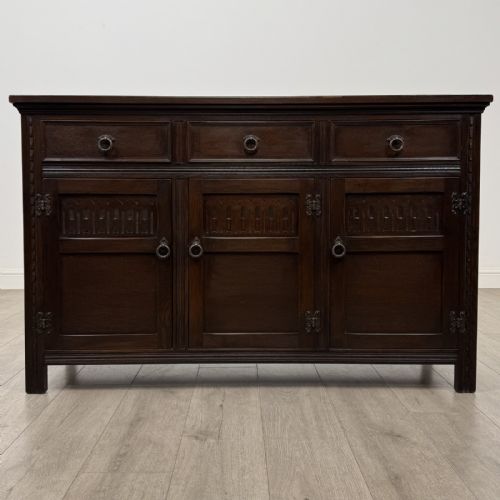
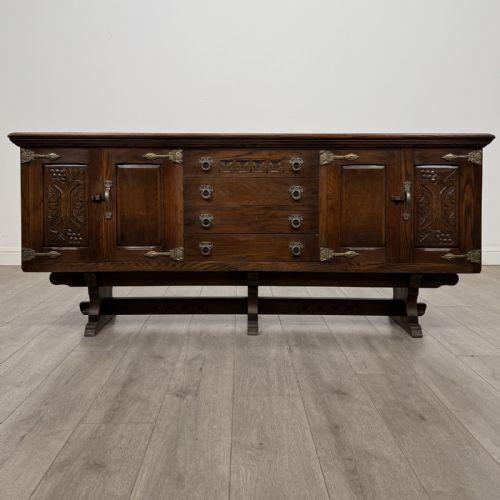
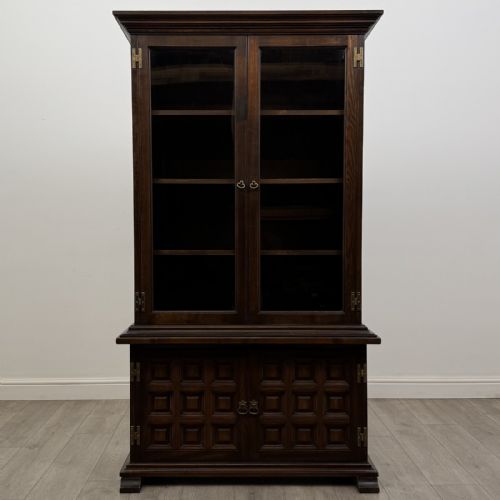
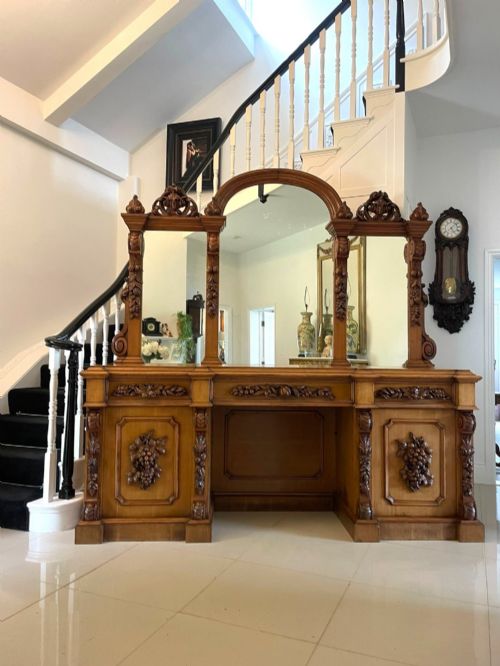
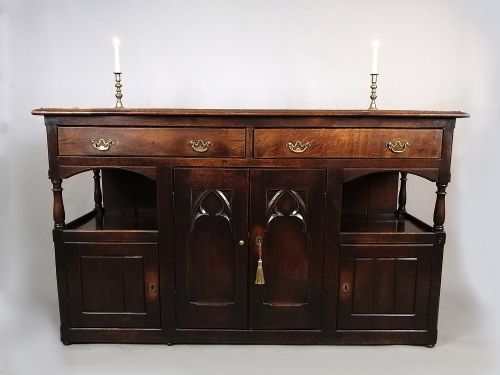
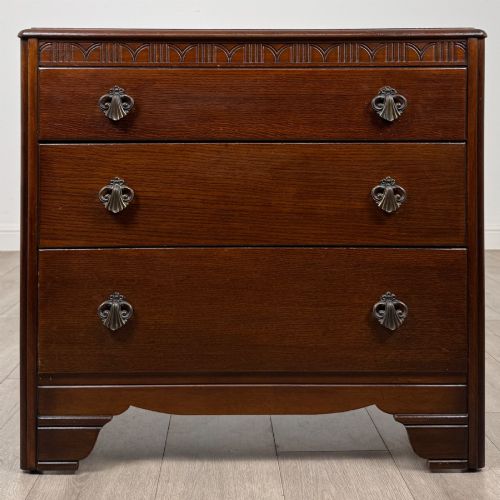
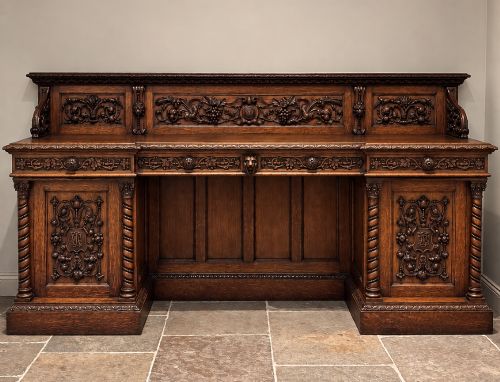
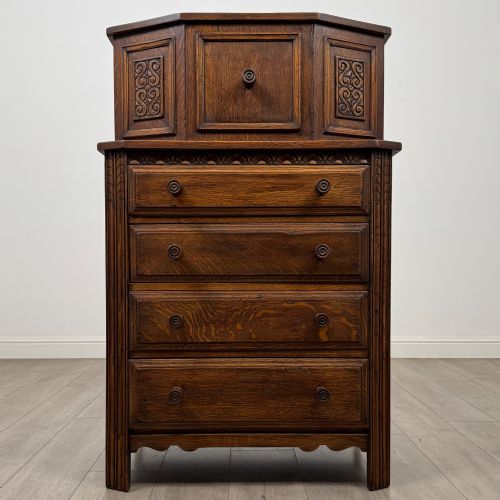
Revival Oak Dresser
These revival oak dressers bring solid timber and centuries of historic design vernacular straight into modern dining rooms.
Revival Oak Dresser
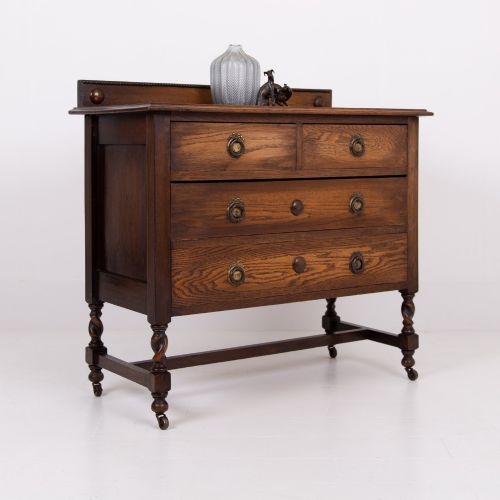
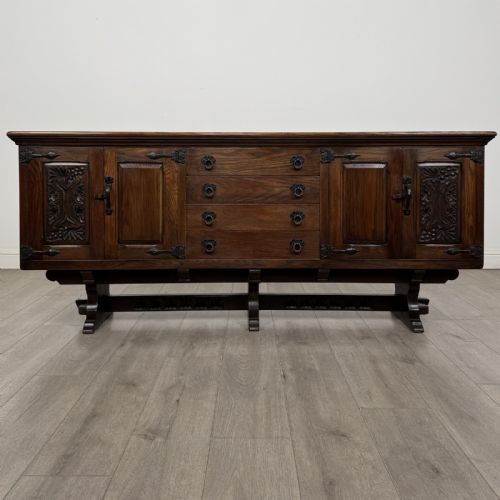
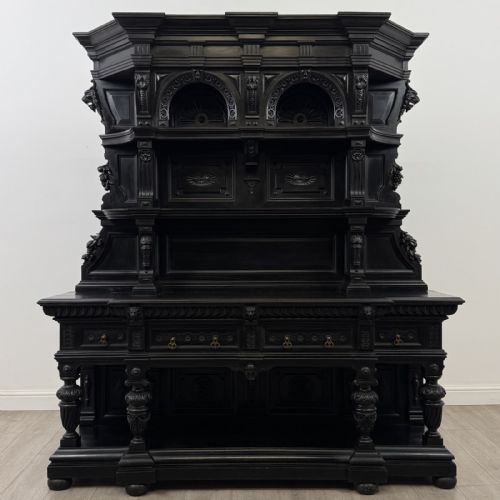
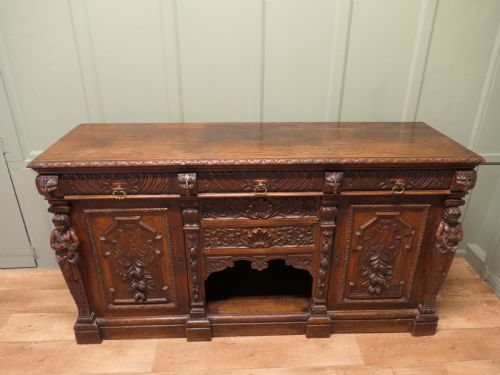
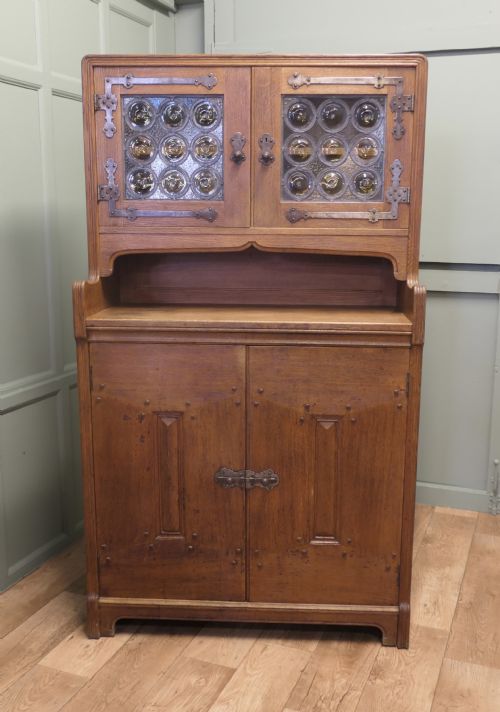
A revival oak dresser draws upon historic periods such as the Jacobean, Gothic, and Carolean eras, reinterpreted by makers from the eighteenth, nineteenth, and twentieth centuries. These large storage pieces incorporate traditional forms like dresser bases, sideboards, and cupboards alongside display elements.
The versions most commonly met on this page date from the Victorian, Edwardian, and 1920s periods, often displaying stylistic revivals that favour heavy carving and sturdy proportions. They serve as practical storage furniture that doubles as a strong decorative focal point in a room.
Assessing craftsmanship and design
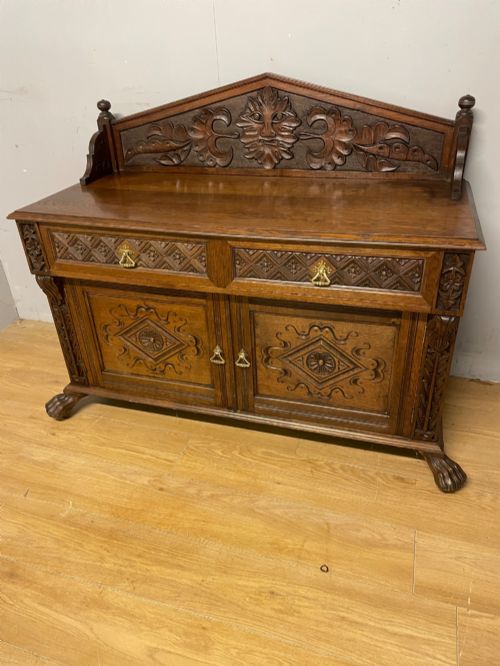
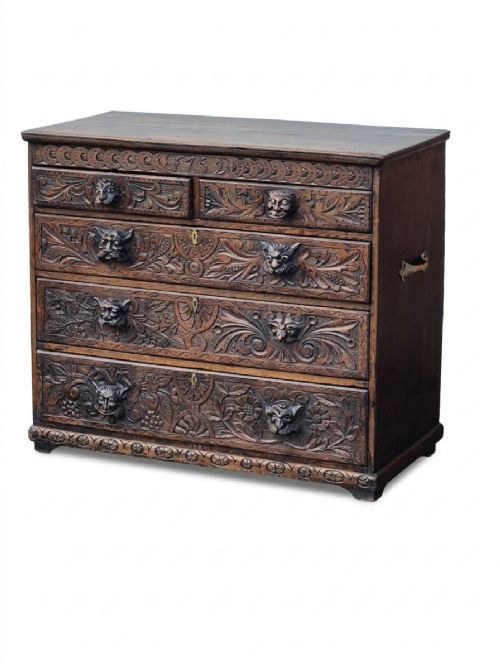
Quality in a revival oak dresser depends upon the depth and crispness of the hand-carved details, such as lion masks, green man motifs, and geometric panels, compared to mechanical or shallow execution. The choice of golden or dark oak timber grain and the integrity of stretcher bases and heavy doors also dictate standard.
Superior examples often feature documented connections to notable firms or distinctive regional adaptations like narrow proportions, while lesser pieces rely on simpler factory production with minimal ornamentation.
Keep your keys secure inside hidden compartments tucked away within sturdy Edwardian tallboys.
The Revival Oak Dresser Glossary
- Dresser base
- A low sideboard or cupboard featuring drawers and surface space, traditionally used for serving food or storing dining utensils before upper plate racks became common.
- Green man
- A sculptural architectural ornament depicting a human face emerging from or entwined with foliage, frequently encountered on nineteenth-century carved woodwork.
- Linenfold
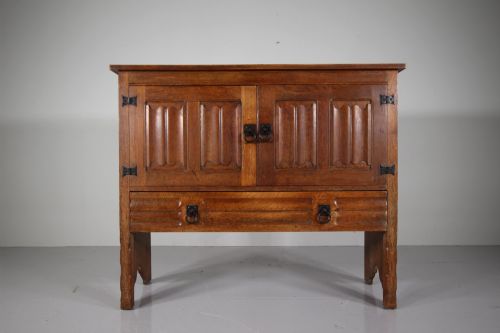
- A style of wood carving that imitates folded fabric, popular on panels of cupboards and doors to create textured vertical relief.
- Barley-twist
- A turned wooden support resembling a spiral rope or twisted column, characteristic of seventeenth-century furniture revived during the Victorian and Edwardian eras.
- Stretcher base
- A system of horizontal wooden bars connecting the legs of a table or sideboard near the floor to provide additional structural rigidity.
Revival Oak Dresser: Frequently Asked Questions
How do I date a revival oak piece?
Dating relies on examining the construction methods inside drawers, the type of hardware used, and the specific historic revival style favoured by the maker. Victorian and Edwardian examples often combine heavy machine-sawn timber with hand-finished carvings.
Secondary materials, such as the type of glass or metal handles, provide further clues to whether a piece originates from the late nineteenth century or the 1920s.
What is the difference between a sideboard and a dresser base?
Historically, a dresser base refers to an open-topped storage unit with drawers intended for kitchen or dining use, whereas sideboards evolved specifically for dining room service.
In modern cataloguing, the terms often overlap for heavy oak items featuring cupboards, drawers, and flat serving surfaces.
Where should I place a heavy oak dresser?
These substantial items require a wall capable of supporting heavy solid timber furniture, ideally in a dining room, large hallway, or spacious living area.
Ensure you measure both floor space and ceiling height, as mirror-backed or tall variations demand considerable clearance.
How do I care for antique oak furniture?
Maintain the timber by keeping it away from direct heat sources and sudden temperature fluctuations that cause wood to split.
Apply a traditional beeswax polish occasionally to nourish the grain and protect the surface from everyday wear.